17th December 2020
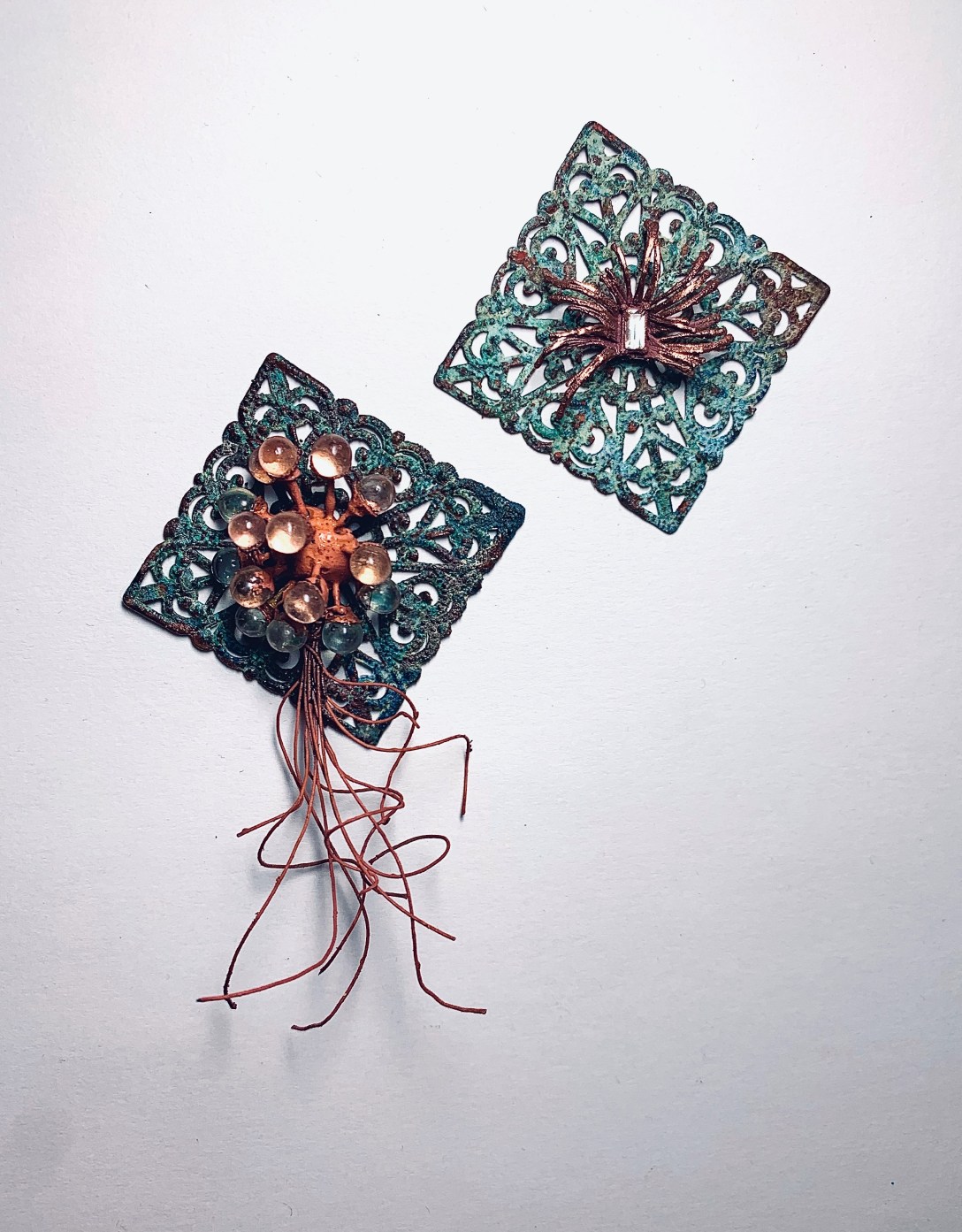
Colours and textures from patination and electroforming have long been suggesting this… And the underwater world holds so much intrigue, it is almost like a fantasy land. A parallel world, with vibrant colours and abstract formations, how does sea life come up with these unique forms?
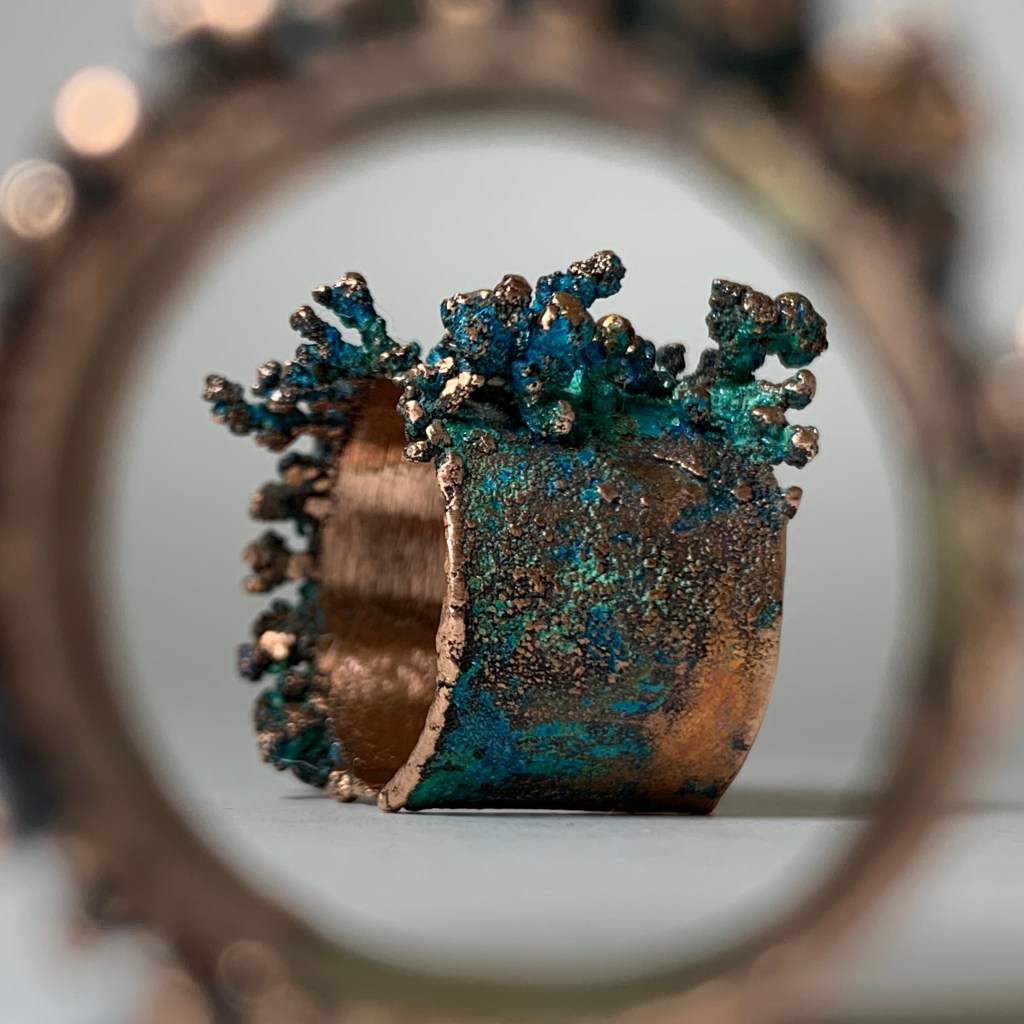
It’s been 5 years since my amazing encounter with the breathtaking beauty of the Barrier Reef. I wonder how much of it survived the past five years…
___________________
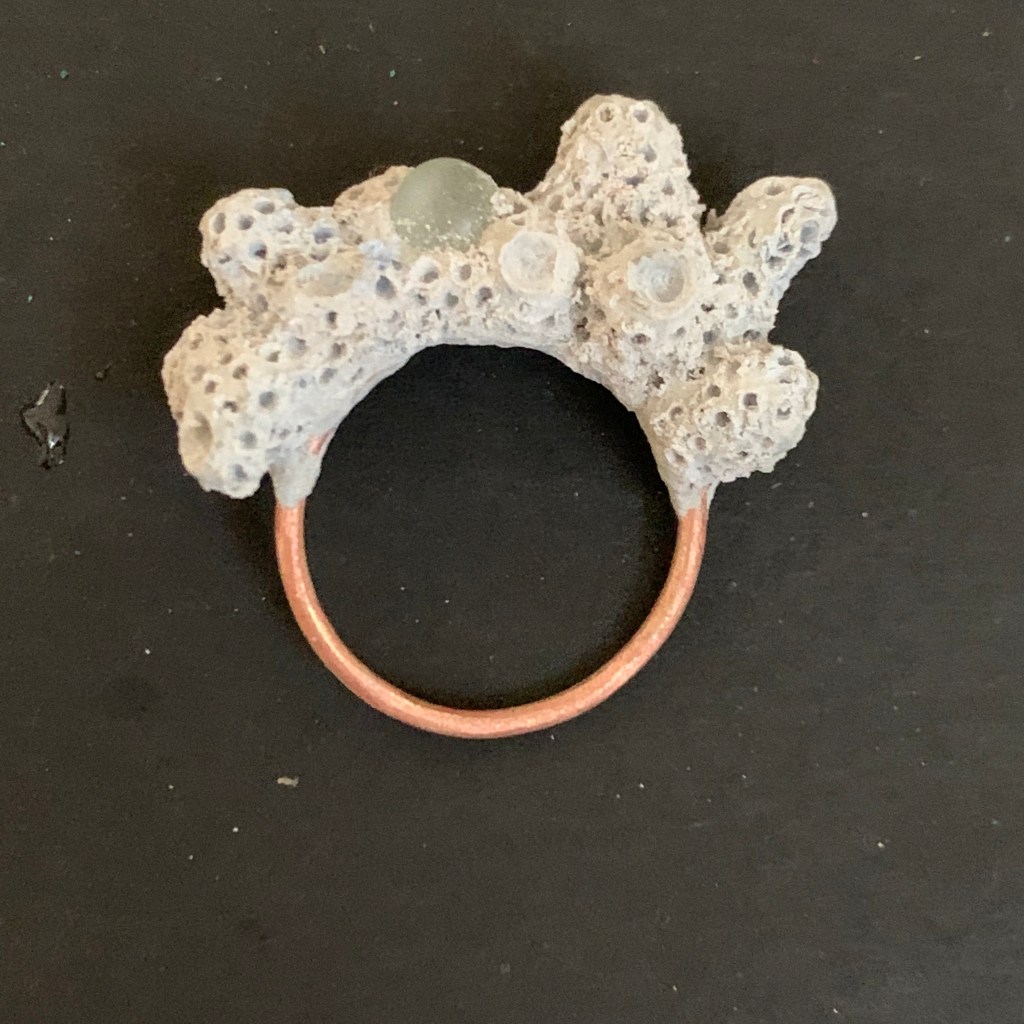
I wanted to create something as thrilling as my encounter with the underwater world, but simultaneously expressive of the mounting threats to its existence.
3rd Jan 2021
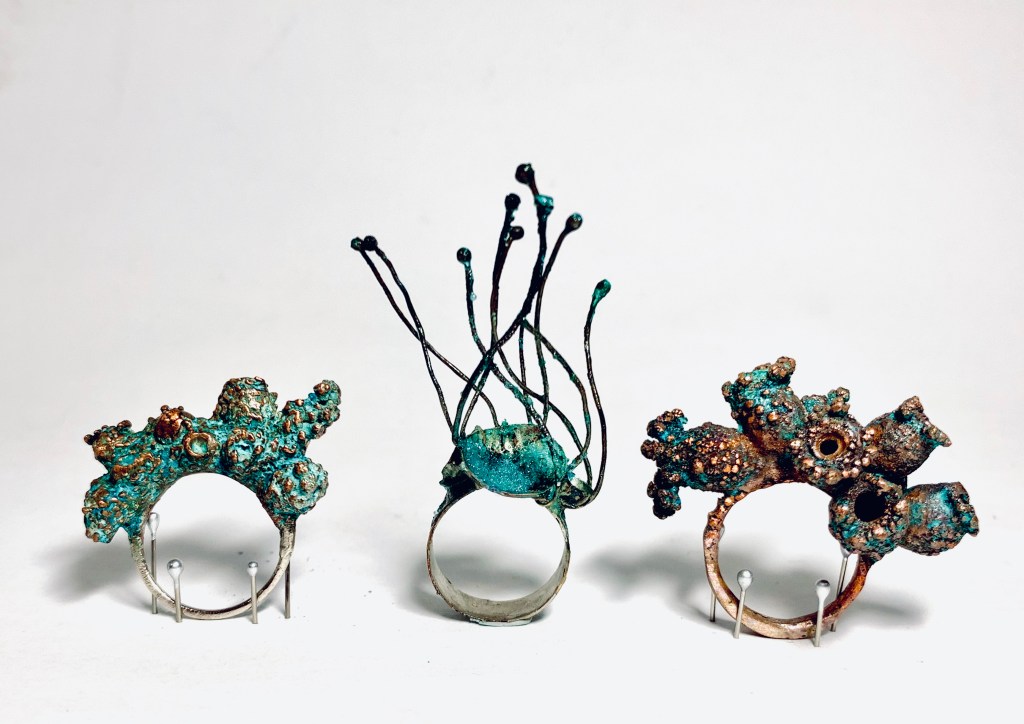
After ‘growing’ corals in my electroforming bath, rhodium plating, and sanding back to distress and reveal the copper, I patinated them to suggest decay.
I decided to study coral formations and their growth patterns further, to deepen and develop my current line of enquiry.
7th Jan 2021
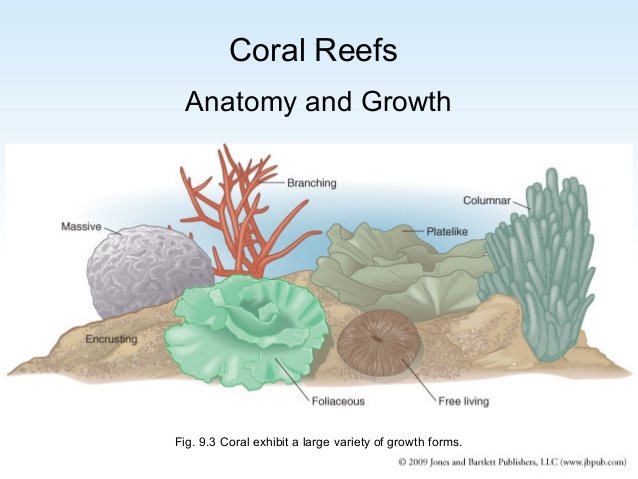
The following illustration that I found here helped me understand different kinds of growth formations in corals, while this website gave me insightful information on the symbiotic relationship between coral and zooxanthellae algae, which is in fact, the main reason for the various colours found in robust reefs. I figured that corals are indeed, living architecture, providing substrate for algal growth as well as protective cavities for fish.
And as for other sea life: Difference between Corals and Sea anemone:
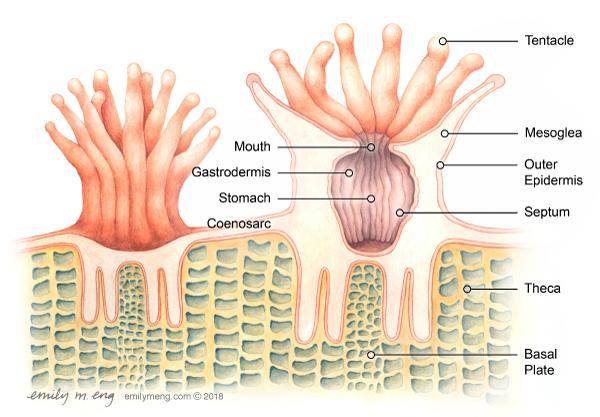
“Corals can have skeletal bodies with spiraling, columnar and dendritic growths. Sea anemones are the creatures with bulbous, floral or fleshy bodies, without skeletons. Some anemones could also have tentacles to trap prey. Sea anemones, like corals, are given their distinct bright colours from their symbiotic relationship with xoozanthallae algae. Both Corals and Sea anemones are severely affected by ocean acidification and global warming, resulting in disruption of marine diversity and bleaching respectively. “
Jellyfish:
Jellyfish, though related to corals and anemones, are free swimming marine animals, probably the only kind of marine life suggested to thrive under the climate change threat. Reading on Jellyfish and the anthropocene, I am reminded of Rimini Protokoll’s Win-Win at the Royal Academy, as part of last year’s Eco Visionaries exhibition. The installation, a tank containing 50 live jellyfish, and its accompanying narration, speculated that in a post apocalyptic world, Jellyfish will remain the only survivors on the planet.
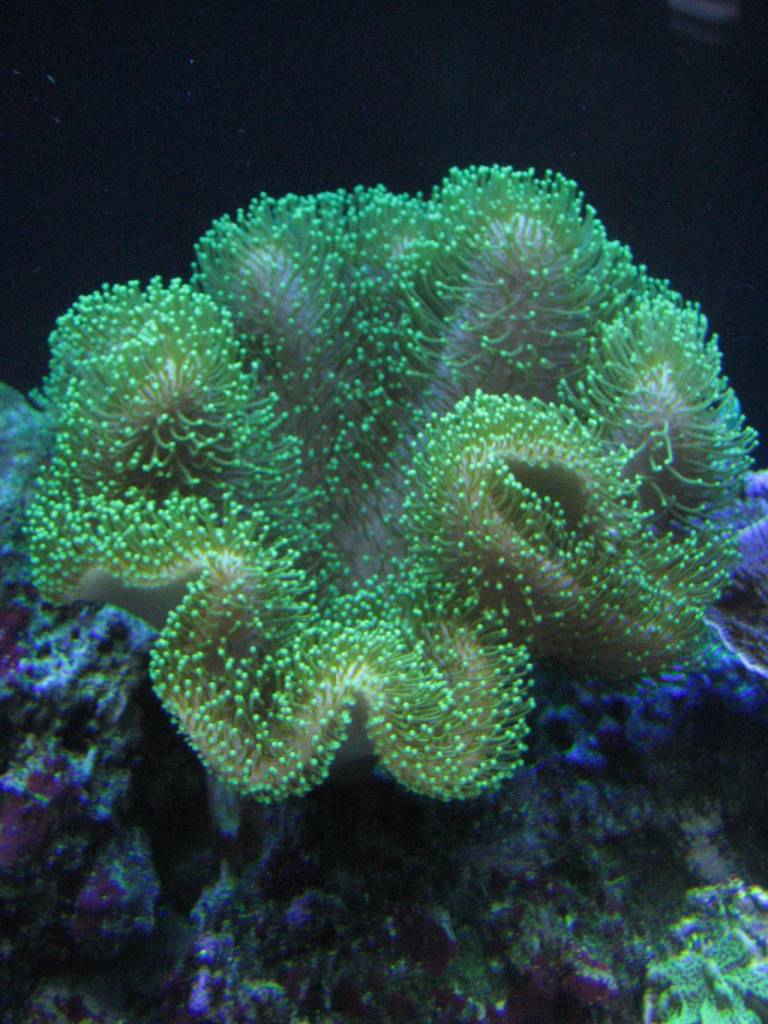
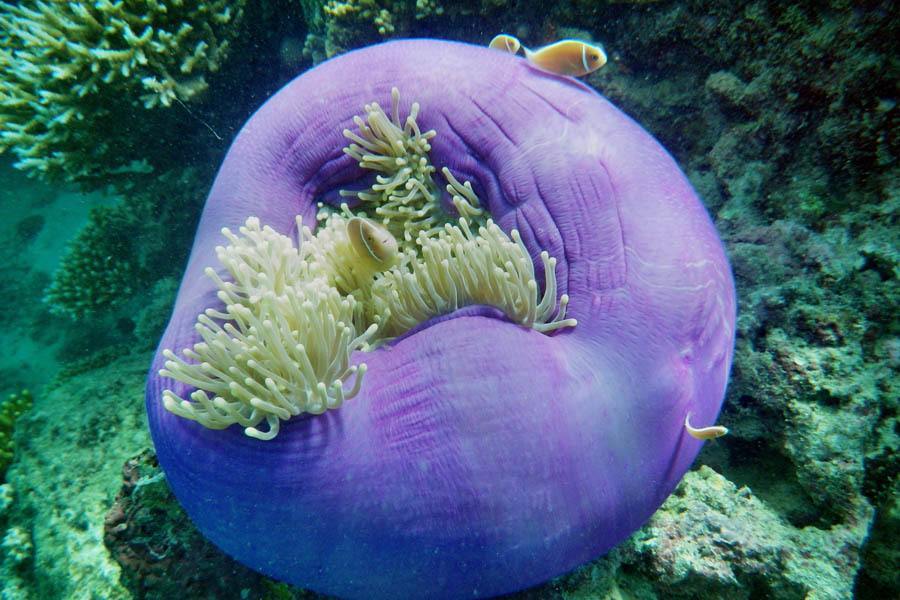
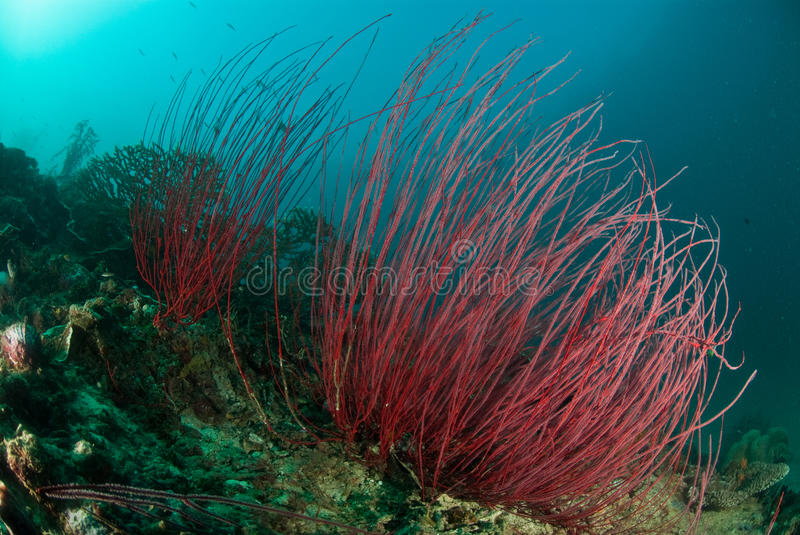
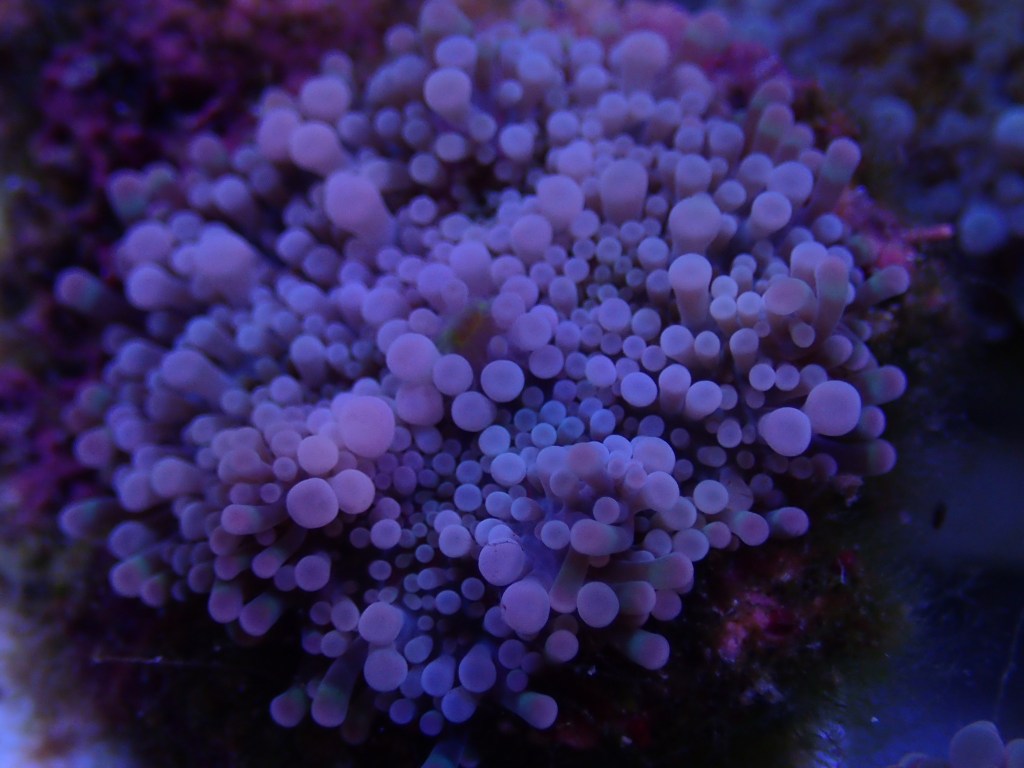
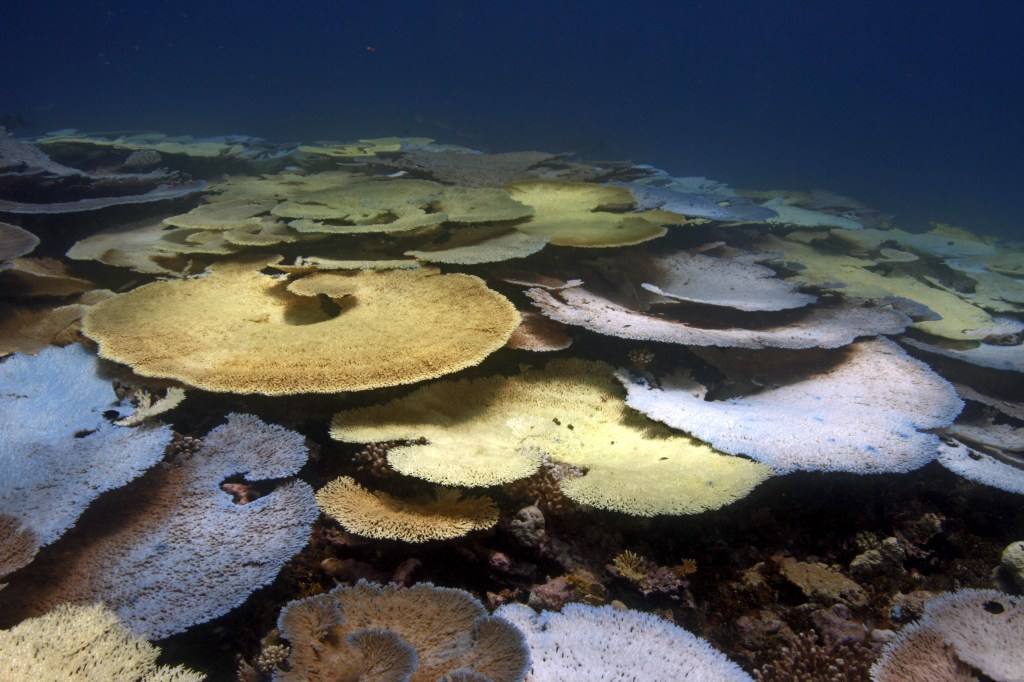
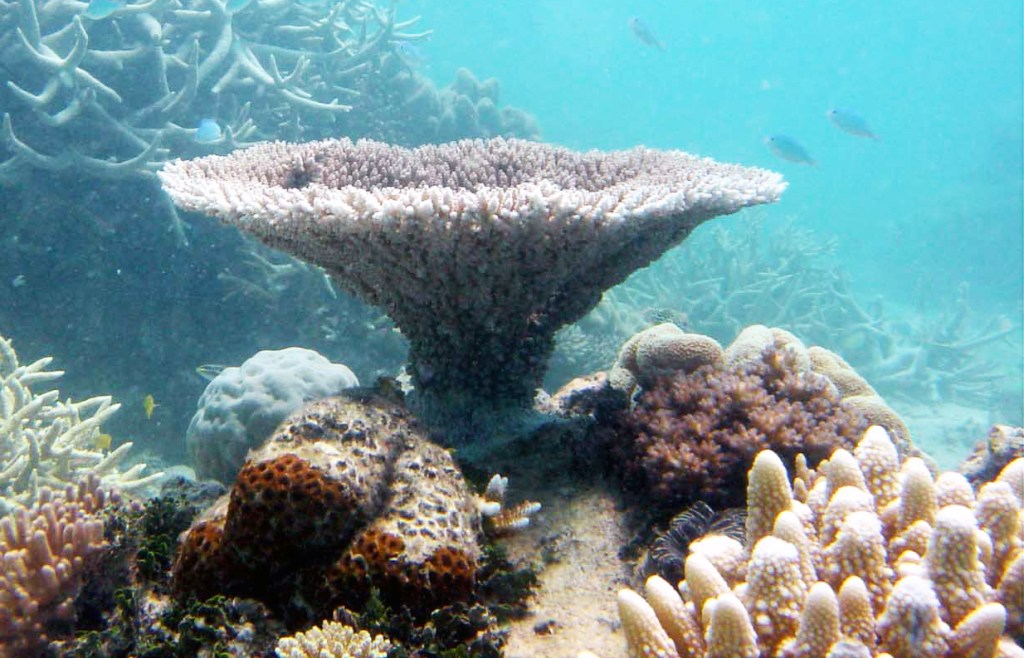

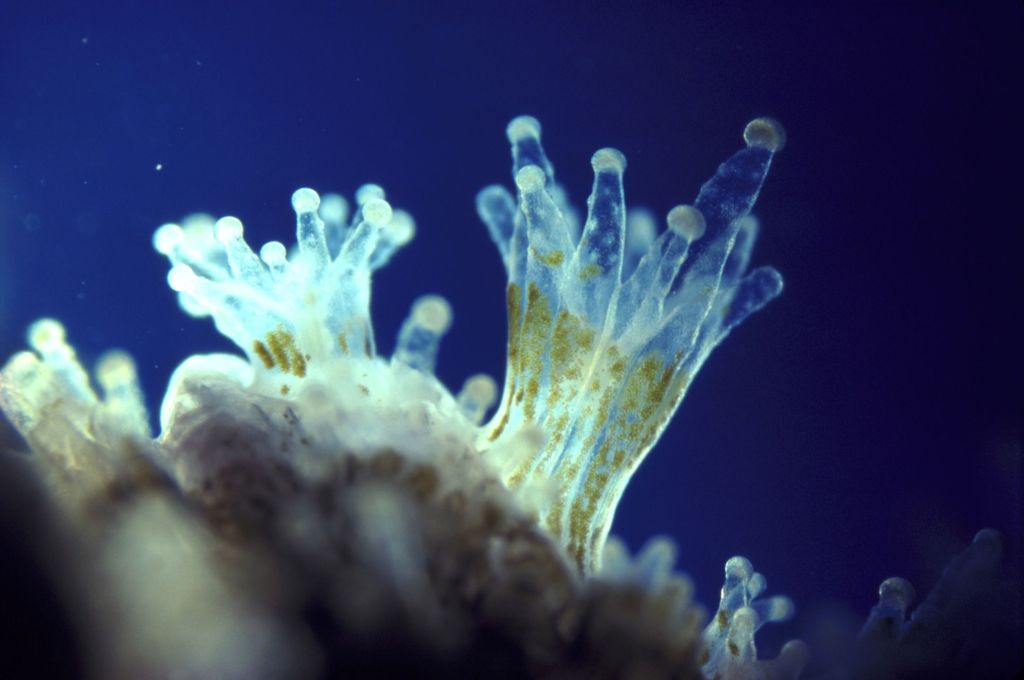

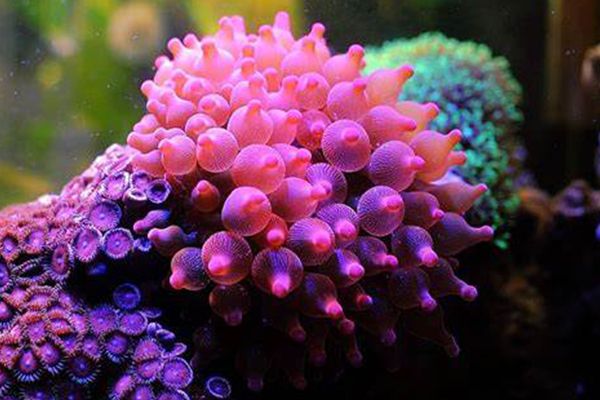
Above: Some images of different coral and sea anemone types depicting various growth formations.
__________
9th Jan 2021
Bioluminesence:
Some corals, anemones and plankton emit light when disturbed, or as a defense mechanism when confronted.
_____________
I discovered the work of some great jewellery artists and sculptors, featuring corals and marine formations:
Košica Olga uses enameling and stones to add colour to her electroformed pieces
10th Jan 2021
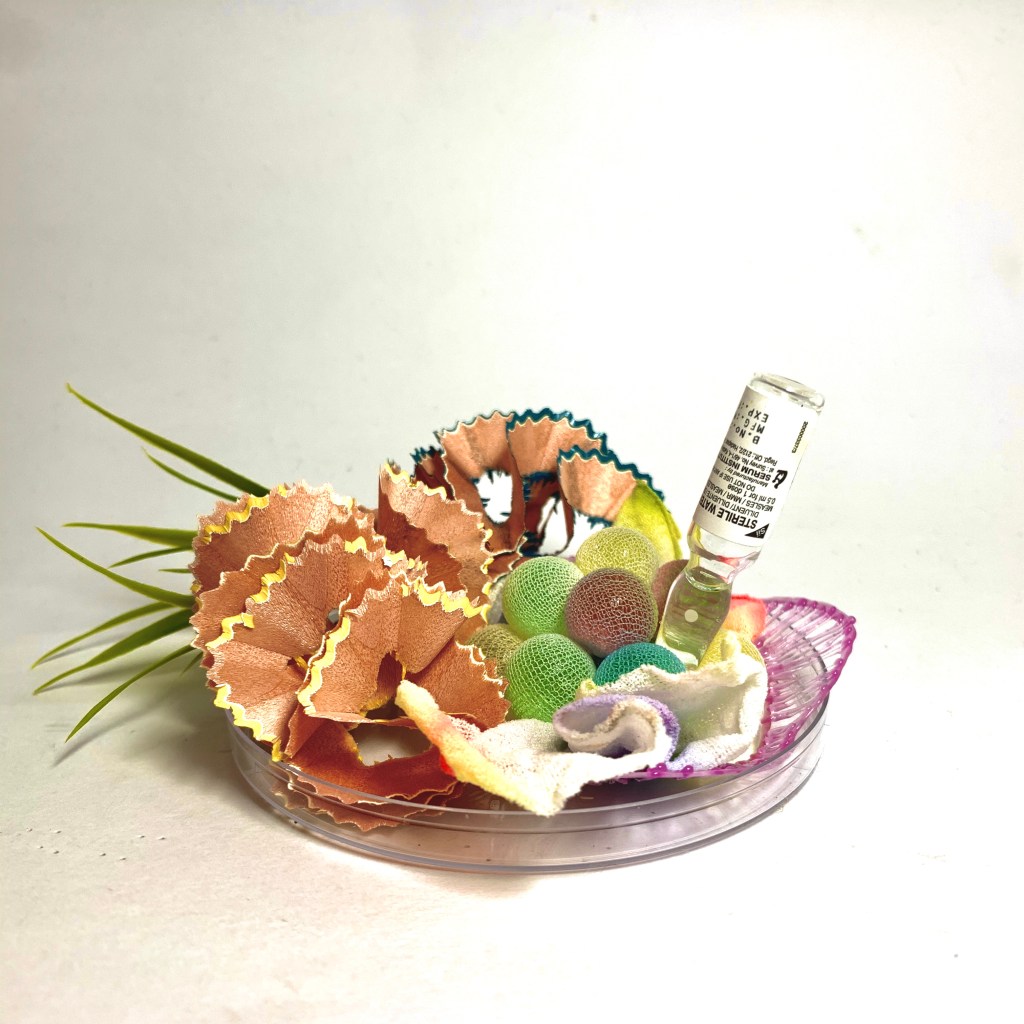
Below: Inspired, I tried to engage with different materials to recreate the physical and tactile qualities of marine life.

The hydrogel aggregate is a nice, squishy model, depicting the colourful skin in the stocking fabric, while also giving slimpses of the translucent flesh of the anemone itself. I will leave the it out to shrink slowly, as the hydrogel loses water.
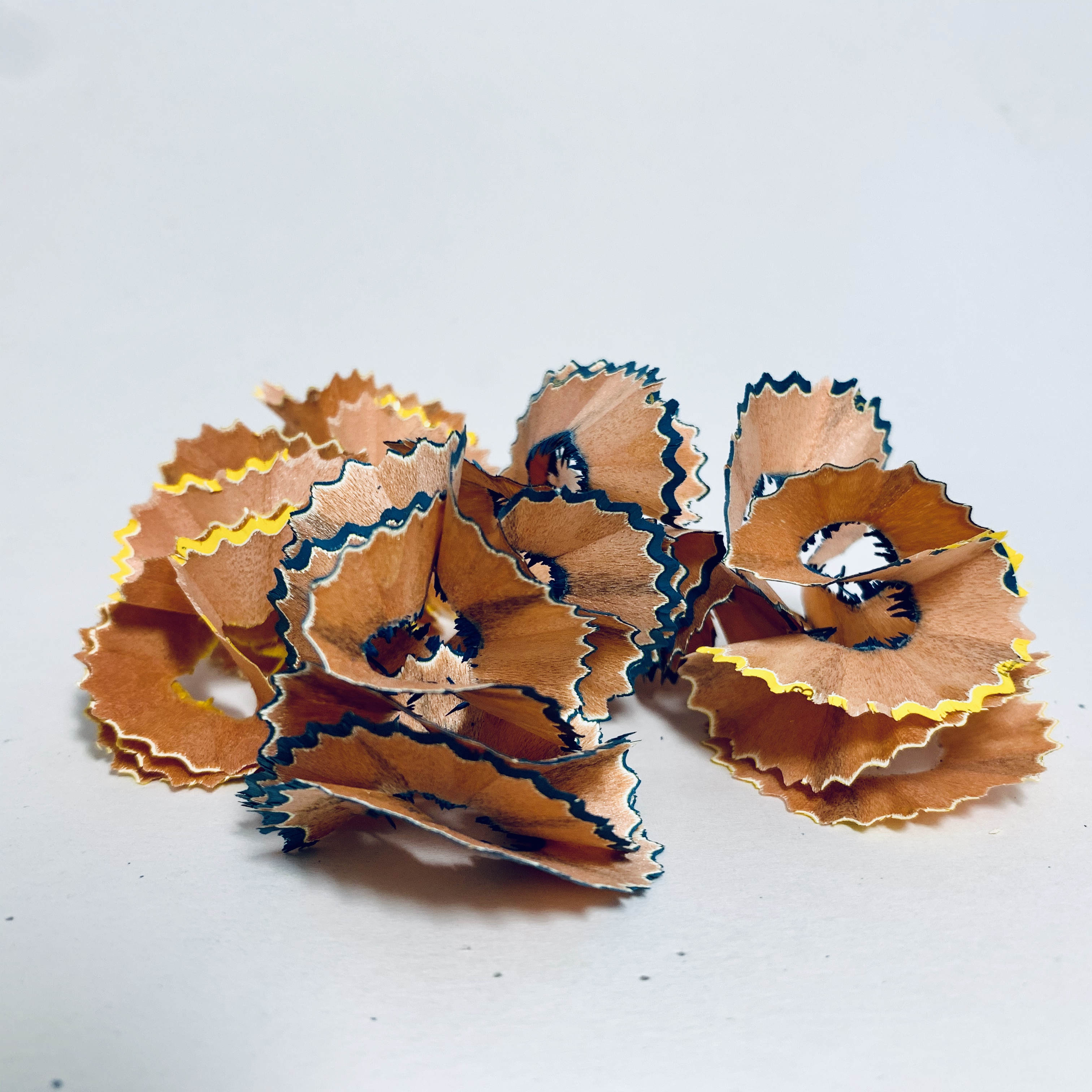
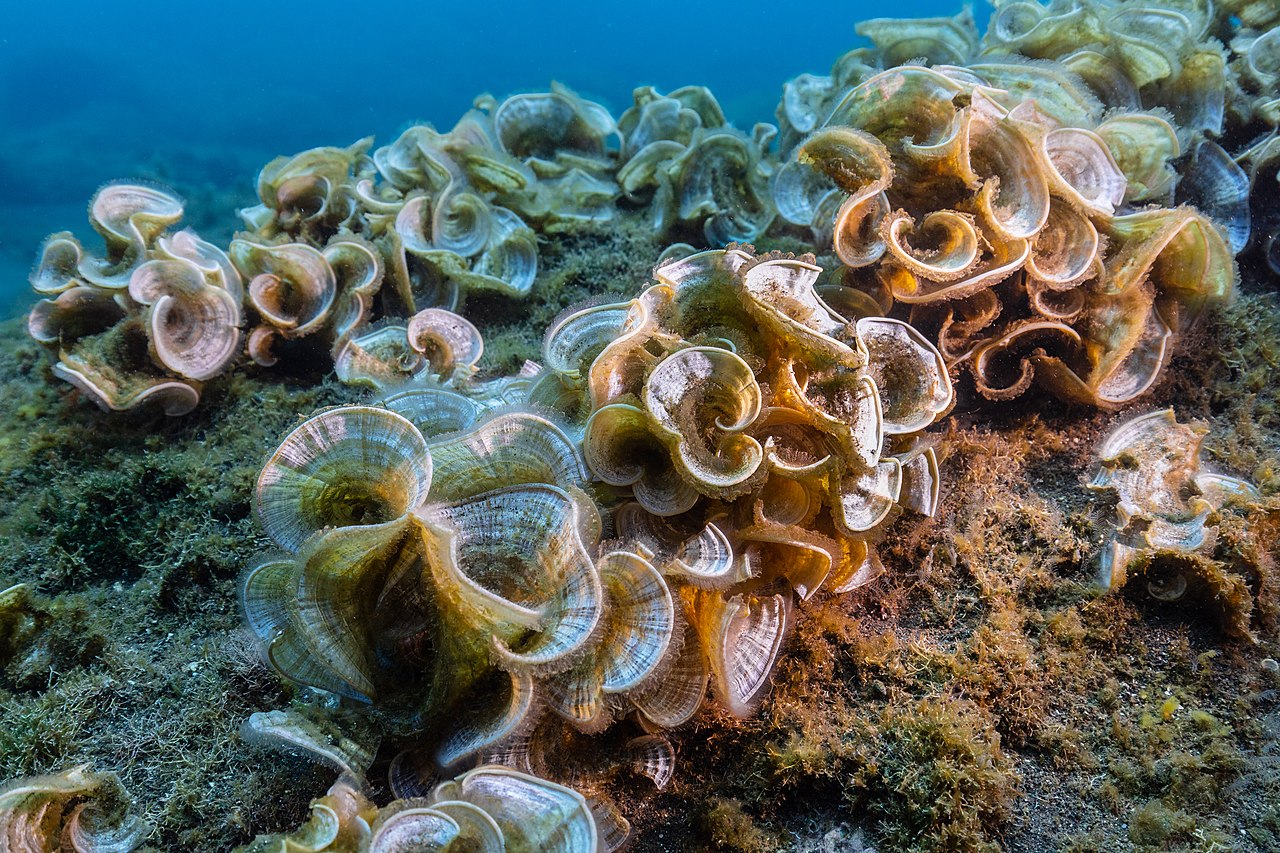
The foliaceous coral just resembled a mass of pencil shavings! This is a delicate material, but i like that I can add colour from the pencil. Maybe I could electroform the edges after spraying with clear lacquer.
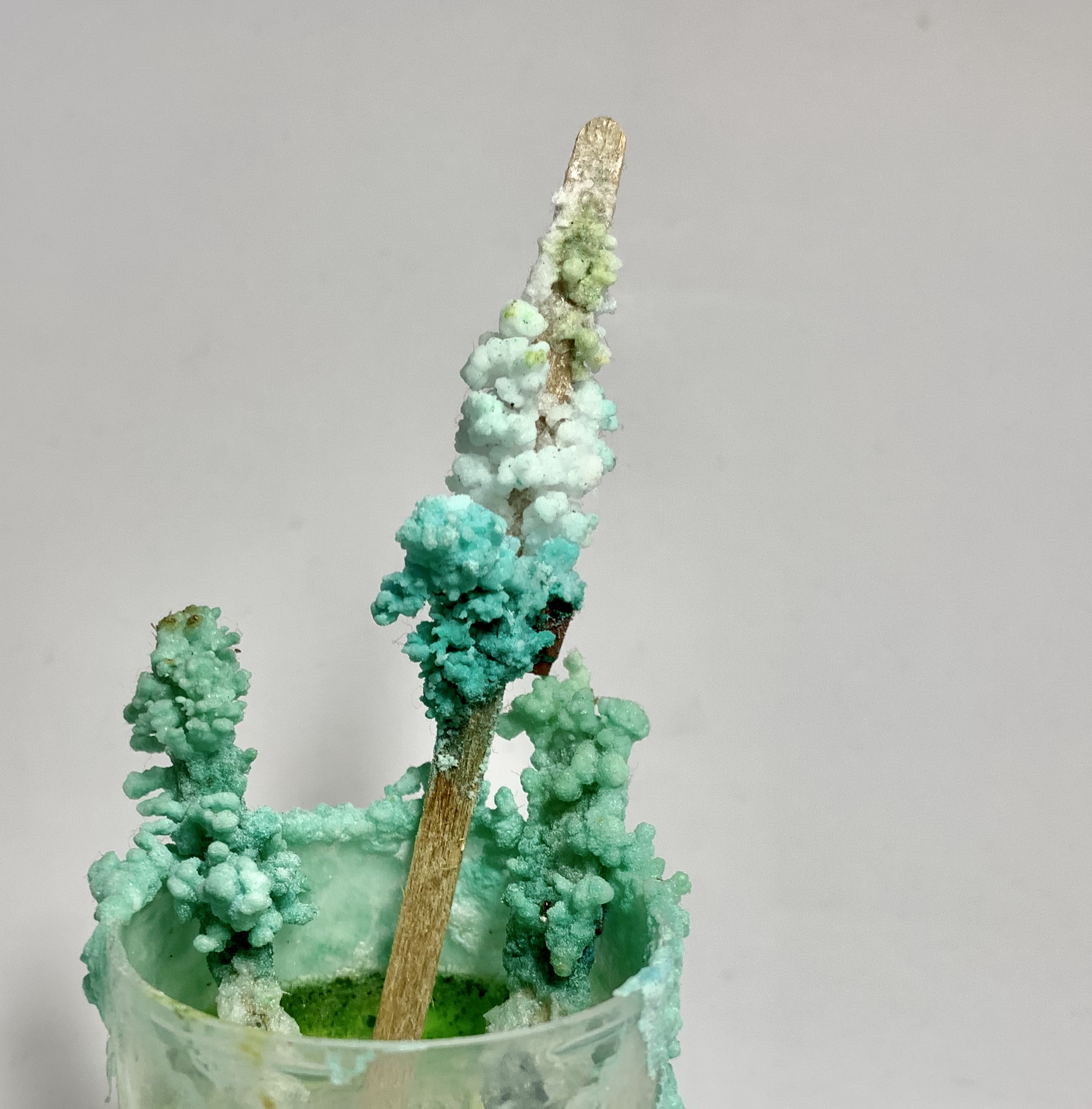
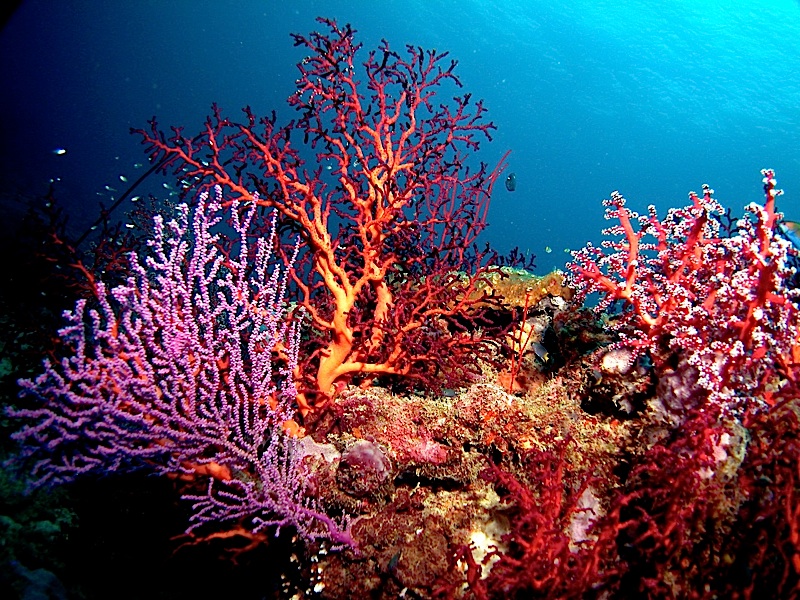
My dendritic salt growth looks so much like dendritic corals. Its almost like I can ‘Grow’ this type of coral. The salt dendrites have hardened since they we sitting out a while, but in contact with water, they would surely dissolve. It could be interesting to explore this dissolution as an ephemeral quality in my growth-decay narrative.
_____________
11th Jan 2021
Fractal Growth
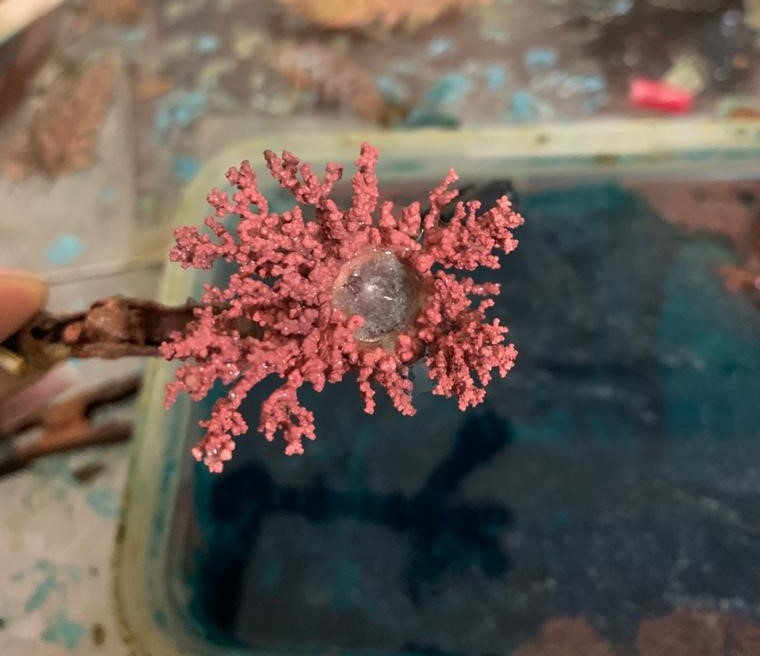
Quite crazy how the hollow cup seems to bubble up with the electrolyte and the edges attract dendritic growth.
I reopened my electroforming resources, trying to find an answer to this sudden reoccurrence of dendrites, and started to analyse my previous crystals that showed this growth…
____
I just discovered that the mysterious salt growth from salt+vinegar precipitation along absorptive surfaces was a Fractal dendritic formation, a common growth formation found in plant growth, tree branching, ice crystal formation, even blood vessels and bronchii in the human body.
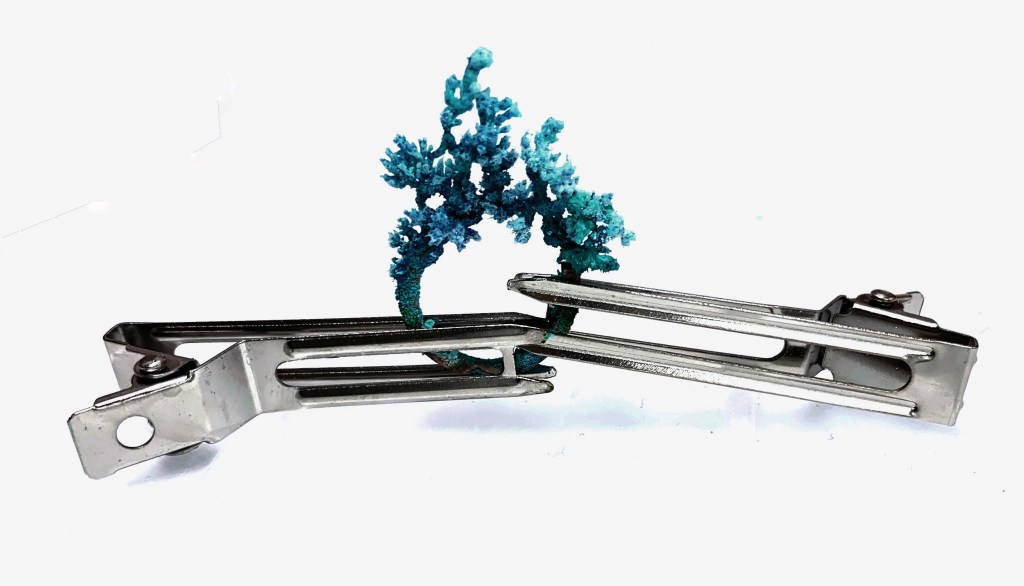
And so was the branching growth on my electroformed copper, when I left it undisturbed in the bath with too much anode and a high potential powerbank supplying the power.
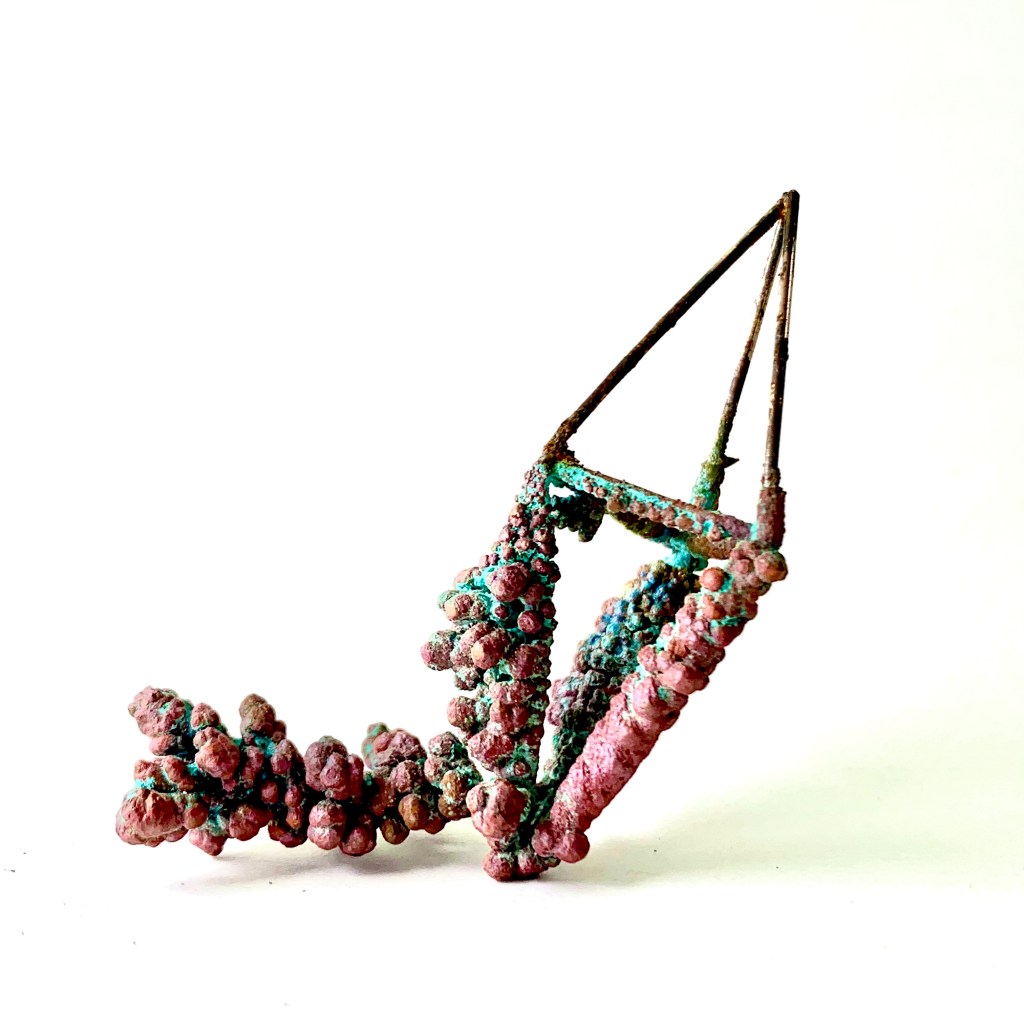
Interestingly, this is how dendritic corals grow underwater as well.
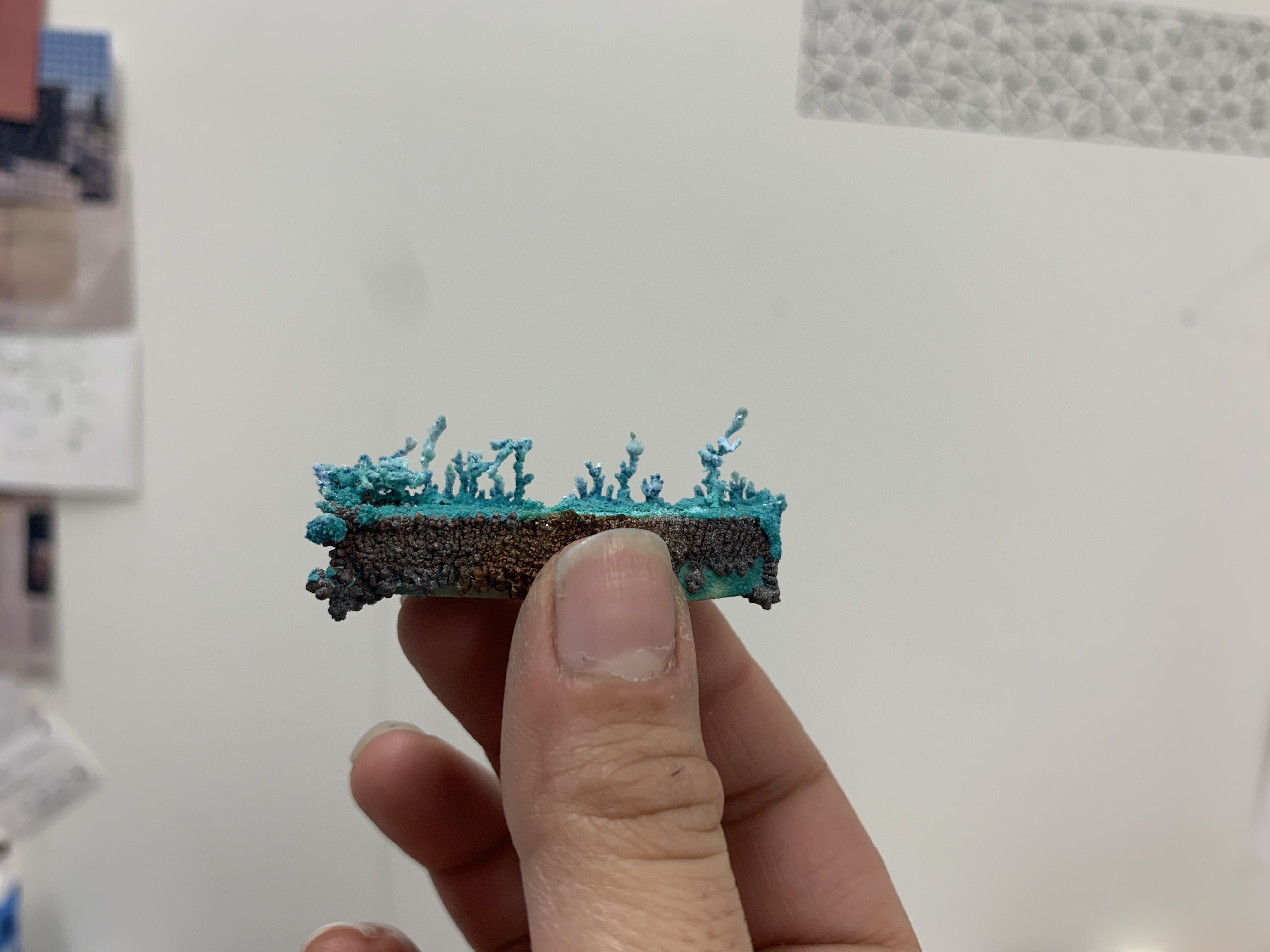
It is a kind of geometry of chaos, explained as Diffusion Limited Aggregation, here. Its interesting how this video explains the actual aggregation in a solution so well, considering it is a tutorial for the digital simulation of fractal formation on Houdini software.
This paper on (PDF) Fractal Structures in Electrodeposition Process (researchgate.net) helped me understand the ‘random walk model’ that explains the branching dendrites. It seems that the electrolyte solution in my current tank is just right for the branching. Moreover, with a lot of anode, I allowed a larger number of ‘random particles’ of copper to attach to my cathode. I noted the amperage and started to rotate the dendrite’s position in the tank for even plating. Moreover, I understand from this study, that branching happens whn the potential is just over the 0.1A/Sq inch convention, but under the point where it burns the cathode. I decided to allow some initial spurts of branching and then longer periods of constant amperage to allow the dendrite to become thicker from even plating on the dendrite surface.
____________________
14th Jan 2021
The documentary, ‘Coral Woman’ made me realize that the climate change and industry led threats to marine life are equally grave closer home, in the Gulf of Mannar region of Tamil Nadu. The documentary features an artist-turned scuba diver- turned marine activist, Uma Mani’s insightful journey as she navigates the waters of Tuticorin and Rameswaram in search of Corals, only to discover the distressing conditions of sea life within.
In the film, Uma explains bleaching of corals as a stress response to warming up of waters, which in turn, threatens its symbiotic relationship with xoozanthallae algae. Appalled by the discovery of this marine biodiversity destruction, Uma engages in creating awareness as well as participates in coral re-propagation in the Gulf.
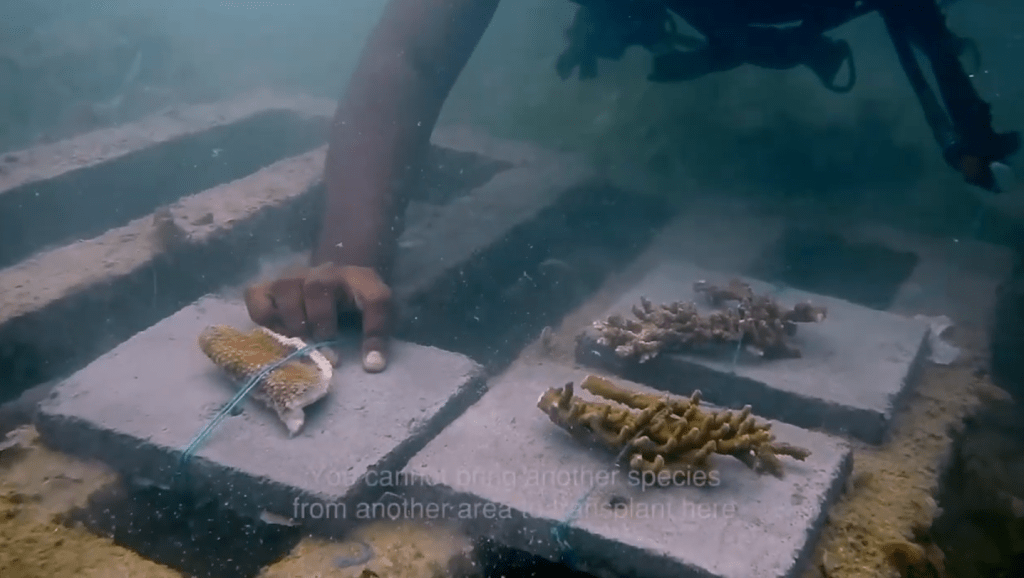
This ‘underwater architecture’ now needs artificial architecture in the form of a substrate and fixing mechanism, for corals to reproduce and rebuild their colonies.
_15th Jan 2021
Revisiting my project statement
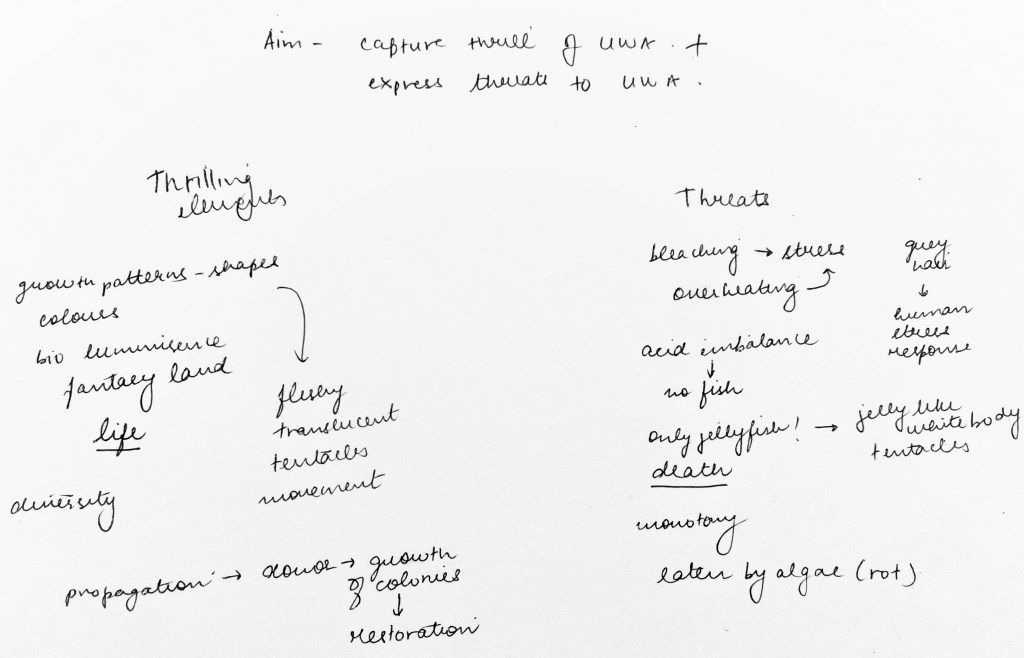
Unlike my earlier explorations of Growth-Decay narratives, the thrill and threat elements are not dichotomous, but complete opposite situations. One – desirable, difficult and beautiful; and the other – suggesting imbalance, disruption and horrifying extrapolations.
___________
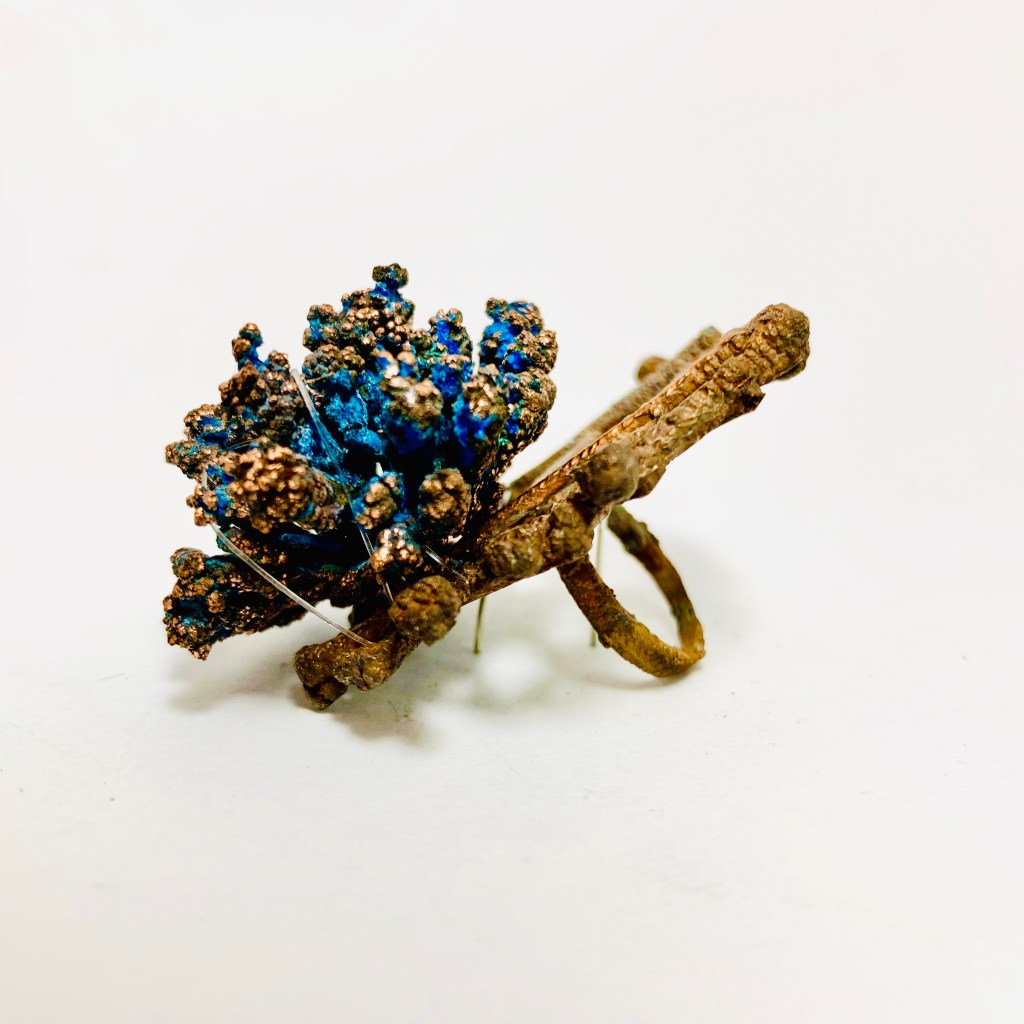
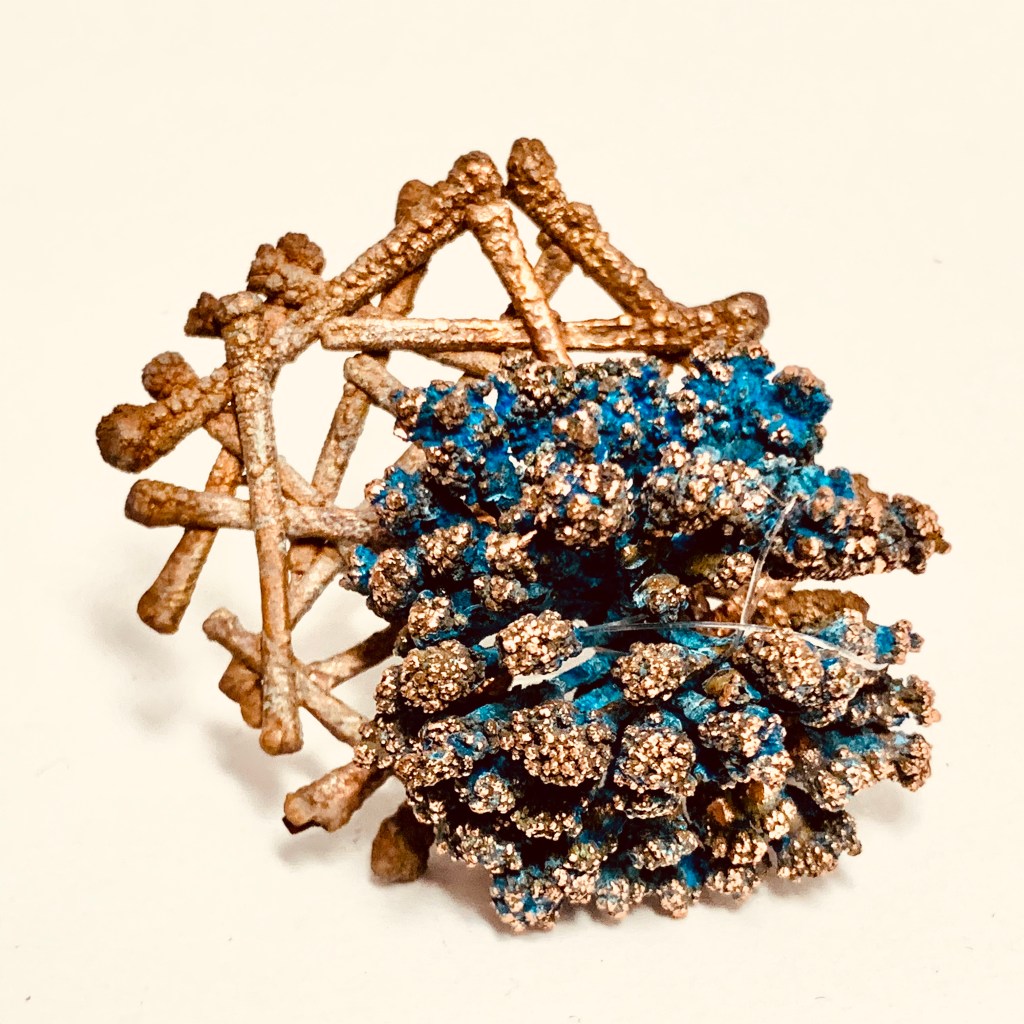
The idea of a structural substrate used to introduce donor corals for the redevelopment of colonies provides a unique aesthetic, that of an artificial means to restore ‘natural’ balance.
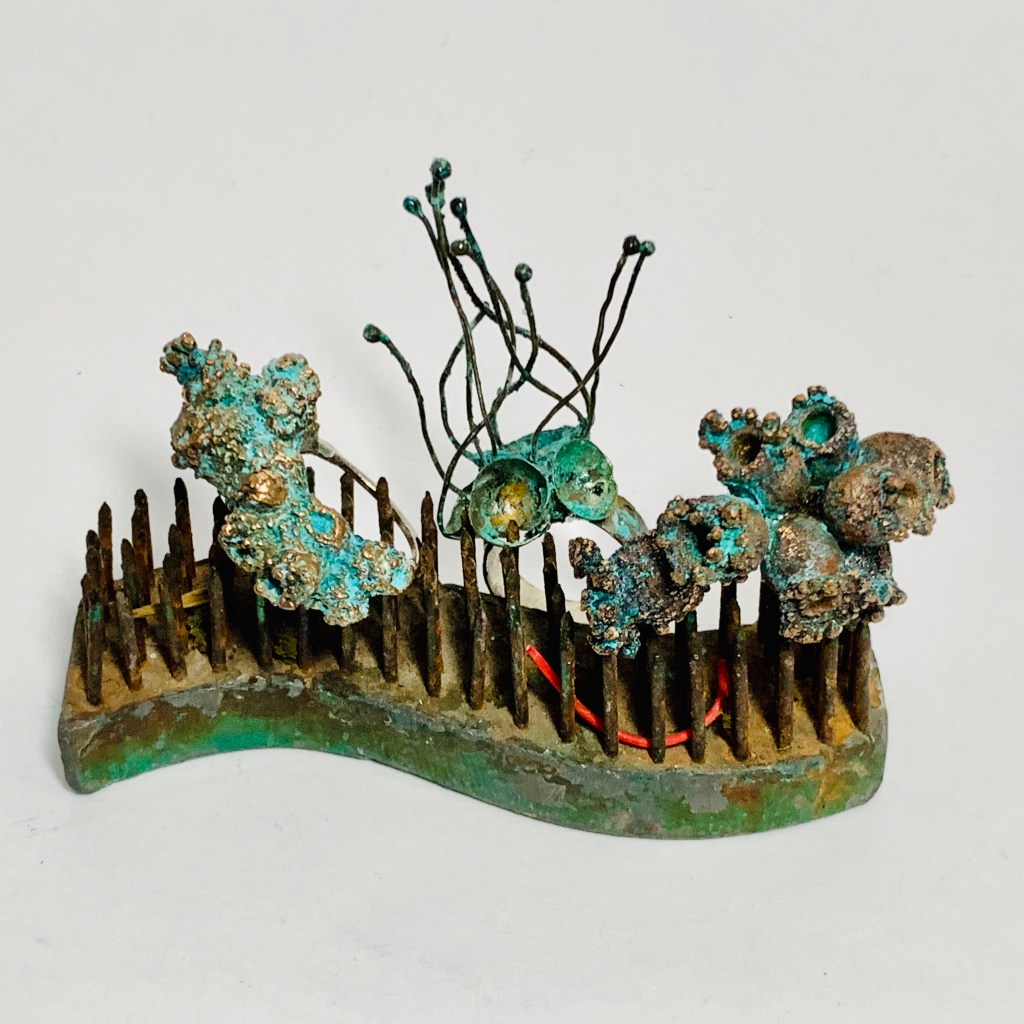

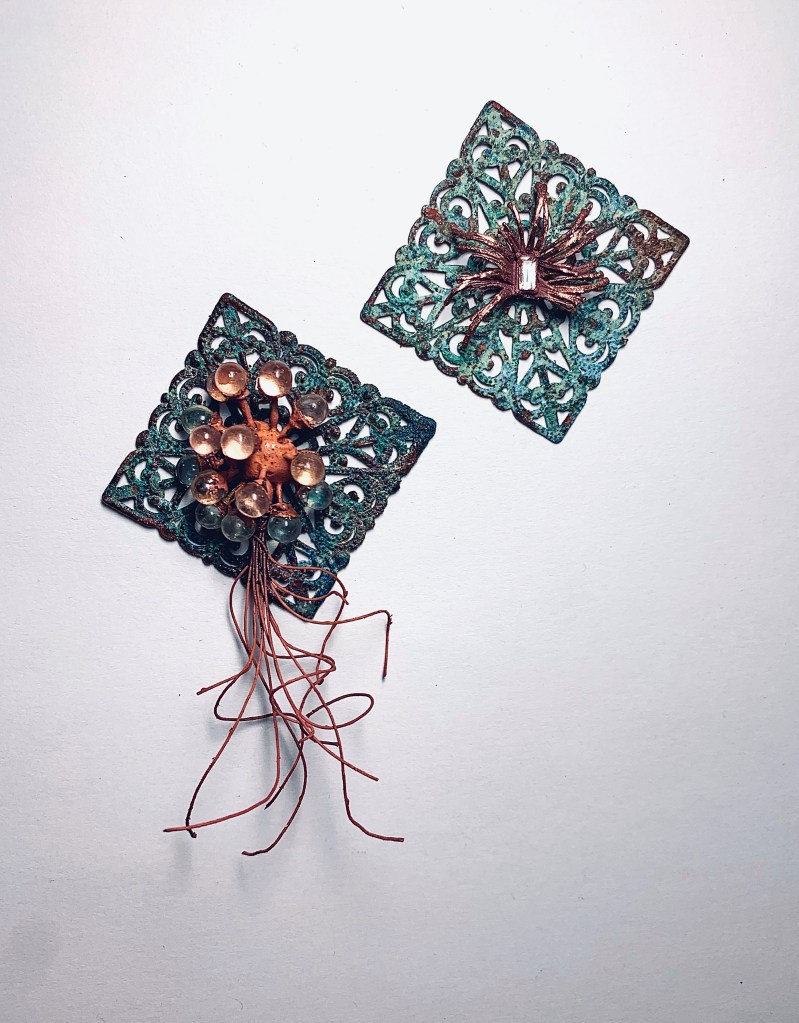
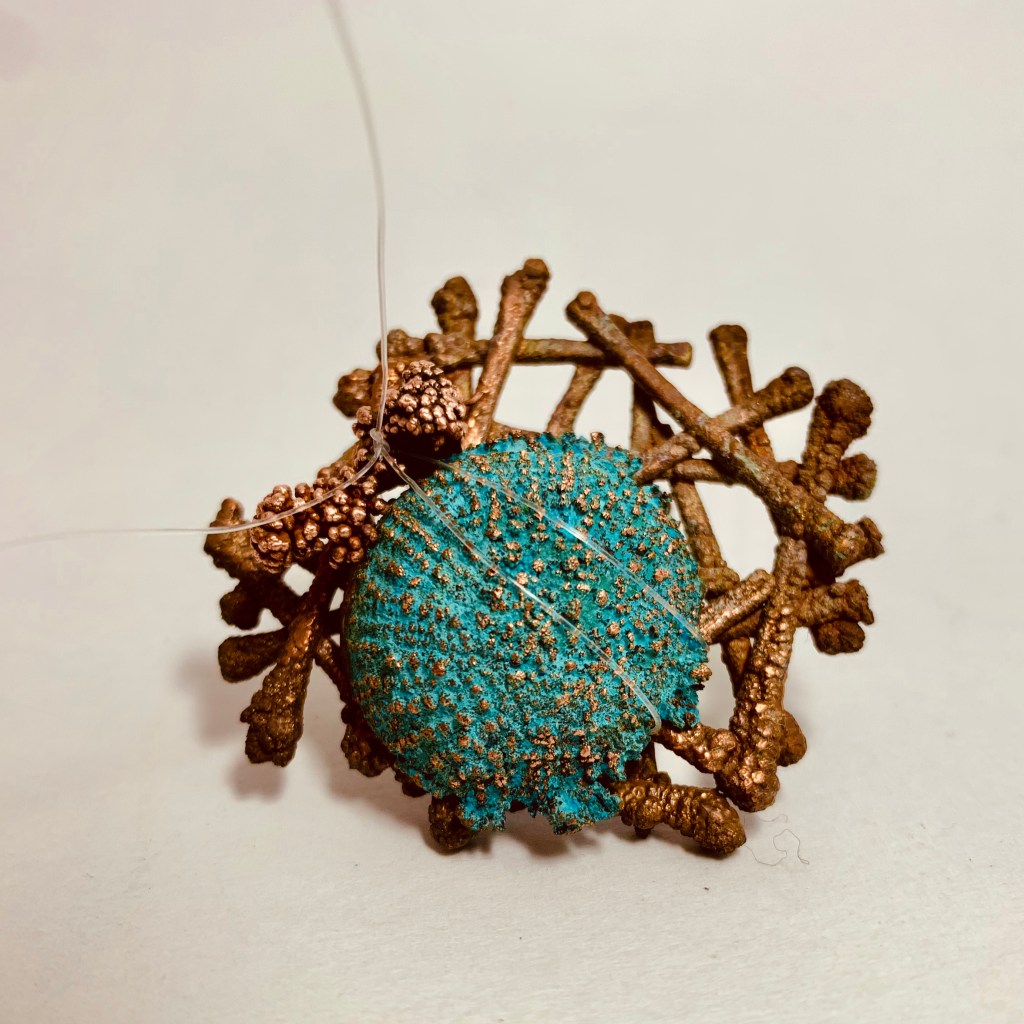
I wanted to create more ‘improved’ donor-substrate pieces, incorporating tentacles and squishy appendages of more resilient sea life, into the donor corals.

_17th Jan 2021
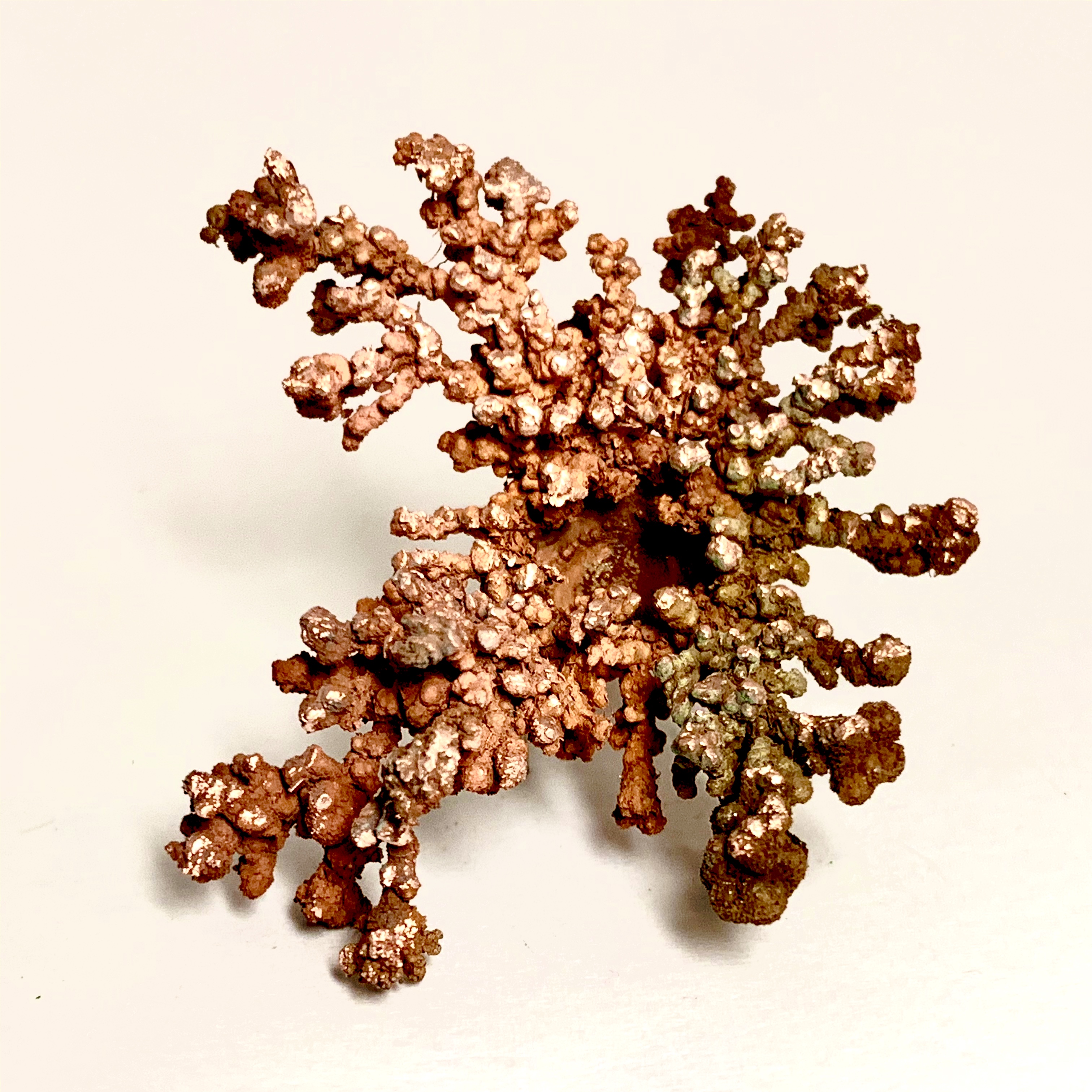
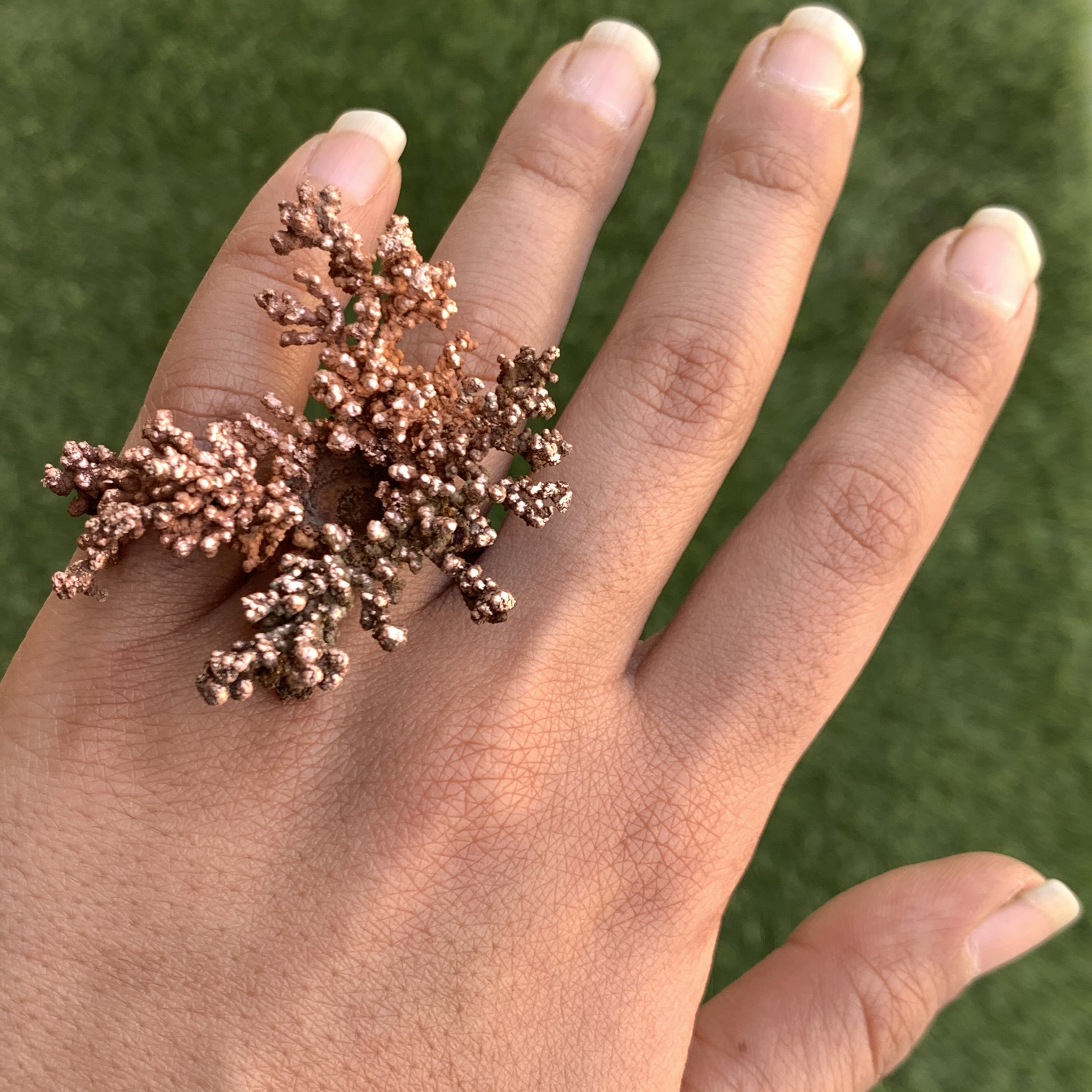
Update: Copper Fractal ring has been growing for 2 weeks straight at a consistent 0.022 Amps with spurts of 0.5A. It easily took some light polishing wheel abrasion, and looks strong enough to be polished/ Rhodium plated.
Patination Experiments
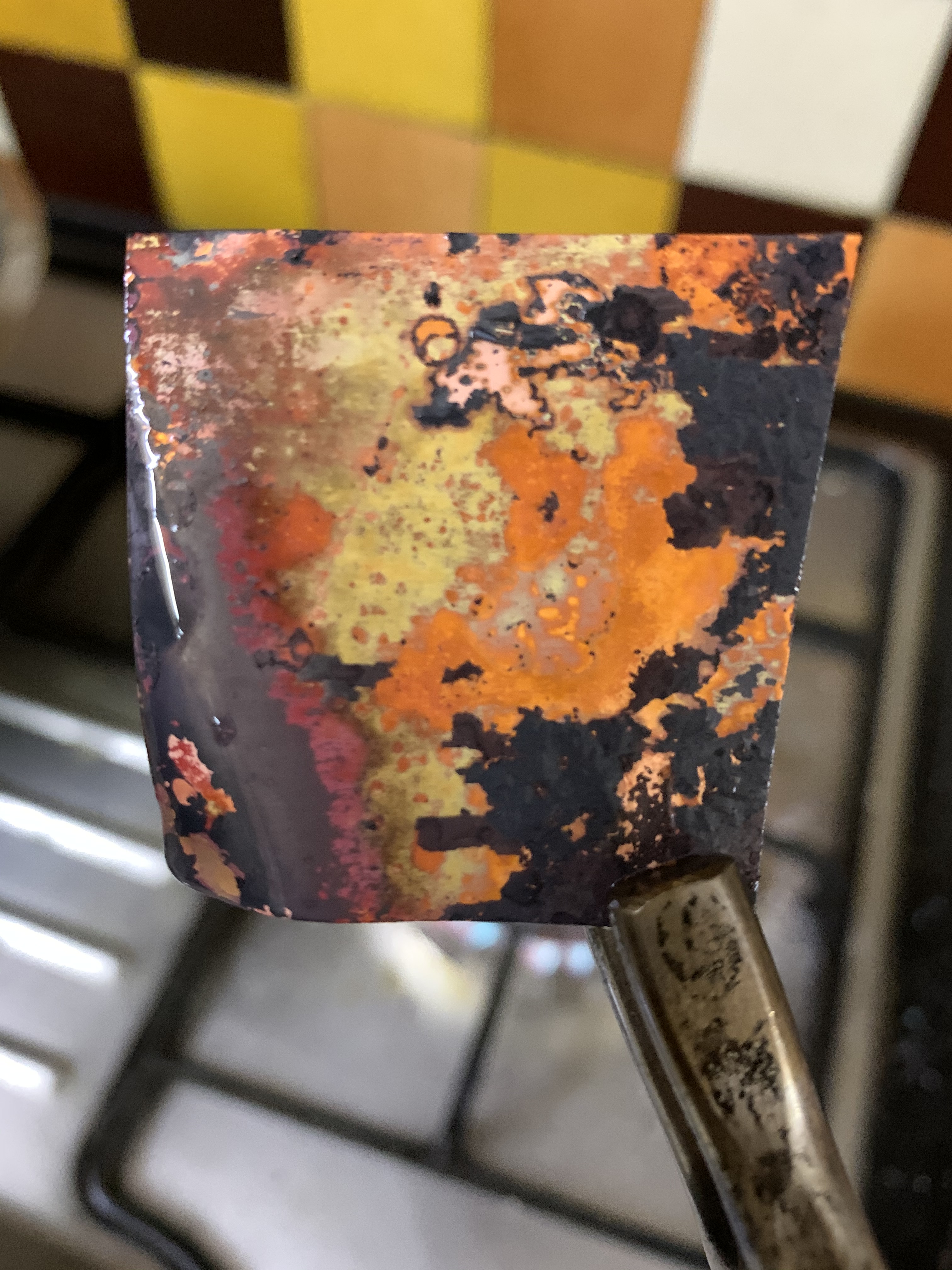
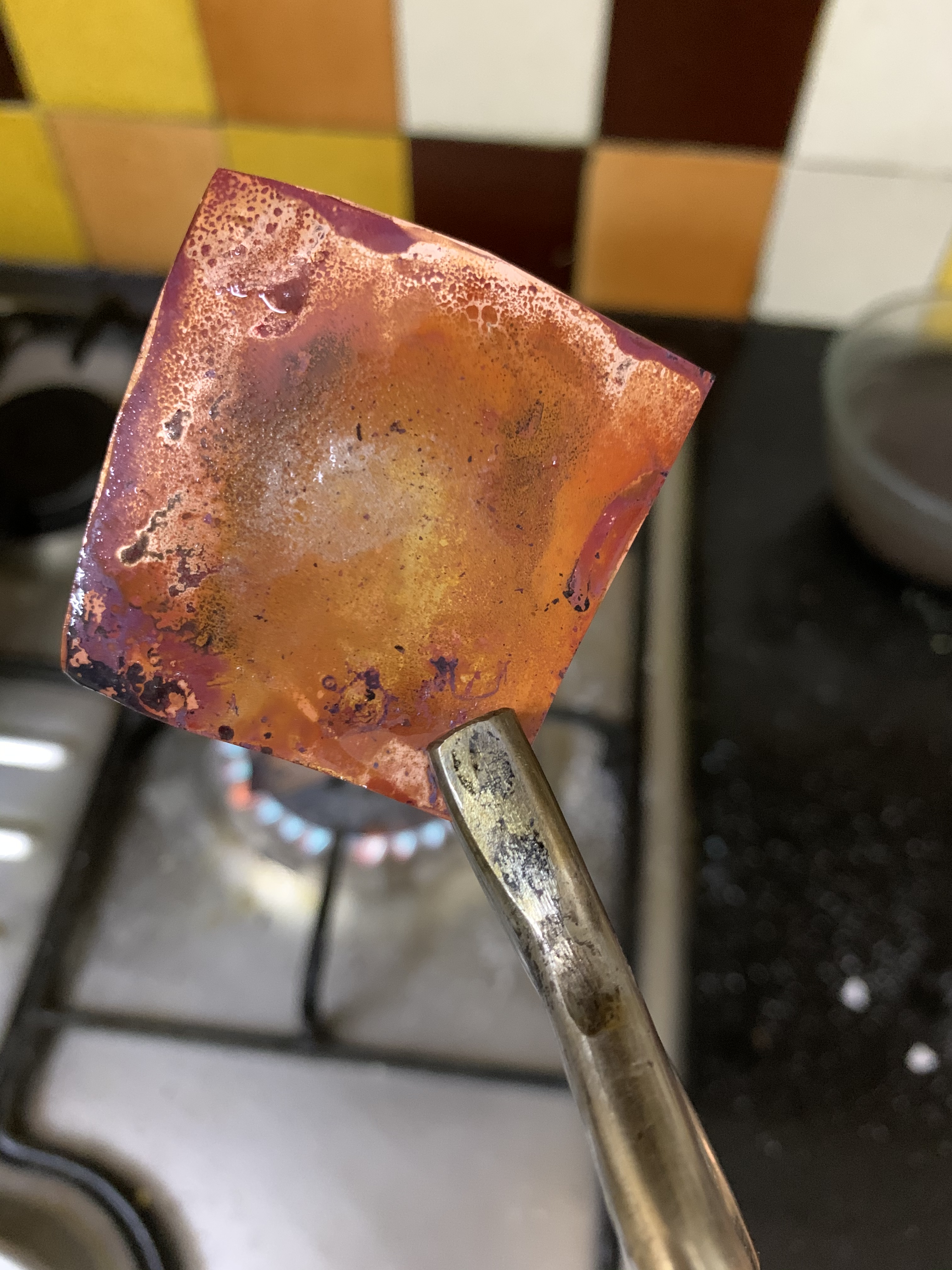
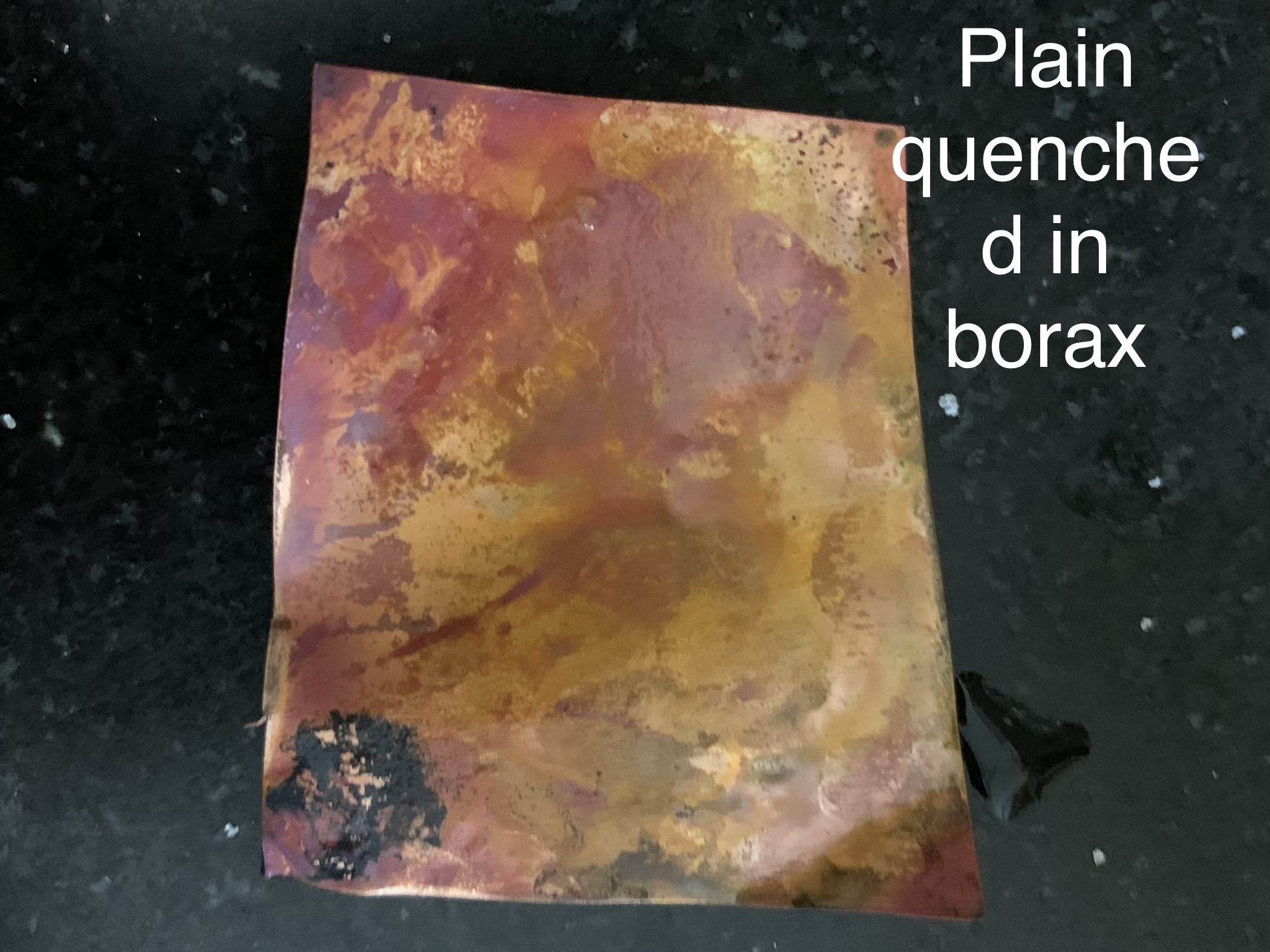
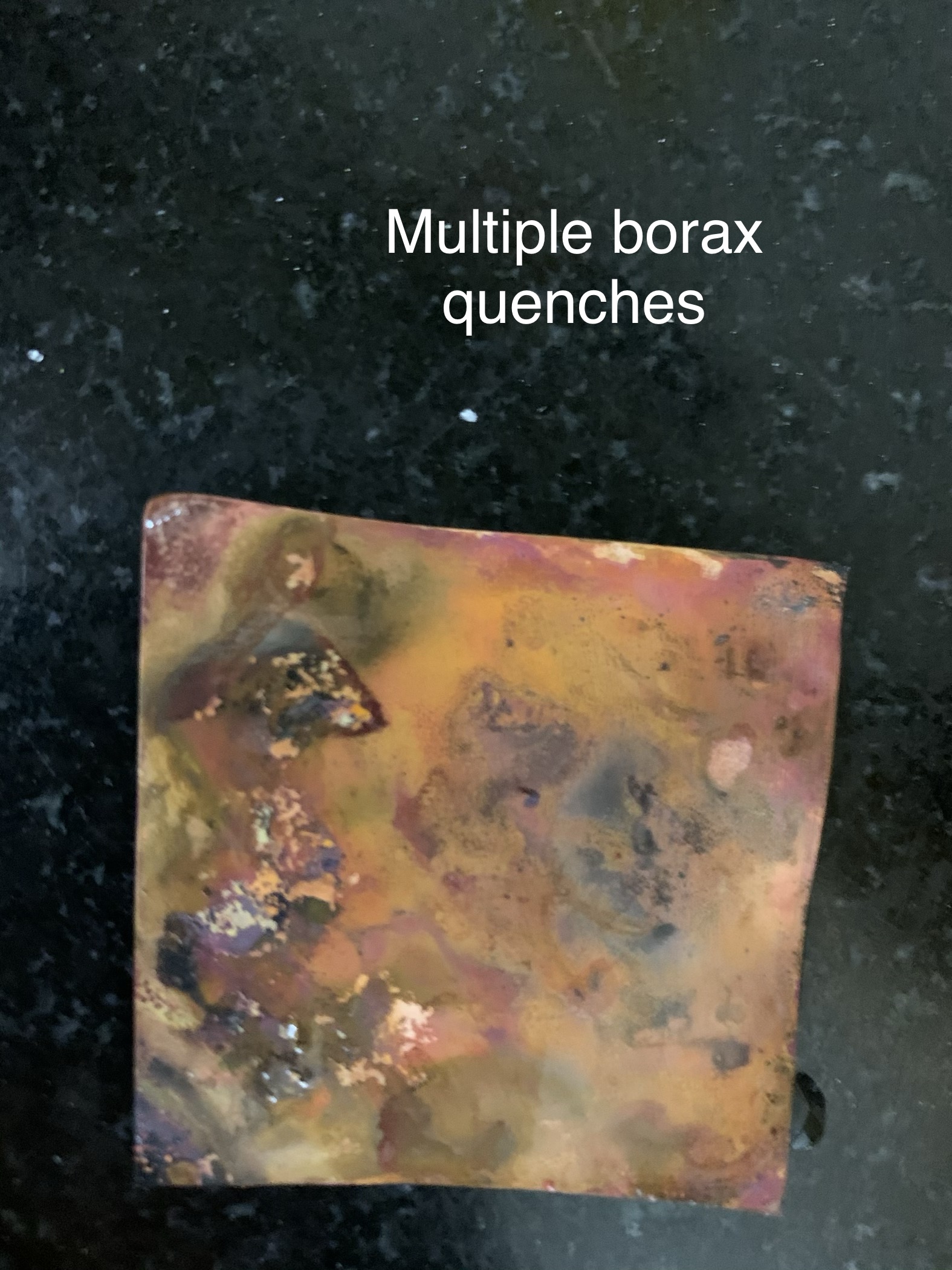
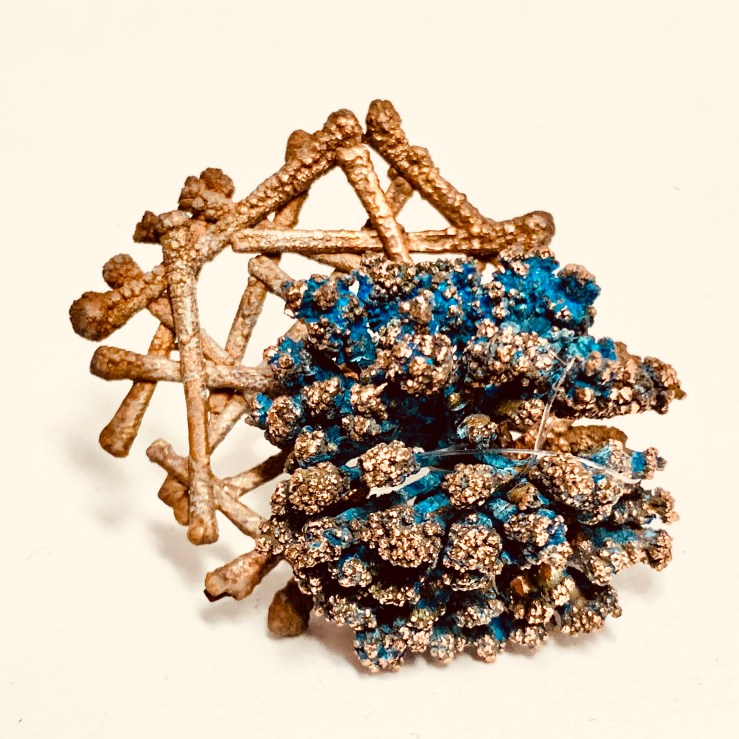
I wanted to explore the other colours copper exhibits in its ‘decay’, using some heat patina recipes. I was aiming for deep red hues, but even though I couldnt get solid reds, I did manage a variety of colours on each piece, with some bright oranges and spots of red colour.
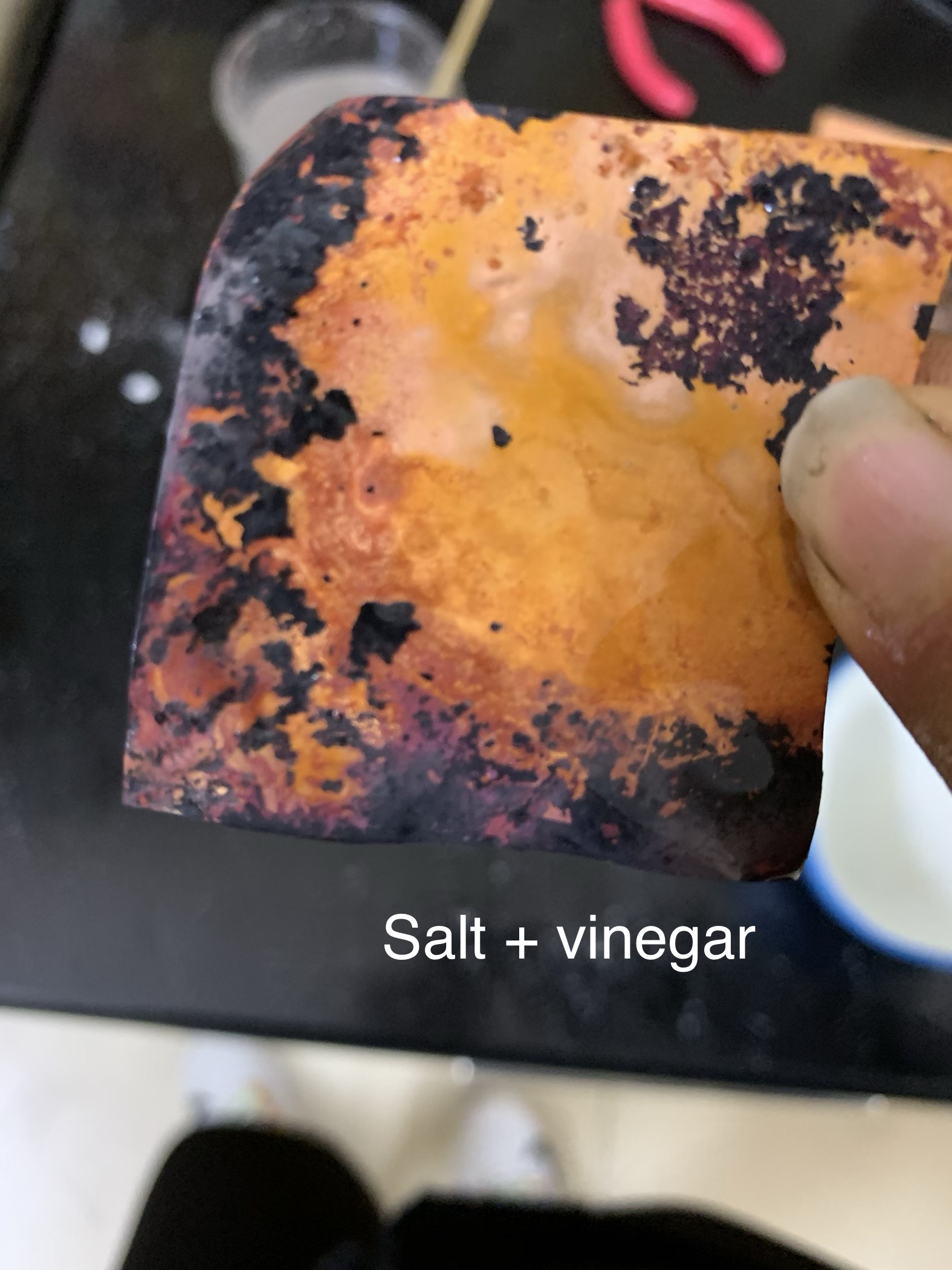
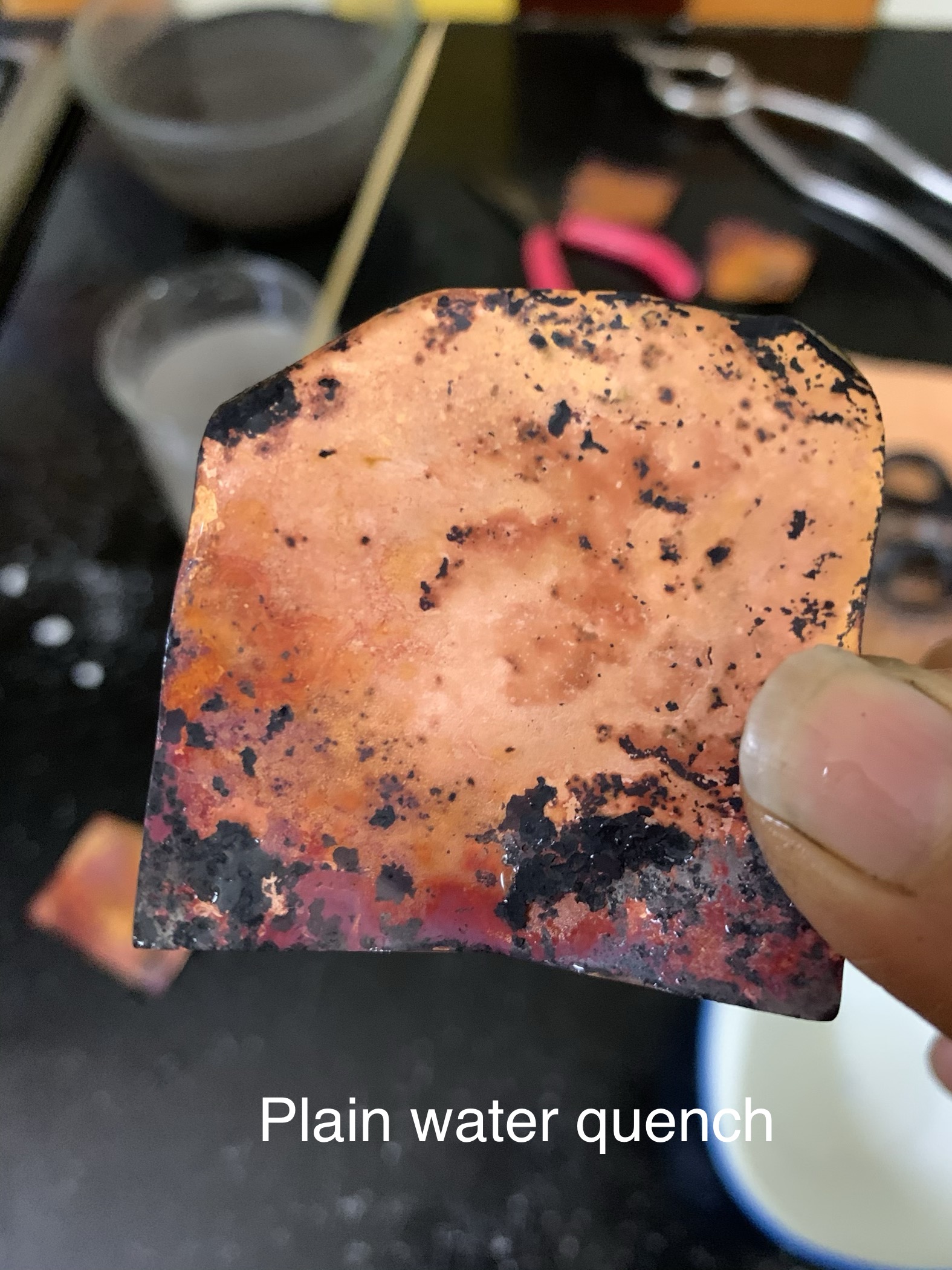
________________________________________
Some brainstorming on speculative narratives:
- Compare humans into jellyfish and attach tentacles as appendages
- When the landmass of earth is polluted and toxic, Is apocalyptic human life meant to be under water?
- As human-parasites on earth, Can we live inside anemones?
- Can anemones live on land?
- Can corals grow on human skin substrate as stick-on parasites?
(In which case, can the parasite be the new substrate?)
- Stickers of parasitic corals packaged in a petridish brooch
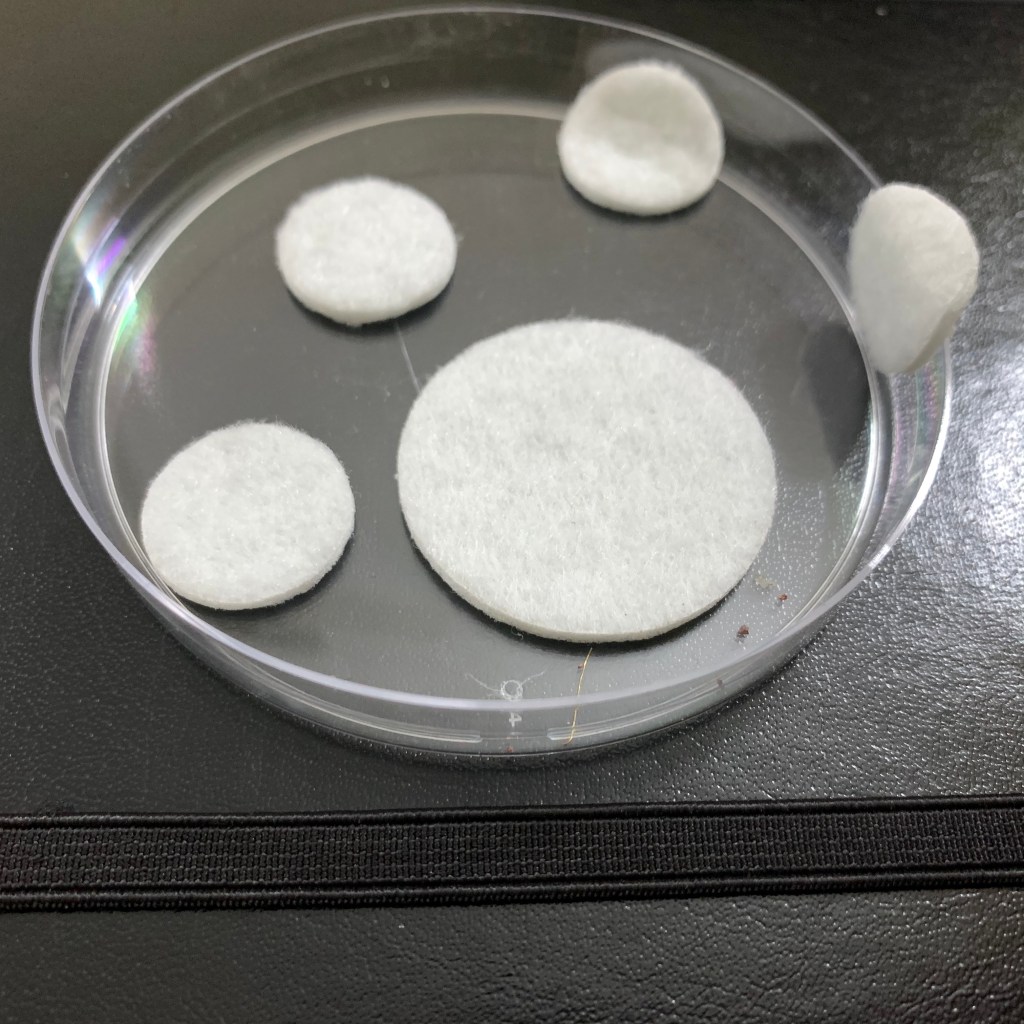
- Post apocalyptic jewellery for Jellyfish – made of human teeth and hair
- Can human homes decorated with grafted corals act as time capsule donors for the post-apocalyptic flood?
25th Jan 2021
I tried to create a sillicon mould of the branching fractal that I could then use to cast clear resin. Colourless resin could represent a ‘bleaching’ of the dendritic coral.
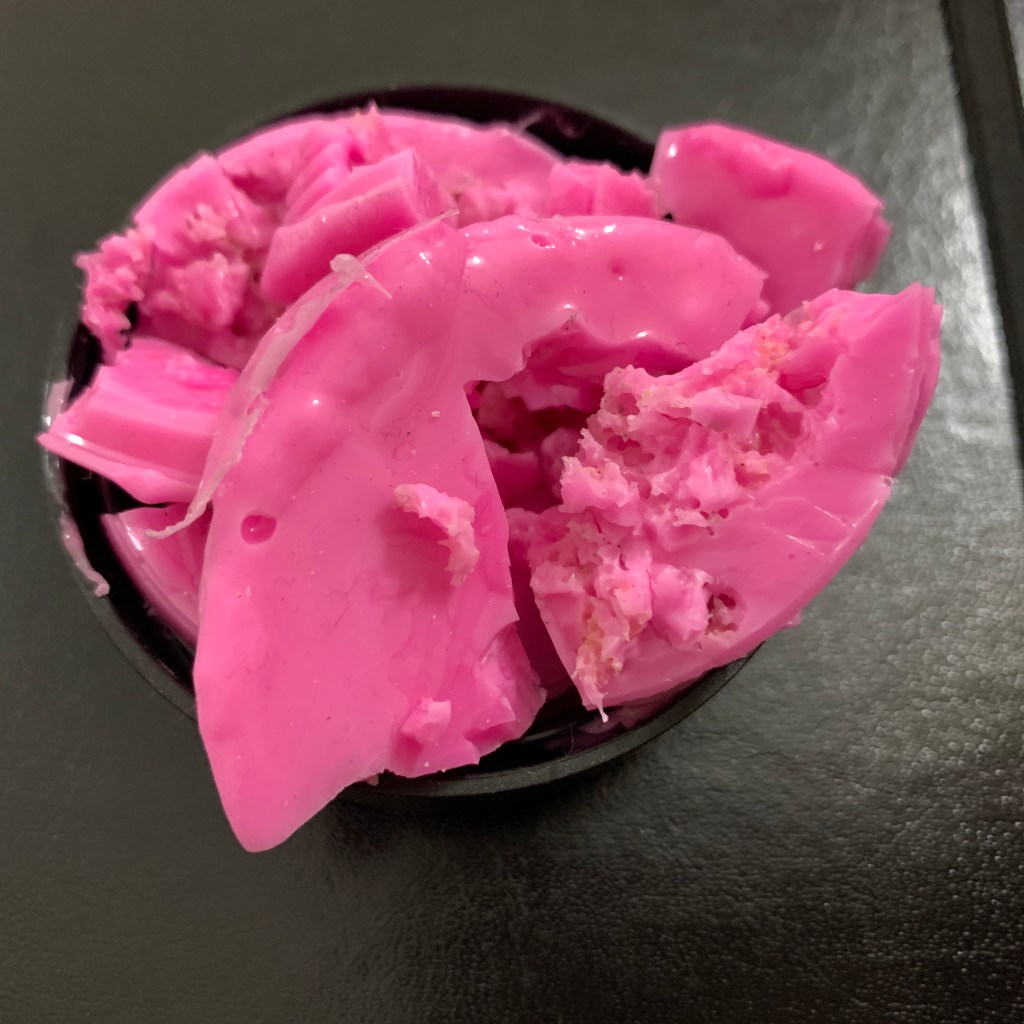
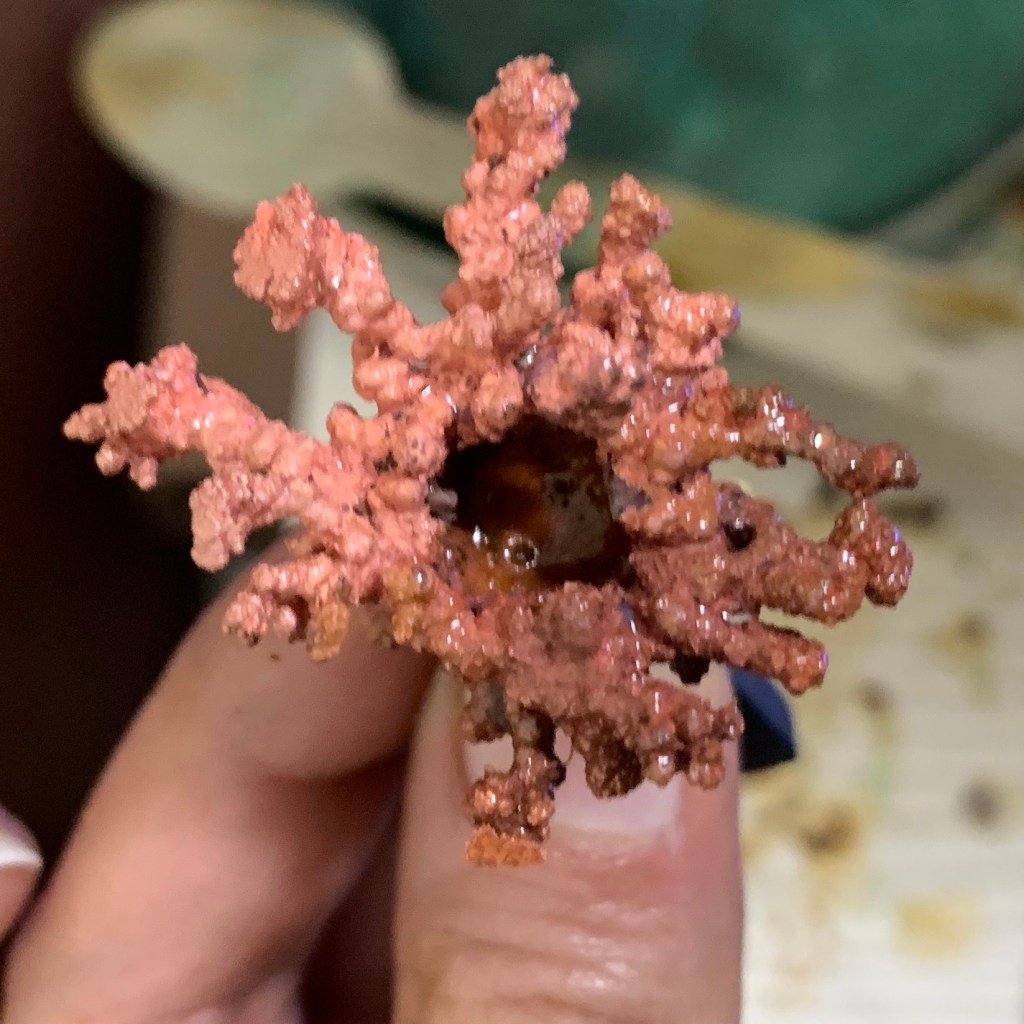
However, the sillicon was too stiff and my dendrites, too far spread out. I ended up breaking my copper dendrite at its delicate points, losing the longer branches… the crystal wasn’t strong enough to be cast in sillicon. I decided to electroform the salvaged portion back at a consistent low potential to strengthen it before ‘growing’ longer nodes in the dendrite bath.
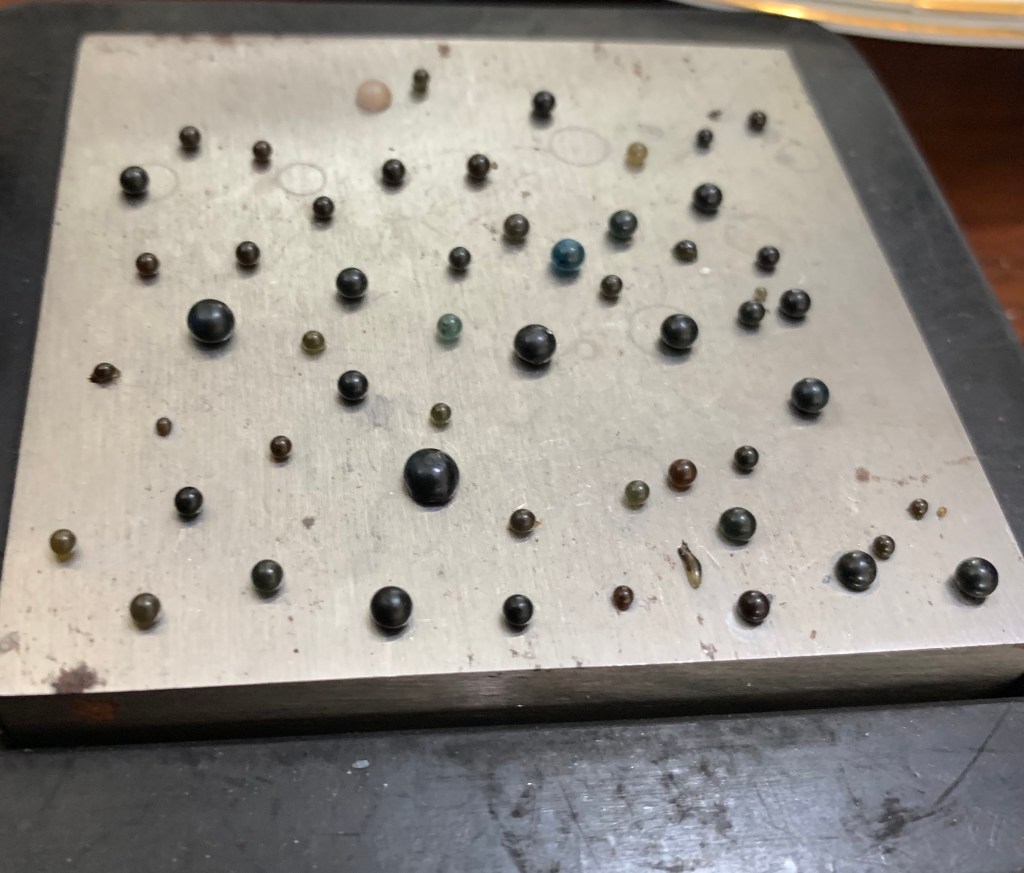
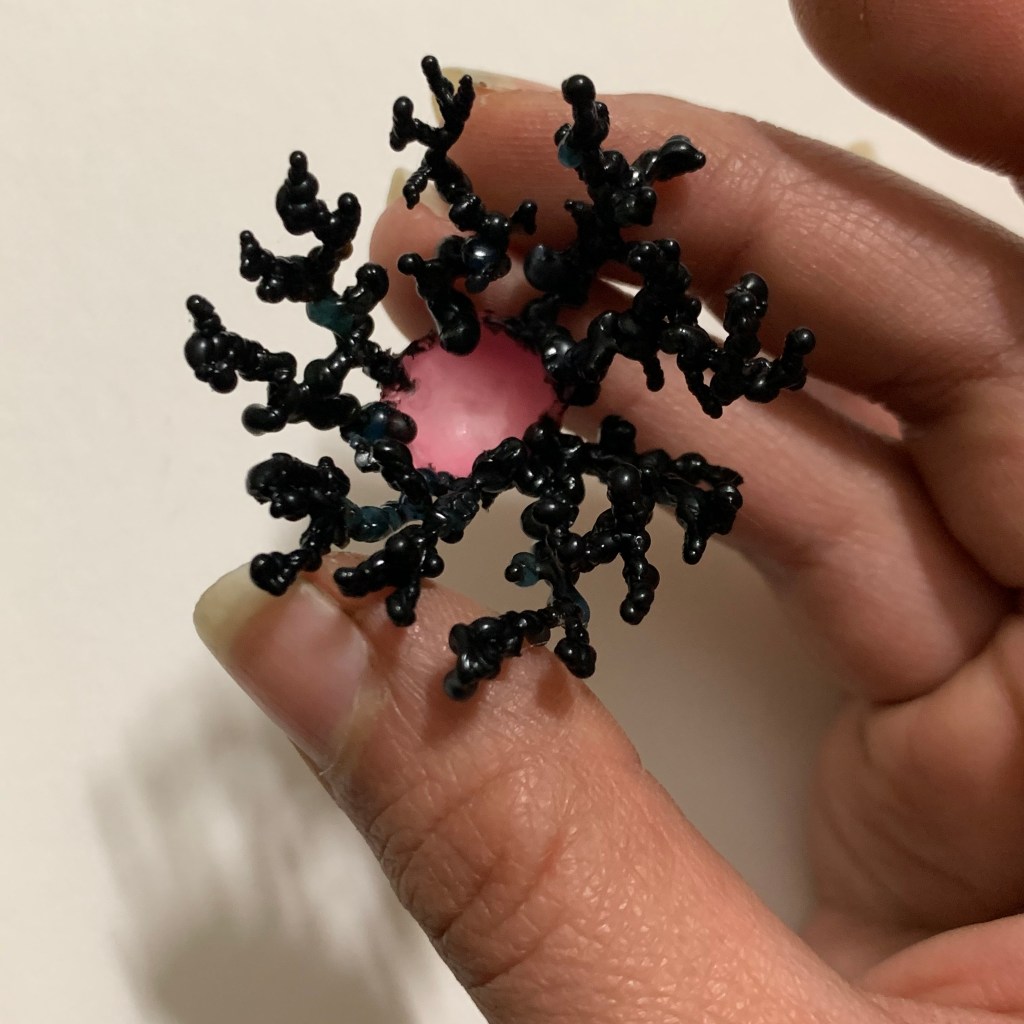
Meanwhile, I learnt to make wax granules from this video. The surface tension of wax was used to drop them into spherical balls on a cold steel block.
Further, from my understanding of the Random Walk model of fractals in digital simulation, I tried to assemble and recreate a fractal from the spherical-ish nodes I created in wax. After an initial set of nodes near the central cup, I found it easier to directly ‘drop’ my nodes as wet wax onto the dendrite itself. The fractal is building up slowly… Makes me compare this slow and contemplative ‘growth’ process of building – granule by granule, with the lightning speed of destruction.
I would like to cast this wax fractal in silver, and subject it to copper electroforming and patination to introduce colour.
28th Jan 2021
Visual metaphors
My reading on the application of visual metaphors here pointed me toward identifying possible subtexts that I would like to highlight in my narrative.
Possible Subexts
- Slow speed of growth vs lightning speed of destruction
- Global Temp rise > Coral colour decline
- Regeneration/ care is in the hands of humans (literally?)
Emotional connotations
- Shock
- Realization / awareness
- Hope
I am beginning to identify elements of my research, highlighting the current conditions of marine life, as well as initiatives to restore underwater balance, that could be visually represented metaphorically…
1. Bleached Corals
Growths and ‘flesh’ devoid of colour, vulnerable, delicate, at the brink of rot
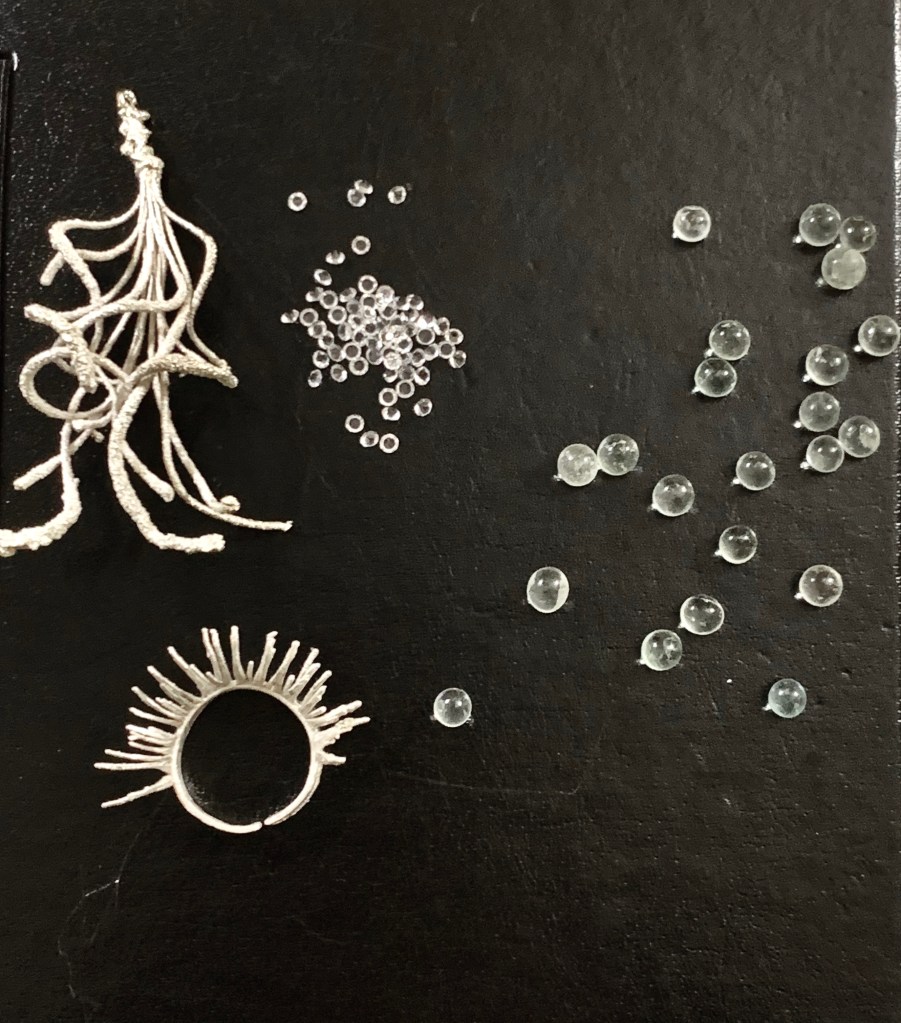
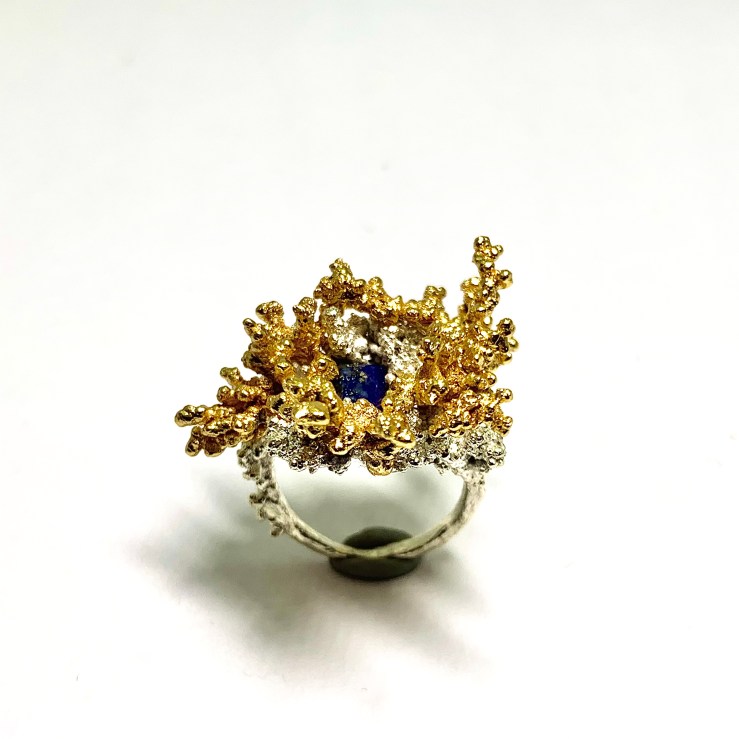
2. New growth on Substrate
Colourful, resillient growth emerging from bleached growths and intervention structures
Colour could be introduced through patinas (blue-green, red) or plating gold.
Experential exhibition
I’ve been exploring ways to bring my audience closer to the cause of marine life through my jewellery and its presentation. I remembered the immersive Olafur Eliasson exhibition, ‘In Real Life’, where visitors can actually ‘experience’ natural phenomenon through artwork and ambience. I’d like to explore such an experiential approach towards curating my underwater architecture pieces.
- Simulate an underwater exhibit
- Lighting and projection could be used to depict the ‘bleaching’ as a live and urgent phenomenon.
- Magnification of jewellery pieces
- Bioluminescence as a background aspect – lighting up the pathways, ambient lighting
- An activity to inspire coral planting/donor corals on substrates

 design factory