
13 February 2020
During our editorial introduction workshop, the our group discussed possible overarching themes that we could look at, as a common thread for our publication. Initial options were regarding highlighting the process over outcome, incorporation of organic themes and sustainable approaches. Since these were not applicable to all, we wanted to broaden the common theme to make it open to interpretation.
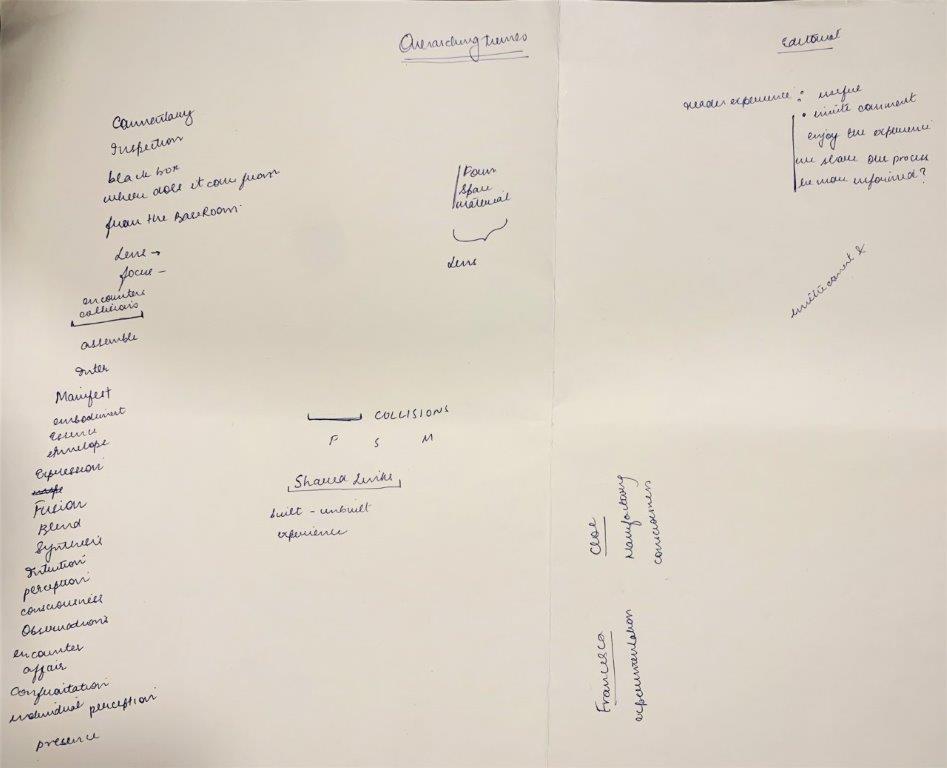
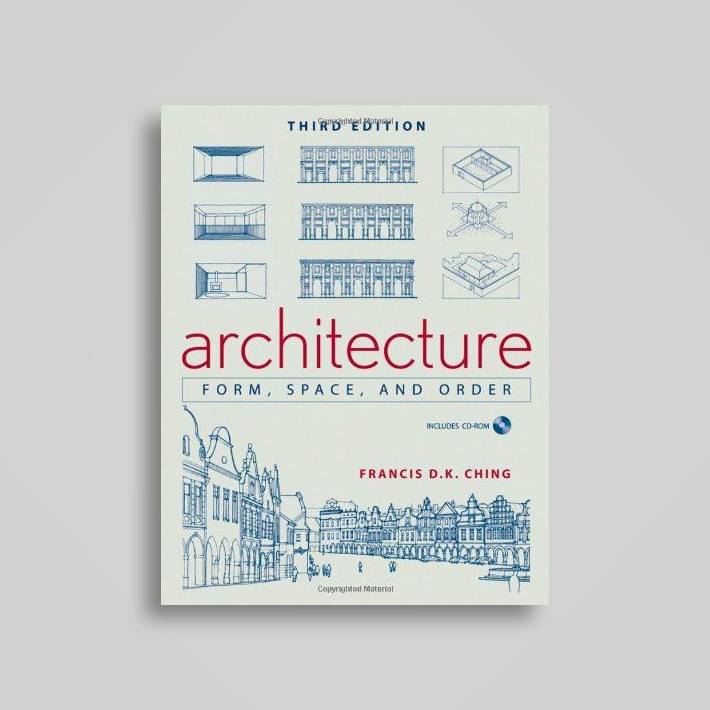
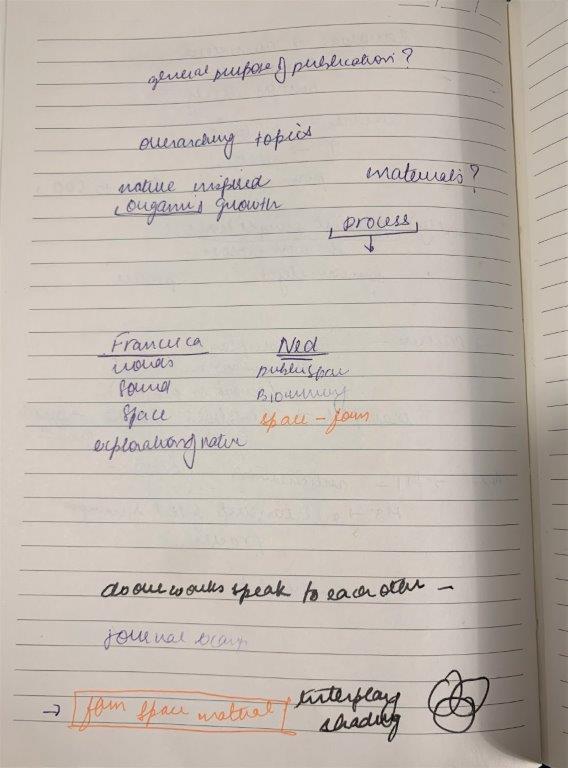
We discussed Form, Space and Material as 3 elements common to all 5 practitioners in some way. I remembered a book from Architecture school, ‘Form, Space, and Order’, by Francis D K Ching, that was my staple as a cohesive resource on spatial planning. I liked how space, form and order were inter-related, subdivided, and sectioned, the the reading yielded different sources of inspiration in terms of architectural design each time. We wanted to club the themes of Form, Space and Material, under one umbrella (maybe not pretend to be as cohesive in our coverage of the elements as the book), but allow different permutations and combinations of narratives to be explored using these three aspects of practice as a lens to look at 5 different approaches to Product and Interior Design. Moreover, we were all inclined to create an academic or informative publication, describing our new and inventive ways of working, rather than an outcome based publication aimed at selling final work. This would allow us to bring out our unique processes and show the audience something different.
Aleya liked our idea of using 3 elements as lens to view individual and unique work, and suggested we could do a venn diagram to depict overlapping of concepts.
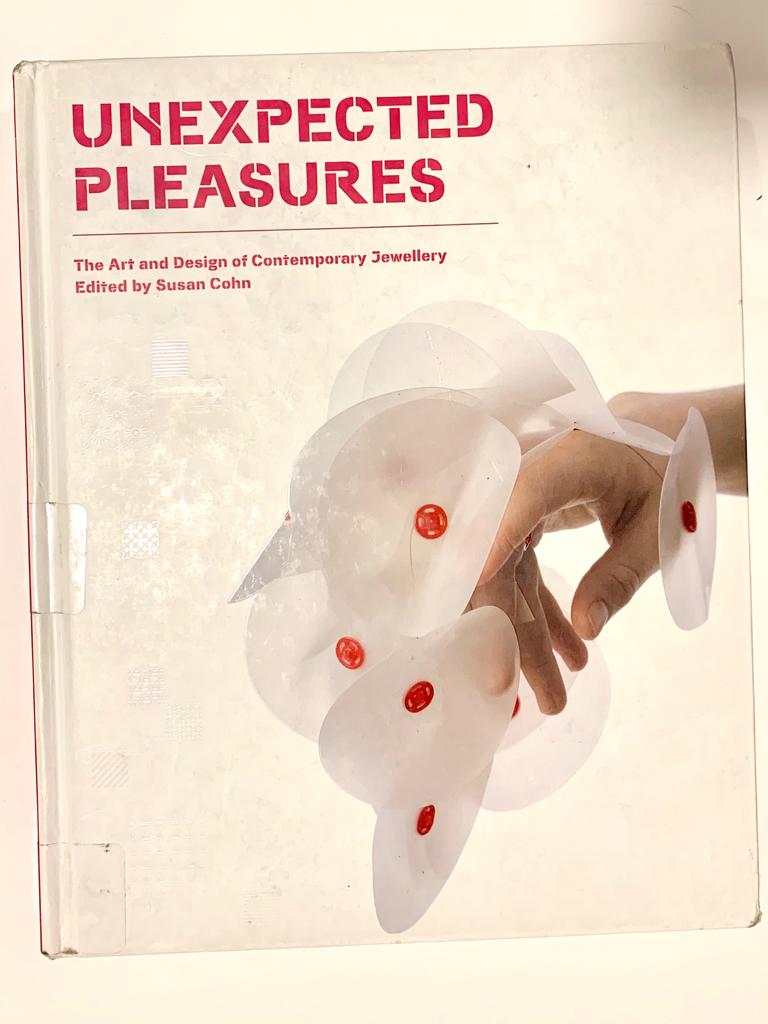
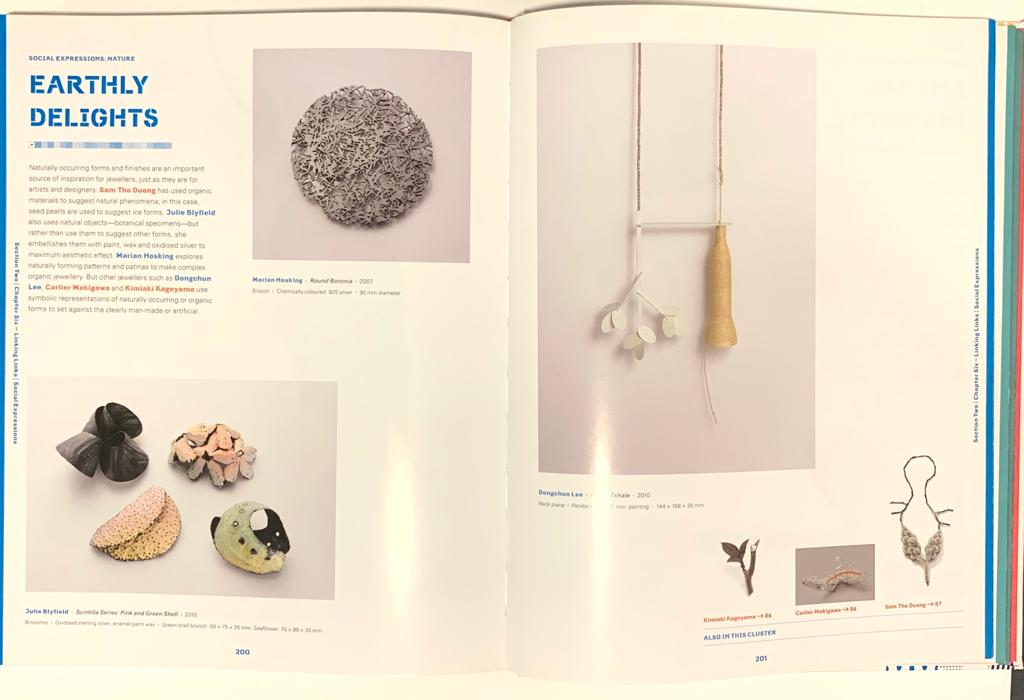
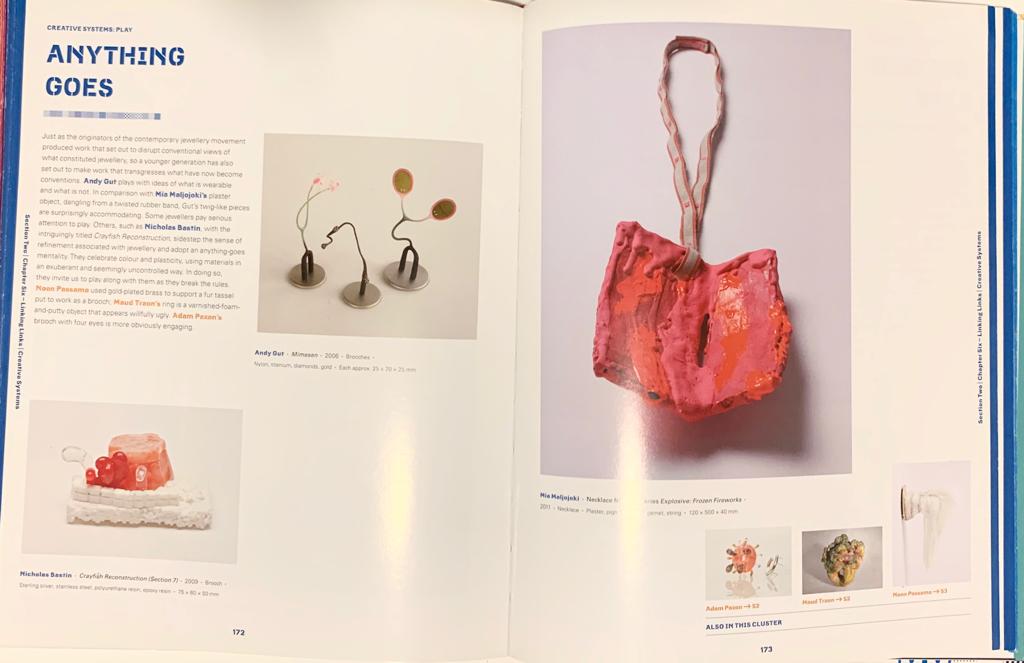
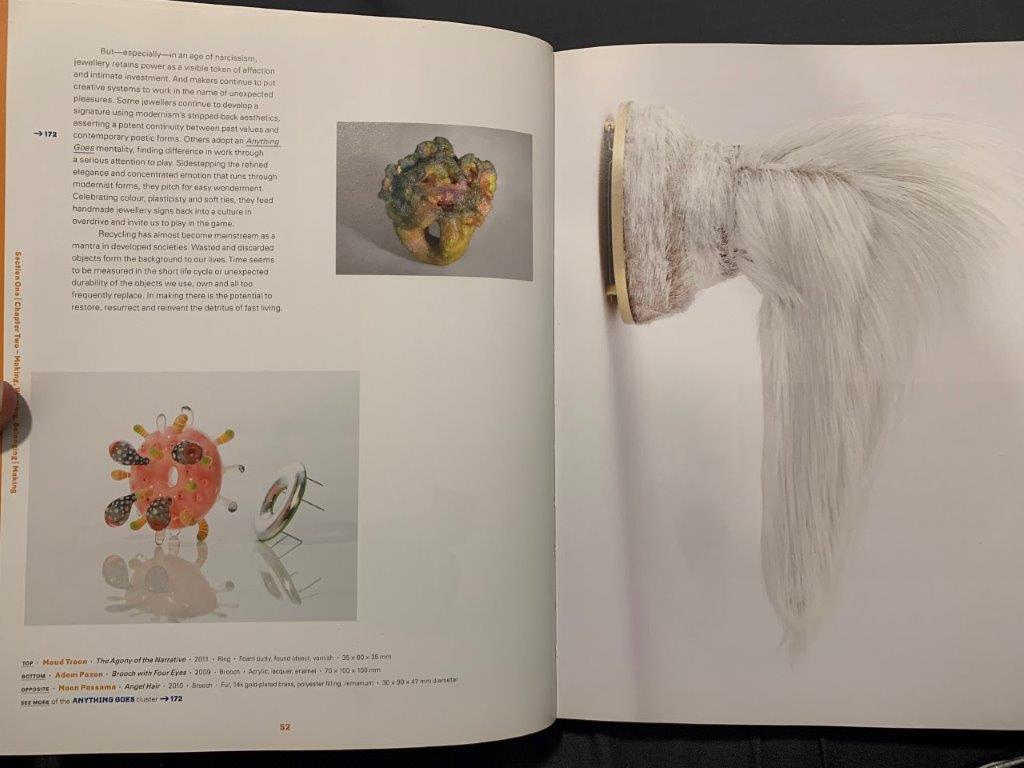
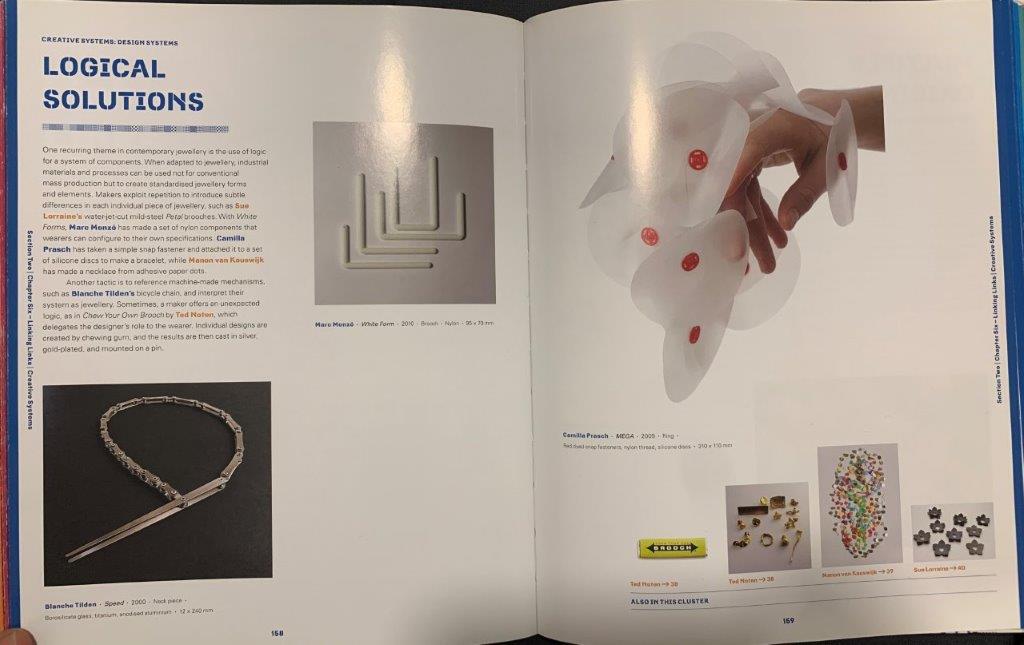
I went back to look at ‘Unexpected Pleasures’ where the author has ‘clustered’ the jewellery design works of a number of different artists under common umbrella themes and subthemes, with overlapping of concepts of the body, photography, nature etc. I liked the use of side text to mention the name of the cluster, and reference page numbers on the footer, leading to other examples in the same cluster. Maybe we could use coloured and varied sized font to depict overlapping and precedence of elements within out main umbrella theme, instead of venn diagrams (which might look a bit diagrammatic for an academic publication).
Editorial Meeting
During our Editorial tutorial with Aleya, we brainstormed the central overarching umbrella term to name our publication. Since the publication celebrated our individual perspectives on elements of Form, Space and Material, we decided to call it Perspectives: Form.Space.Material.
We also quickly wrote our first draft/notes of our editorial with Aleya:
PERSPECTIVE
form, space, materials
- Who we are
- What brought together (RCA, themes, both)
- Purpose of the publication
- Who we are trying to reach to
- Why we are presenting this particular aspect of our work
Strong in terms of thematic perspective
What brought us together: FORM SPACE MATERIAL (rather than we are part of the RCA)
Group perspective of how we see form, space, material
Introduction
OUR UNDERSTANDING OF FORM, SPACE, AND MATERIAL
In design the symphony of form and its materiality should complement the space objects are situated within. Using this symbiotic relationship these three concepts can demonstrate innovative processes and methodologies in design. In this contemporary world design is not singular, not separated into categories. Instead pioneering projects interweave and play amongst multiple disciplines.
Prioritise
Knock on effects
Sequence solution
Type solution
Three key words at crucial moments in the publication – not parking things into three camps
- New innovative concepts
- Introducing audience to innovative way of thinking
- Integration of disciplines through similar concepts
- Inspiring new practice from readers
What do we want our magazine to achieve? Who are we trying to reach? What are we trying to convey? Talk about it abstractly rather than spelling it out… We want our readers to…
EACH A SENTENCE OR TWO ON WHAT WE ARE SHOWCASES
Cloe
Francesca – form, space (how the form changes between 2d and 3d to go from rigid lines to create this organic space, this is also dependent on the flexible material that is used as formwork)
Ned – form, space, materials (landscape design, soundproof mat)
Summer – materials (bioplastic experiments/investigation of materiality), form (prioritising materials when it comes to applications, how the introduction of a form gives it a function)
Surabhi – space (organic growth against human structure, growth decay, artificial real), material (what drives the narrative)
There is an intuitive attraction towards natural form
We decided to keep developing our individual biographical sentences. Developing the conceptual text further, we managed to convey the idea in our final editorial proposal highlighting the relevance of the three concepts in our diverse design practices, as well as putting our own interpretations on these elements for further analysis.
Proposed Editorial Text
Perspectives:
Form.Space.Material
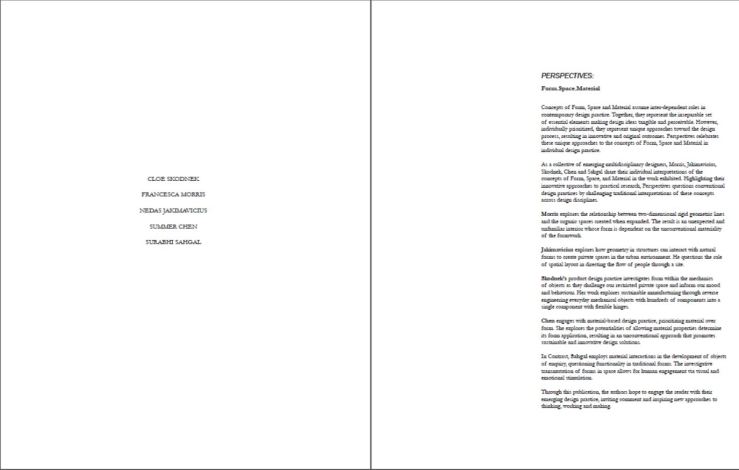
Concepts of Form, Space and Material assume inter-dependent roles in contemporary design practice. Together, they represent the inseparable set of essential elements making design ideas tangible and perceivable. However, individually prioritized, they represent unique approaches toward the design process, resulting in innovative and original outcomes. Perspectives celebrates these unique approaches to the concepts of Form, Space and Material in individual design practice.
As a collective of emerging multidisciplinary designers, Morris, Jakimavicius, Skodnek, Chen and Sahgal share their individual interpretations of the concepts of Form, Space and Material in the work exhibited. Highlighting their innovative approaches to practical research, Perspectives questions conventional design practices by challenging traditional interpretations of these concepts across design disciplines.
Morris explores the relationship between two-dimensional rigid geometric lines and the organic spaces created when expanded. The result is an unexpected and unfamiliar interior whose form is dependent on the unconventional materiality of the formwork.
Jakimavicius explores how geometry in structures can interact with natural forms to create private spaces in the urban environment. He questions the role of spatial layout in directing the flow of people through a site.
Skodnek’s product design practice investigates form within the mechanics of objects challenging restrictions in private space. Her work explores sustainable manufacturing through reverse engineering everyday mechanical objects into a single components with flexible hinges.
Chen engages with material-based design practice, prioritizing material over form. She explores the potentialities of allowing material properties determine its form application, resulting in an unconventional approach that promotes sustainable and innovative design solutions.
In Contrast, Sahgal employs material interactions in the development of objects of enquiry, questioning functionality in traditional forms. The investigative transmutation of forms in space allows for human engagement via visual and emotional stimulation.
Through this publication, the authors hope to engage the reader with their emerging design practice, inviting comment and inspiring new approaches to thinking, working and making.
Proposed Editorial Spread

 design factory