
13 February 2020
Text Research: Exhibition and Curatorial
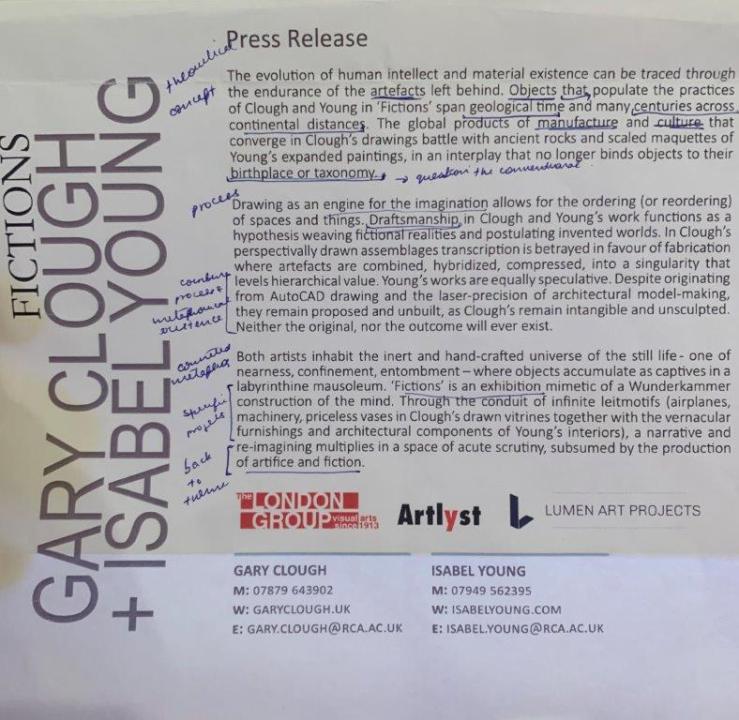
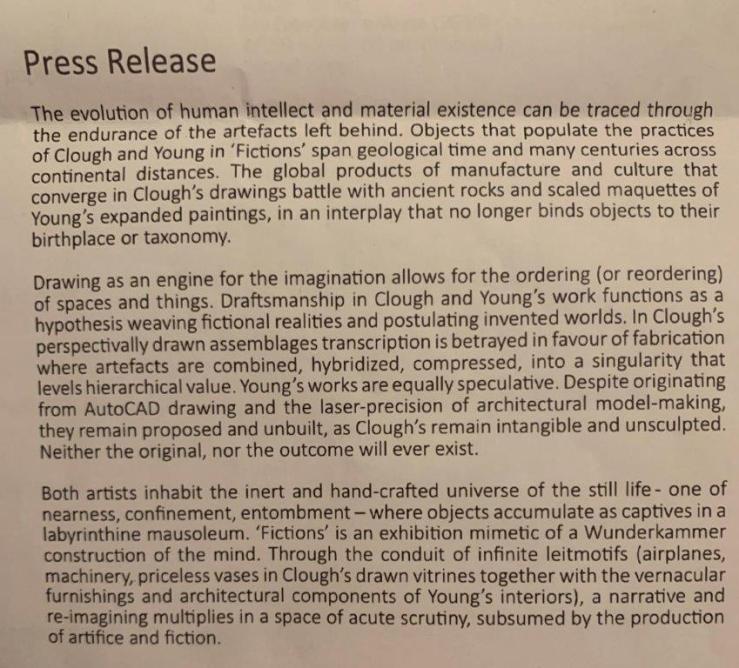
- ‘Fictions’ at Cello Factory: I really liked Gary and Isabel’s Editorial which was in the form of a press release, as it talked about commonalities in their works, and the abstract areas they address in their practice.
2. No Realm of Thought, No Field of Vision: Cerith Wyn Evans, White Cube:
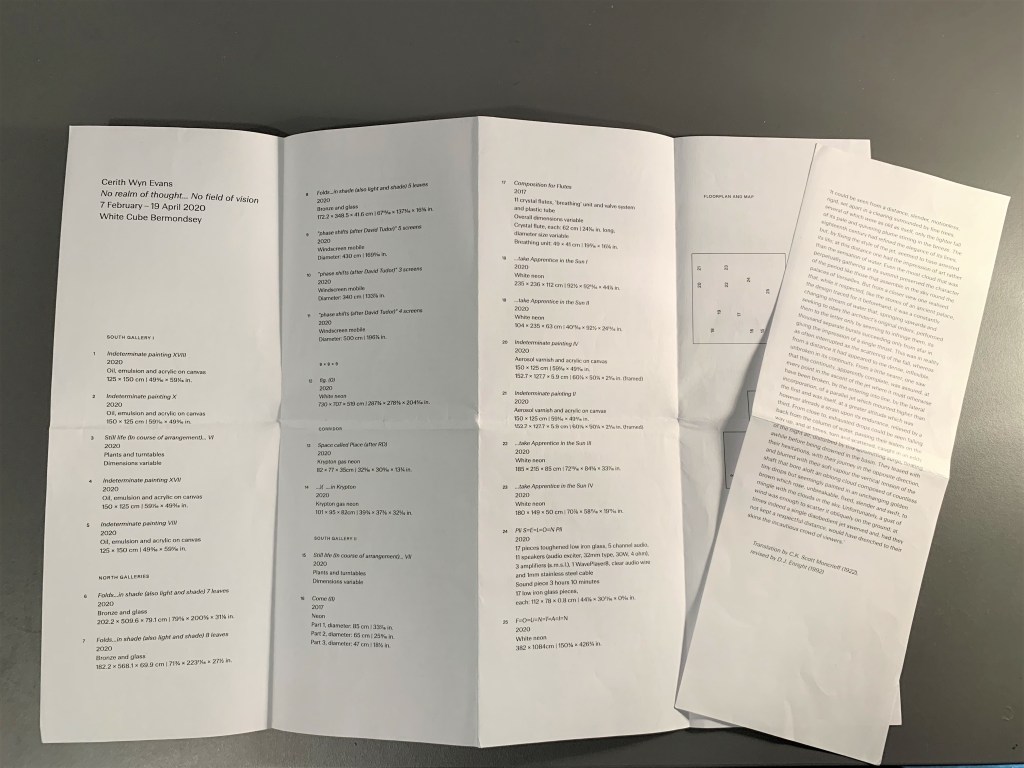
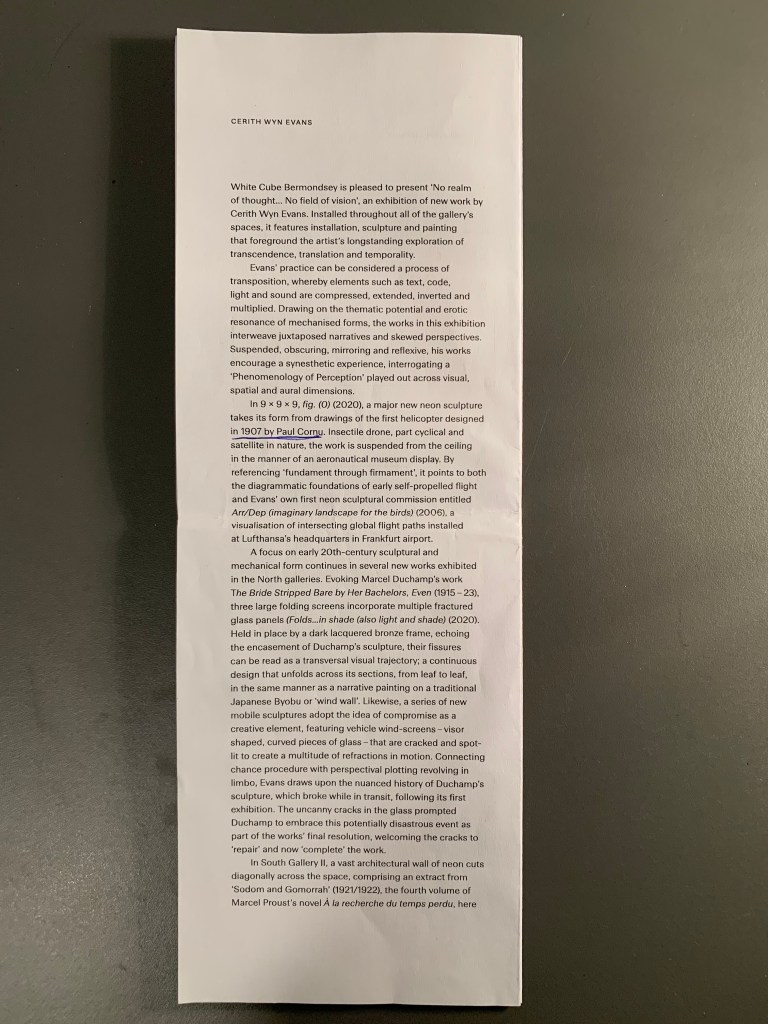
The curatorial text not only describes the artwork exhibited, but also directs the viewer into the historic works and narratives that the artist refers to, in his experential pieces. Moreover, the pamphlet contained an insert with an extract forming a basis for the experience of the exhibition. I really like the way this sets the stage for what is to come.. with explanations and biography providing further information on the artist and his works.
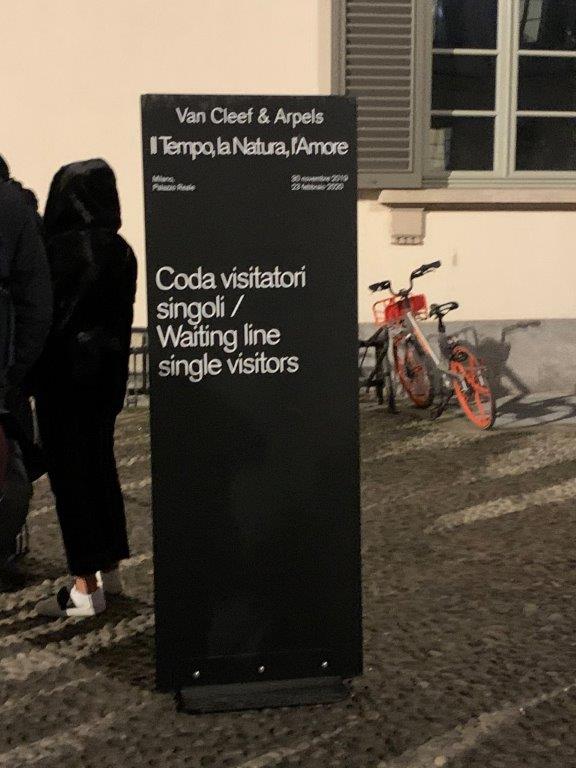
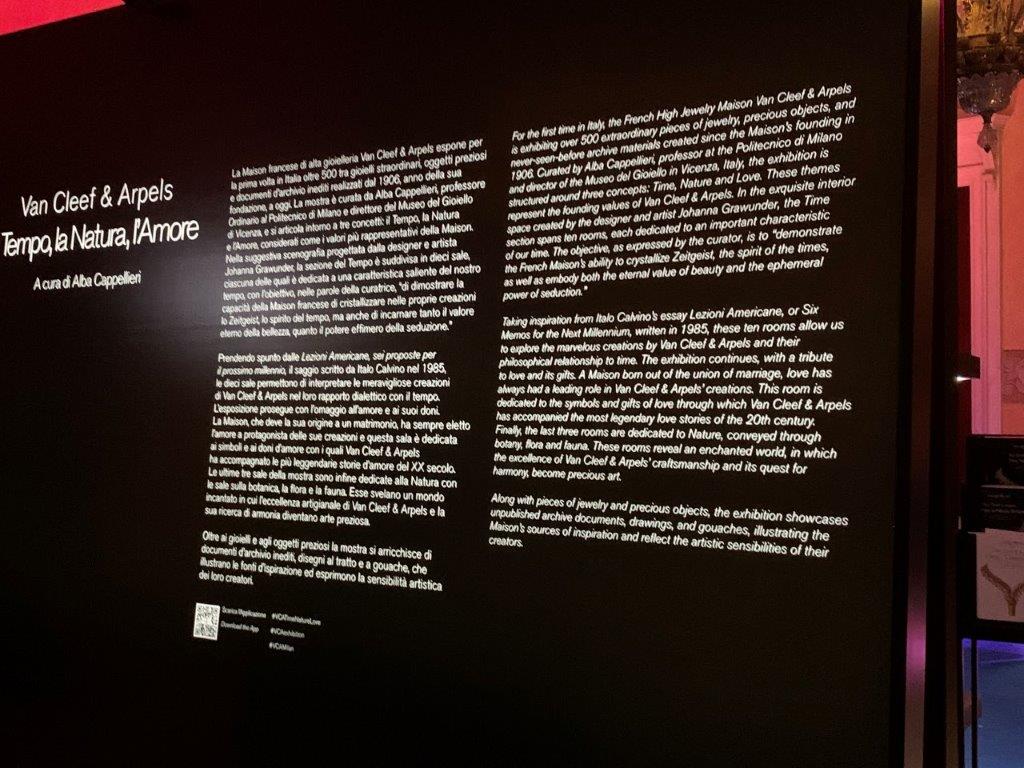
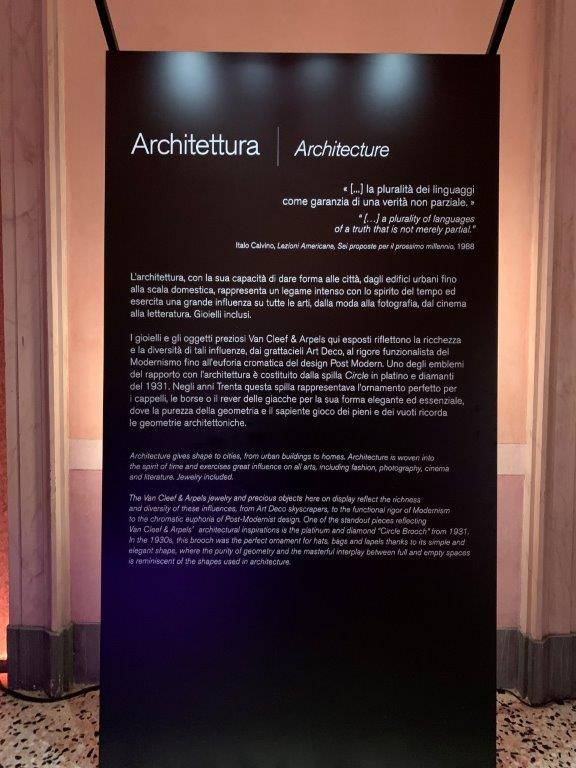
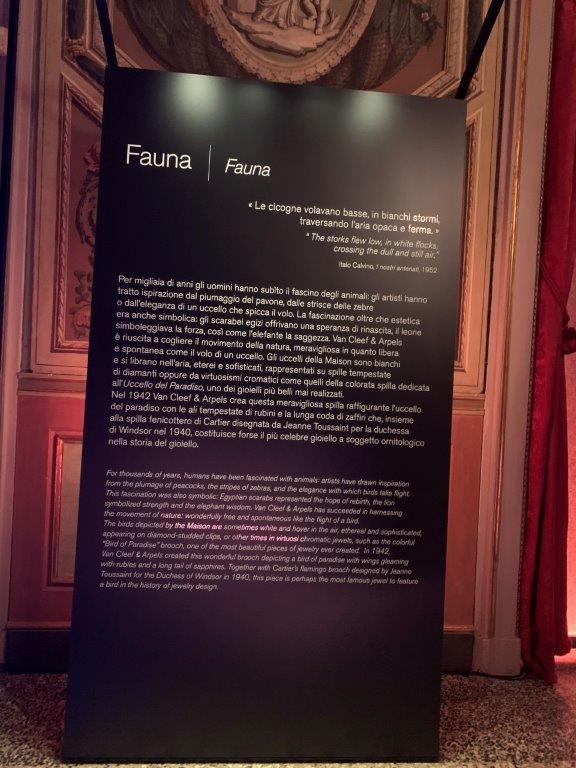
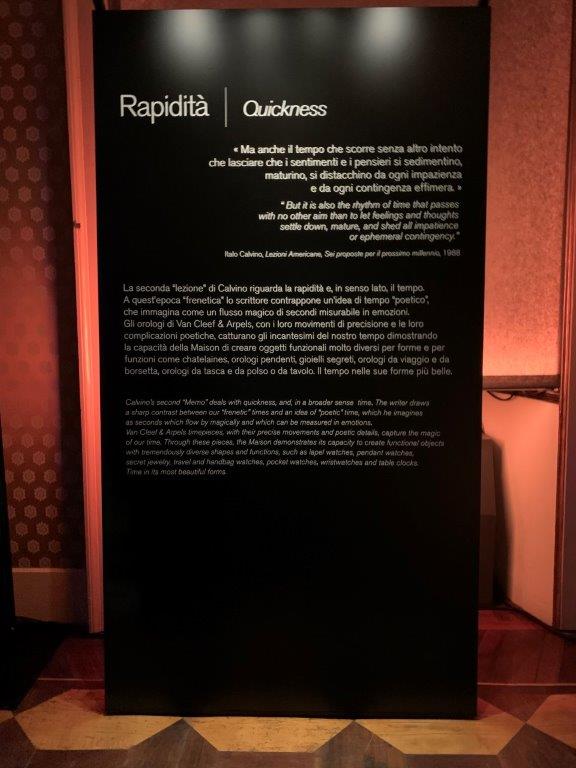
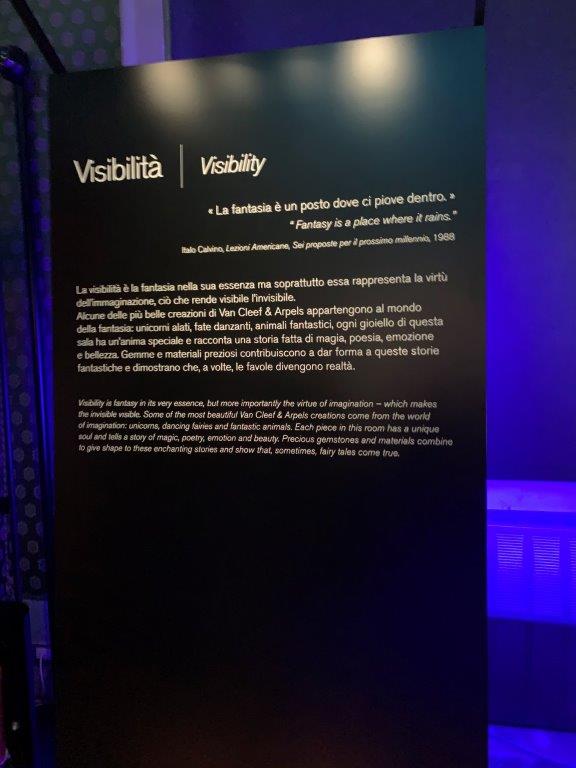
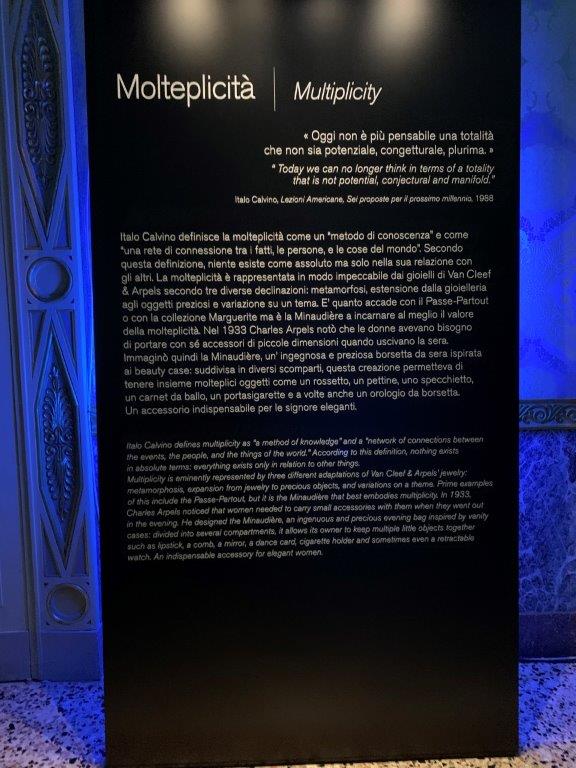
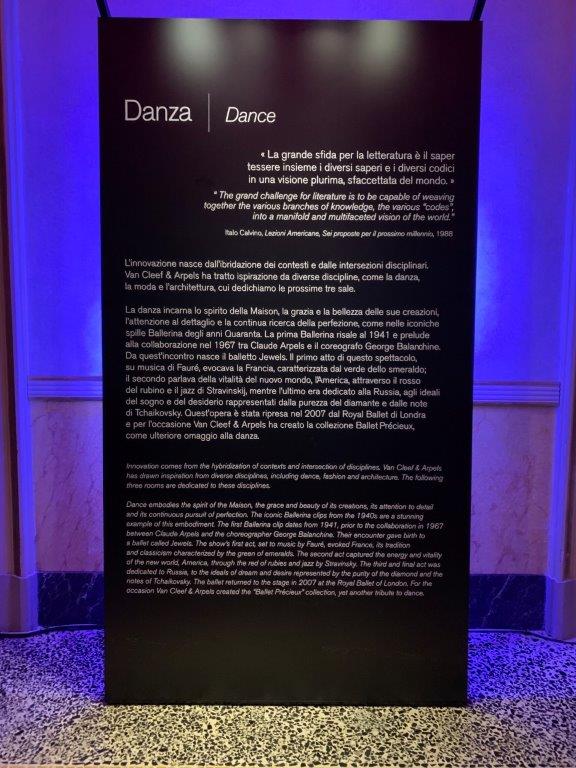
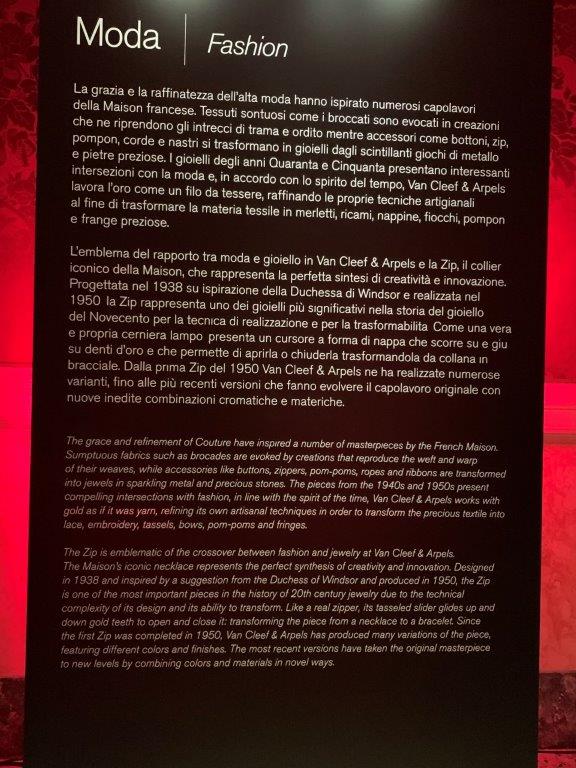
3. Van Cleef and Arpels at Pallazzo Reale, Milan
Classifying a number of diverse, unique pieces into elements and aspects subdivided from 3 basic sections: Time, Nature, Love was an interesting take on the curation as well as curatorial text. Some topics such as Nature – flora, fauna, botanica, represented literal abstractions from inspirational elements, however, ideas of exactitude, multiplicity, visibility etc. were more abstract. The entire curatorial celebrates these different lenses for viewing the work of the Jewellery house, and inspired me to look at sectional divisions as well as multiple viewing lenses for my own work as well as our collective publication.
4. WIP Show: RCA Kensington and RCA Battersea

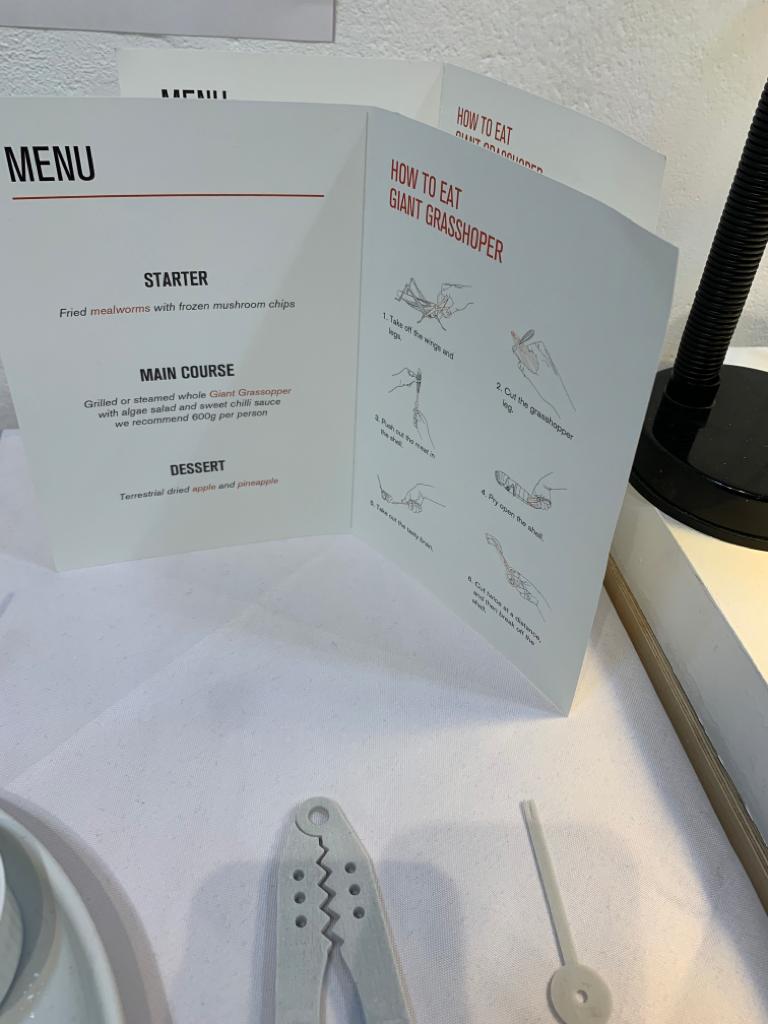
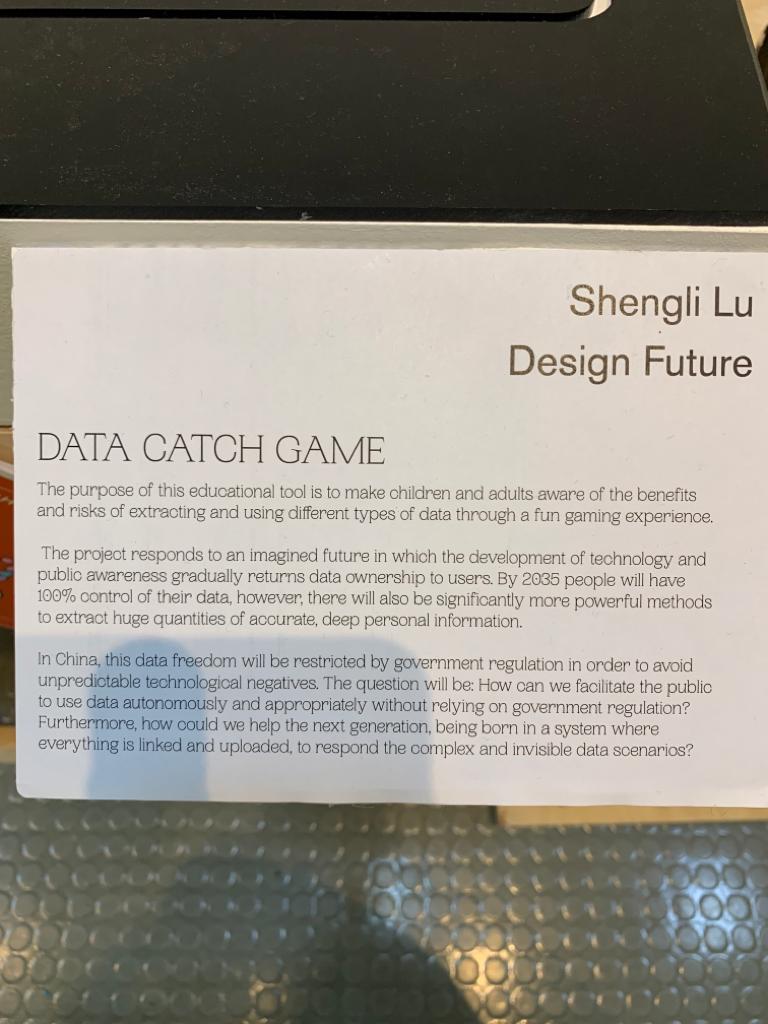
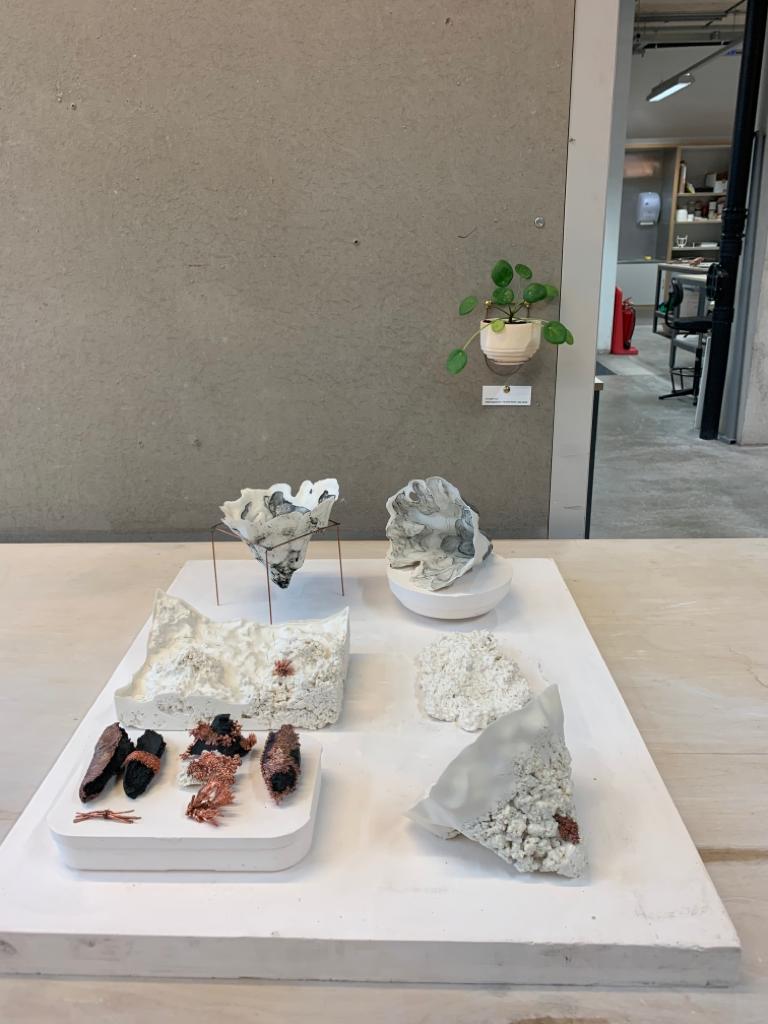
At the Design Products, Metals and jewellery, and Ceramics WIP shows at Kensington and Battersea, I wanted to see how students in these fields communicated their ongoing practical research to their audience through writing. Considering they were not going to be present for the entire duration of the show, they needed to make sure that their setup, including visuals and written explanations, made the work self-explanatory for viewers. I was inspired by the some of the ceramics students’ descriptions of their works, centering around the main conceptual narratives but subtly incorporating their understanding of materiality and craftsmanship.
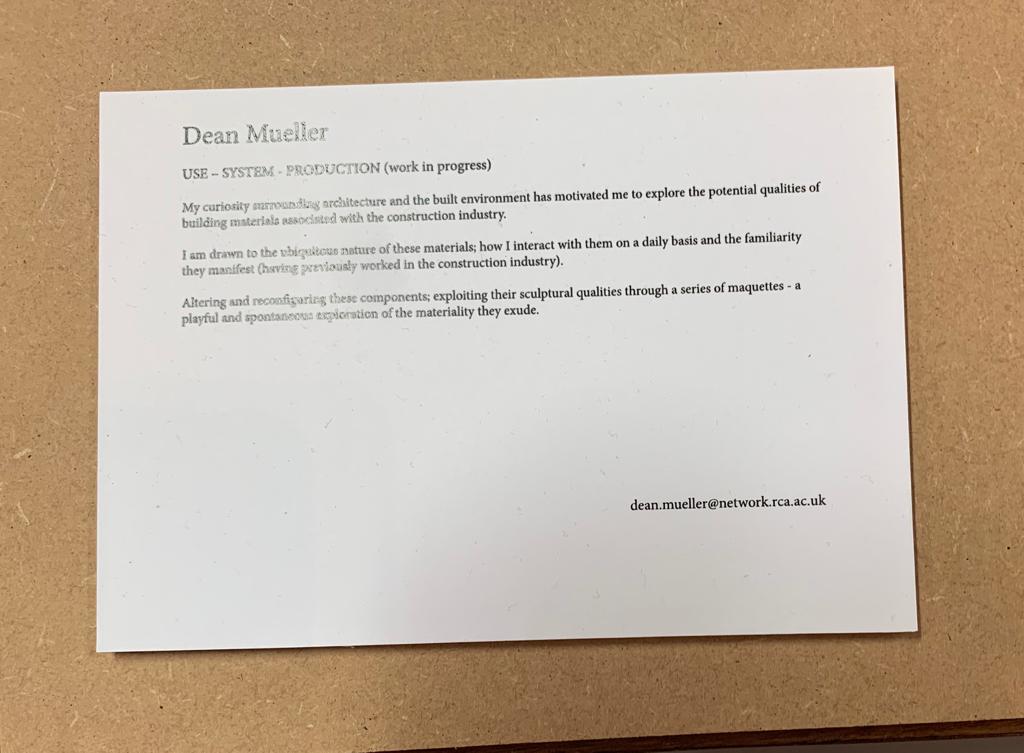
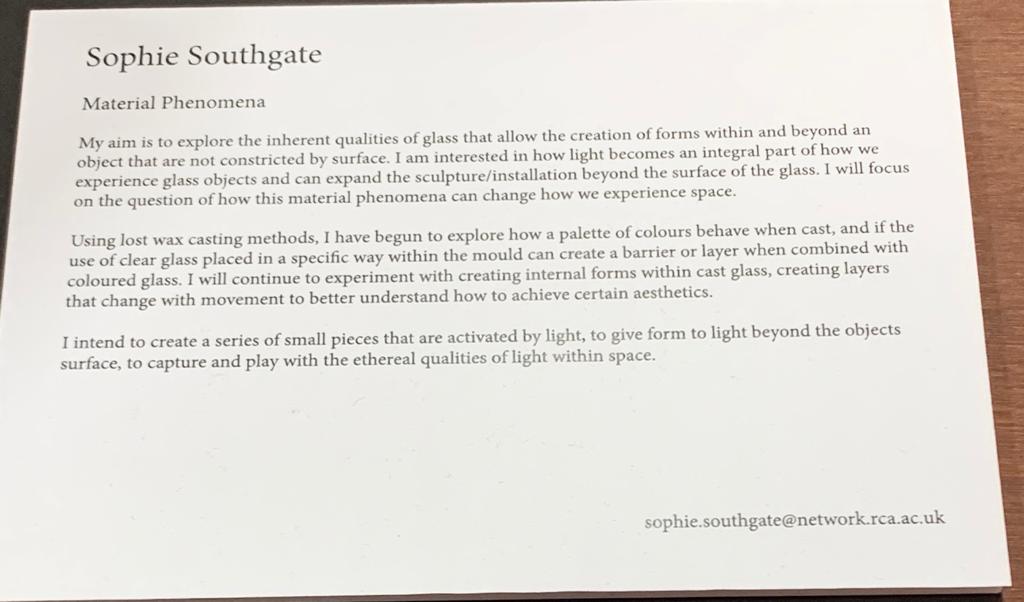
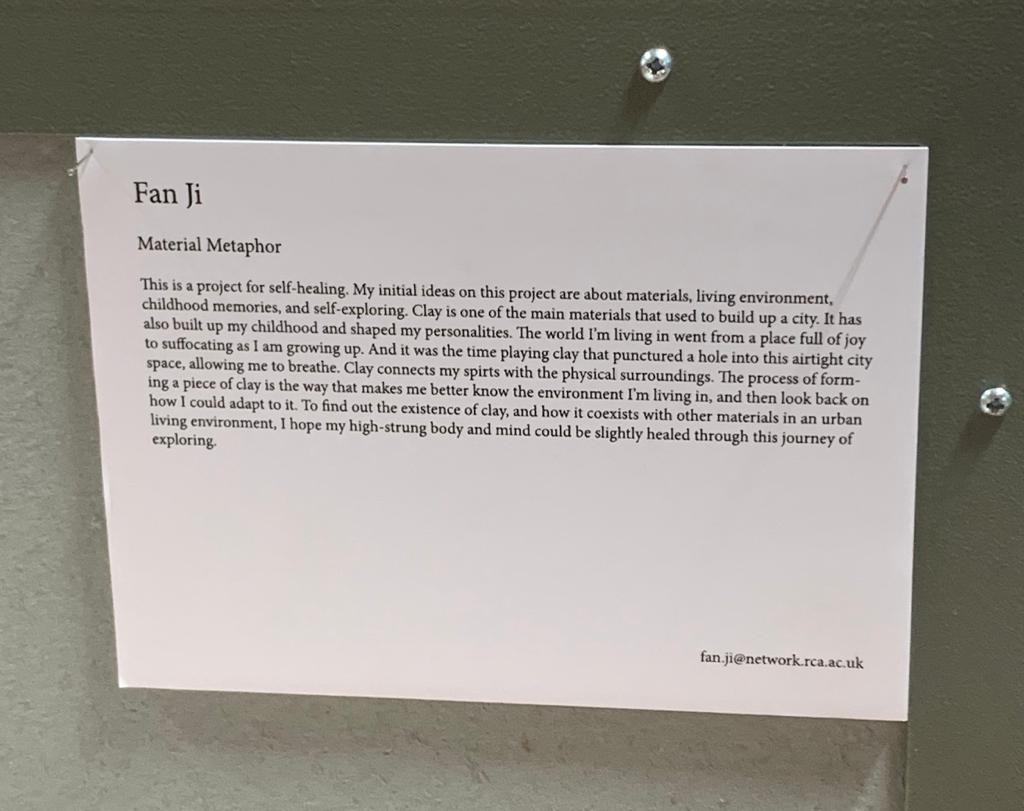
In contrast, the descriptions I saw at the Design Products show were more focussed on solving real and futuristic/speculated problems, bringing out research and critical analysis of their contexts, and skillful visualization. While artistically inclined SOAH students focussed on bringing out their processes of interaction with materials, while DP students focussed on the final outcomes and their place in their contexts.
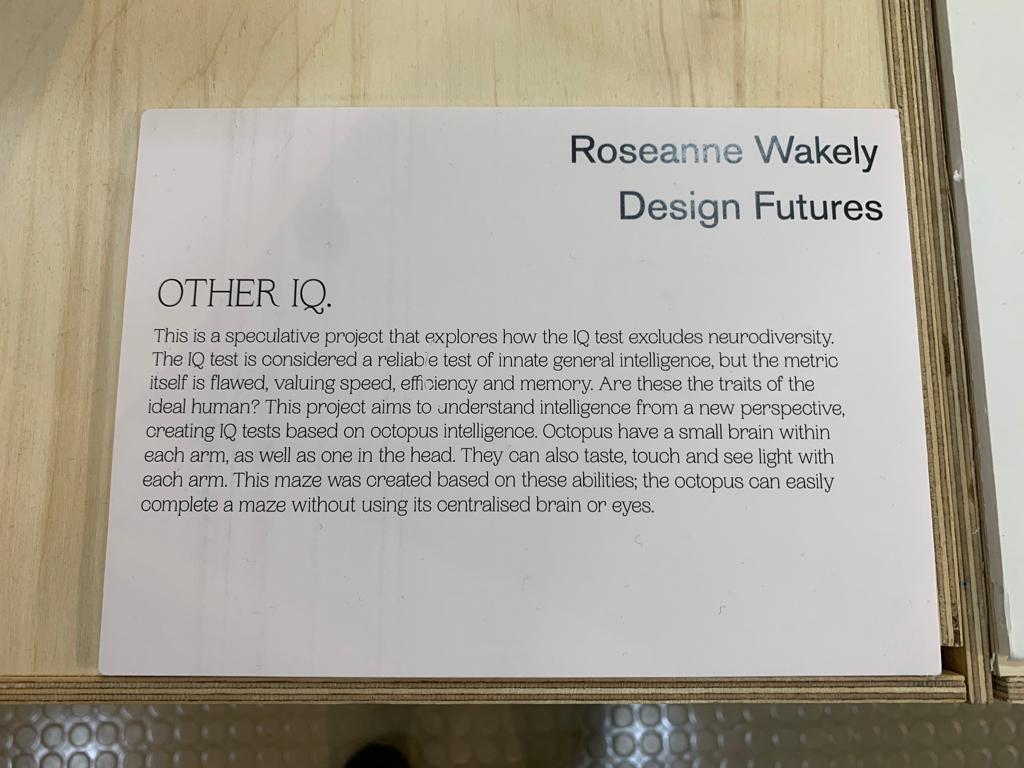
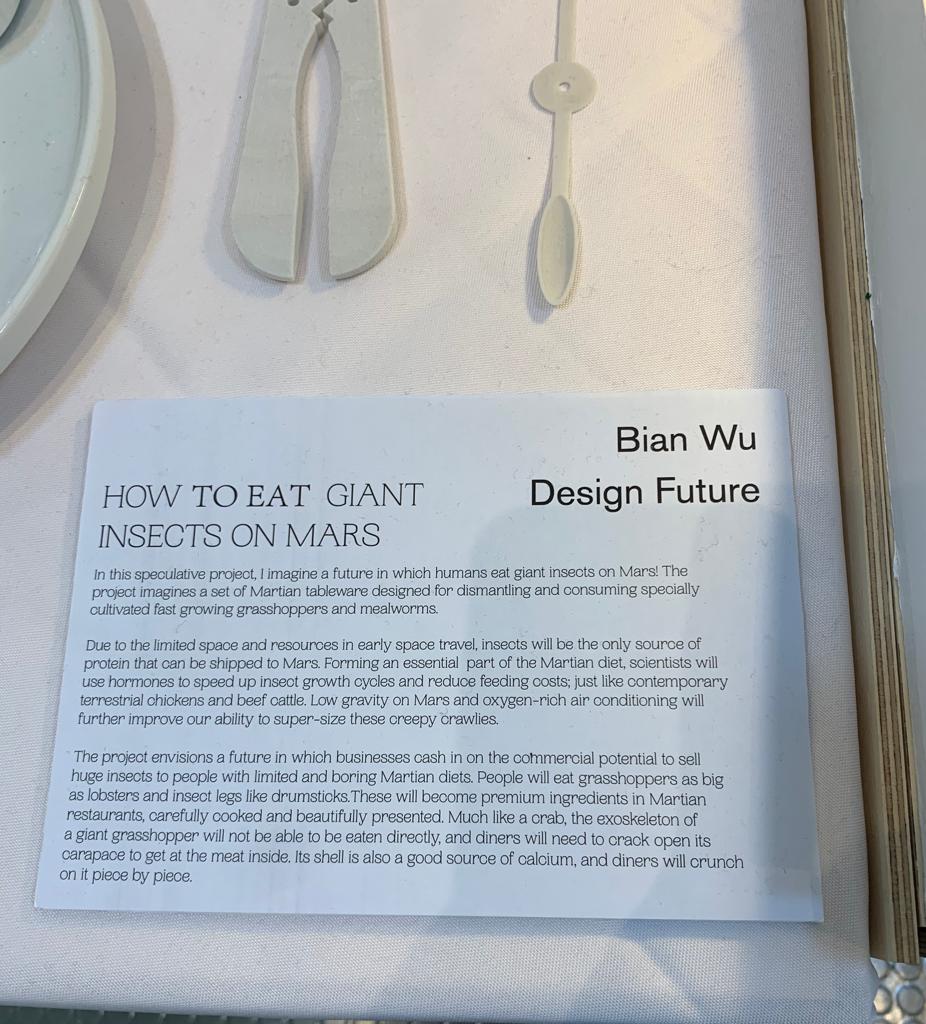
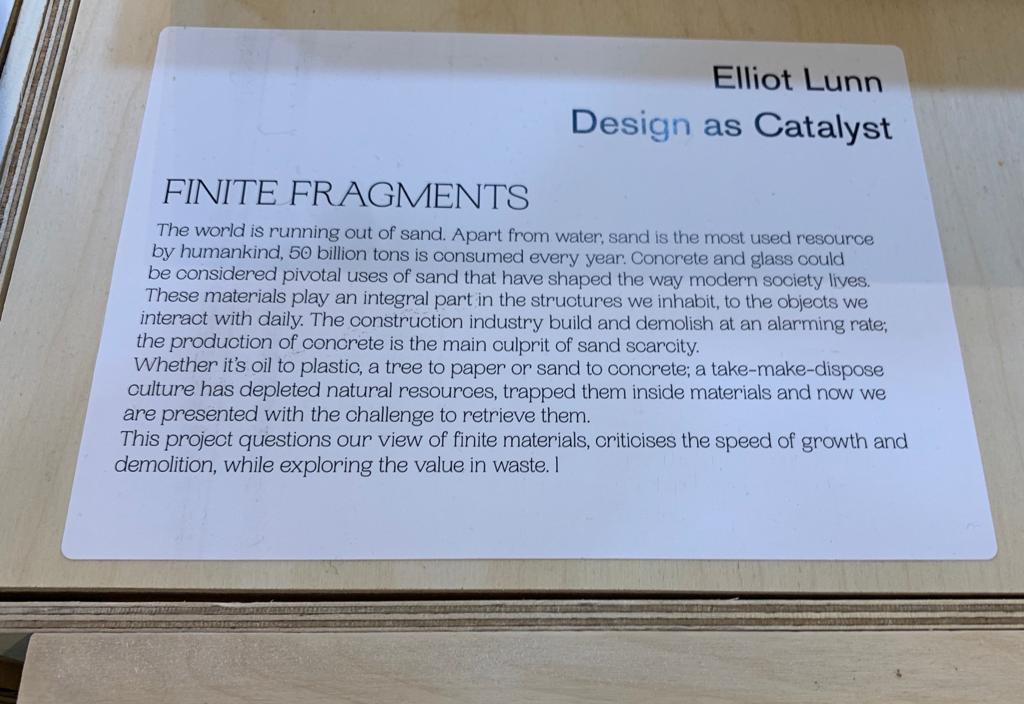
I currently dont know whether I am more ‘Design’ or ‘Art’ inclined, but I sure learnt to be succinct in explaining my project looking at these efficient descriptions.
Curatorial Text Research: Books and Journals
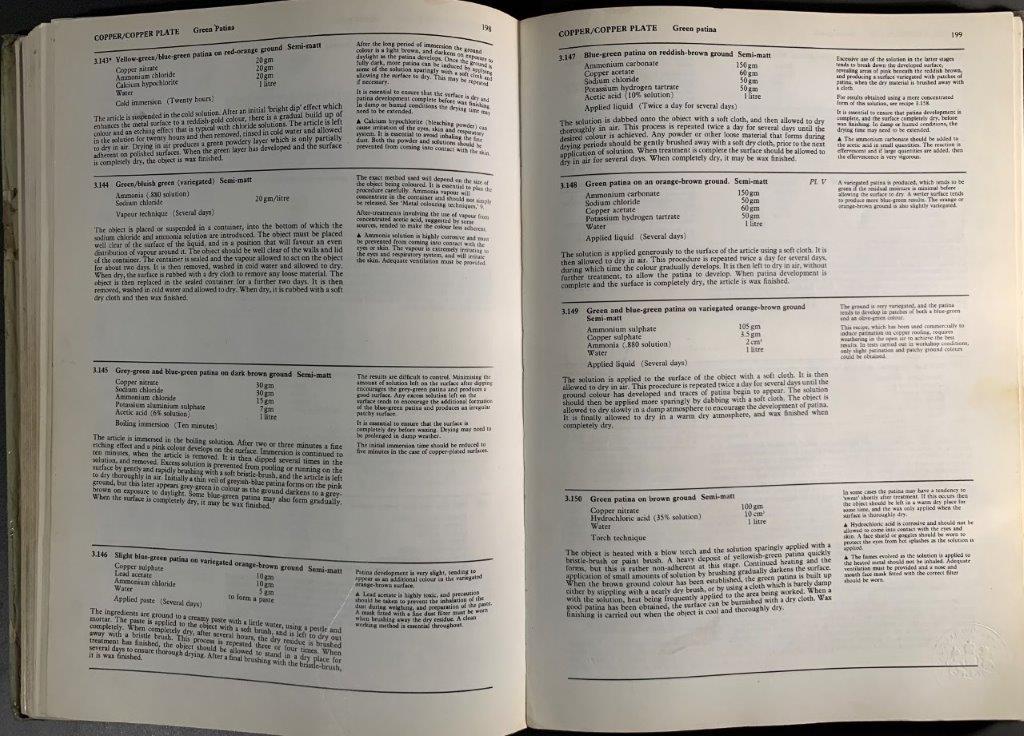
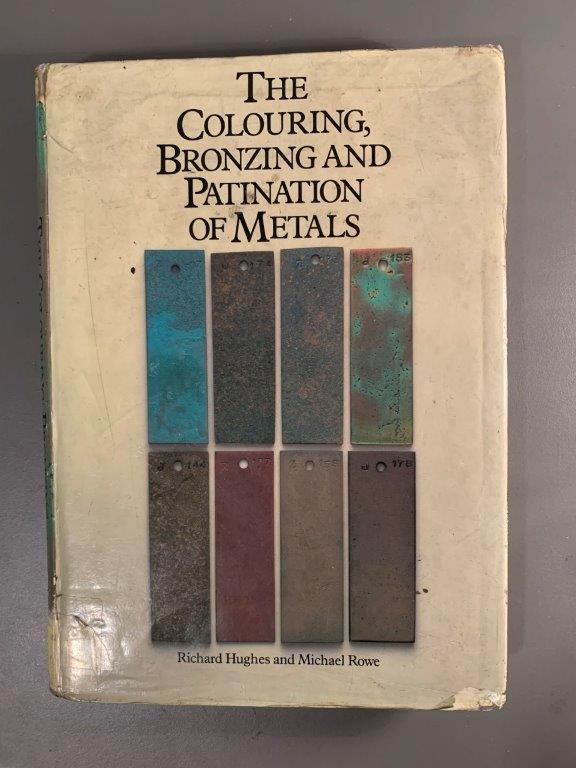
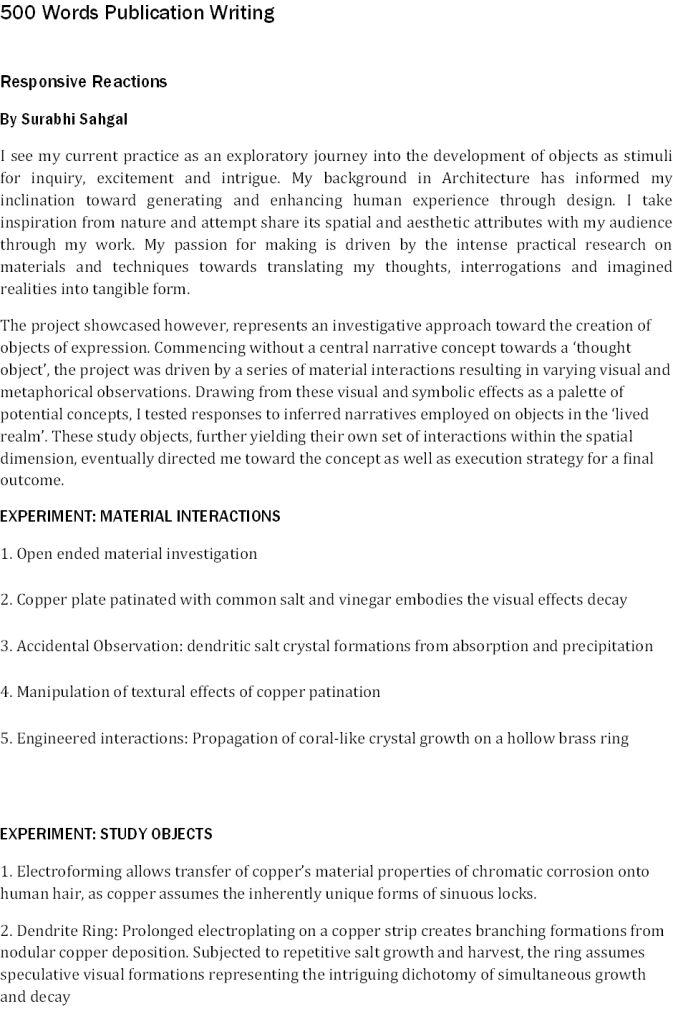
- For my individual response, I wanted to document the experiments and outcomes (both chemical and metaphorical) that I conducted in my P04 and P05 projects. I wanted to highlight the new, speculative approach I took towards object making, where I responded to material reactions at each step, rather than working toward 1 defined end goal. I stared looking at the experiment and inference format in ‘The Colouring, Bronzing and Patination of Metals’ as an example. The book is quite technical in its depiction of experiments and outcomes, I would like to incorporate the more symbolic elements of my experimentation within this text as well..
2. Another writing format with reference to jewellery design was depicted in the book, ‘Jewellery Design and Development’, by Norman Cherry.
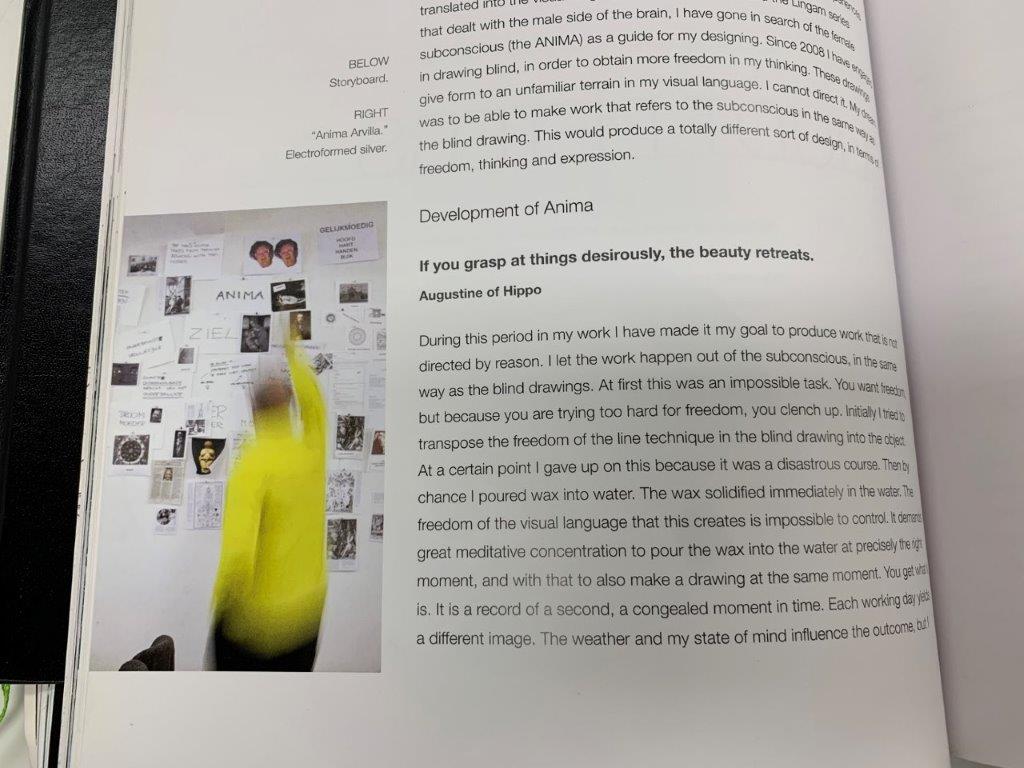
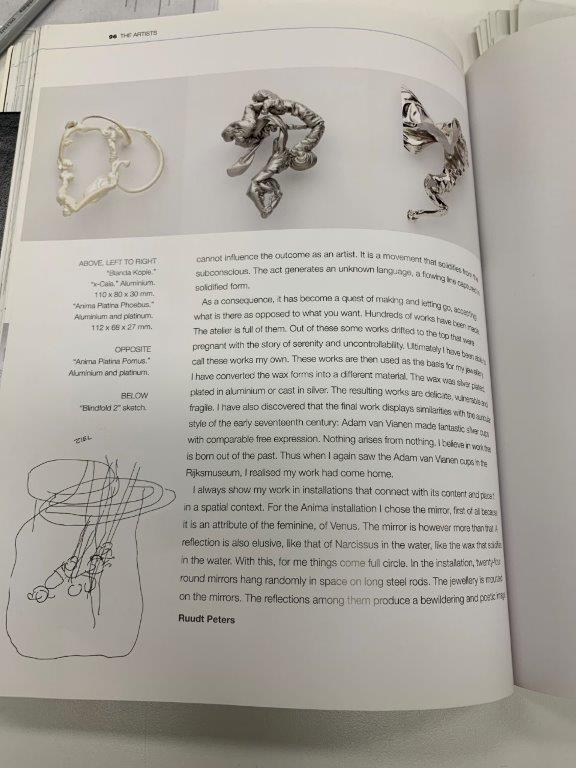
Here 17 Jewellery artists talk about their practice through the description of the process or concepts behind one of their projects. What made the book interesting was that each of the artists was given the freedom to express their work in their own unique writing style, with some expressing the technicalities of their process, while others describing the poetics of their concepts (with poems as literal explanations beside their work!). The format was that of an artist introduction – followed by the artist’s words on their practice, and the explanation of the particular project. This text was interspersed with images of the making of the particular project, along with some images of other works by the artist. My team was happy with the idea of different means of written expression in terms of individual responses, as long as we formatted the visuals of the text and images consistently.
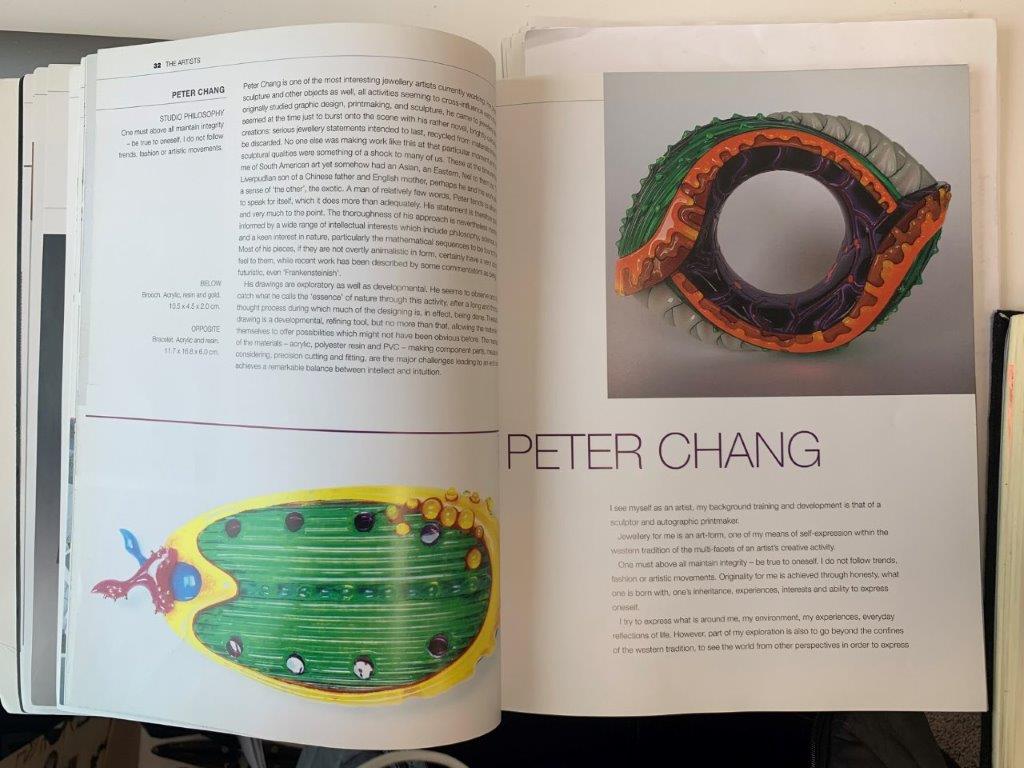
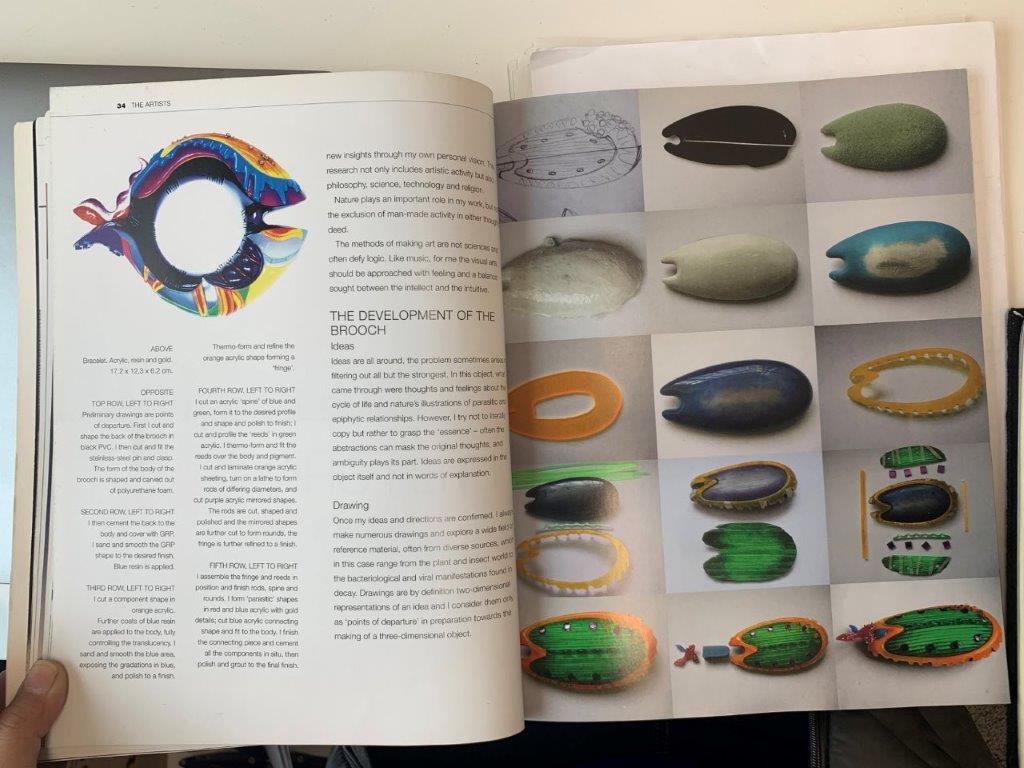
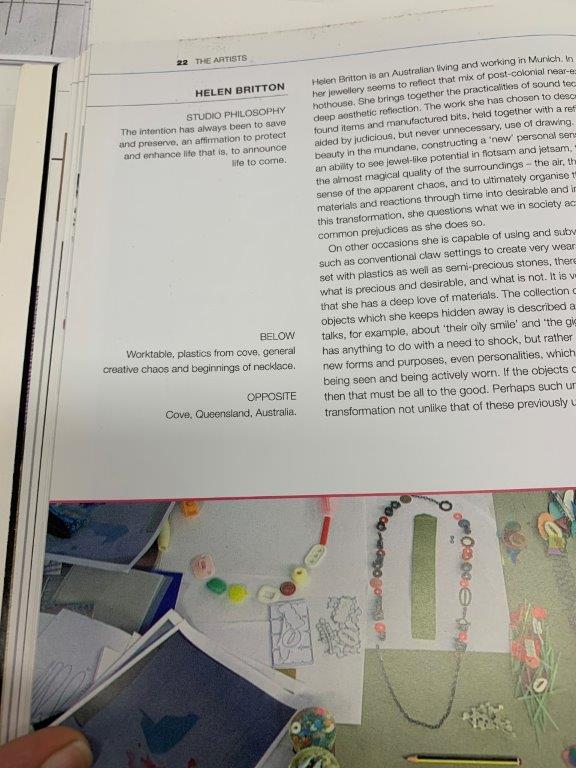
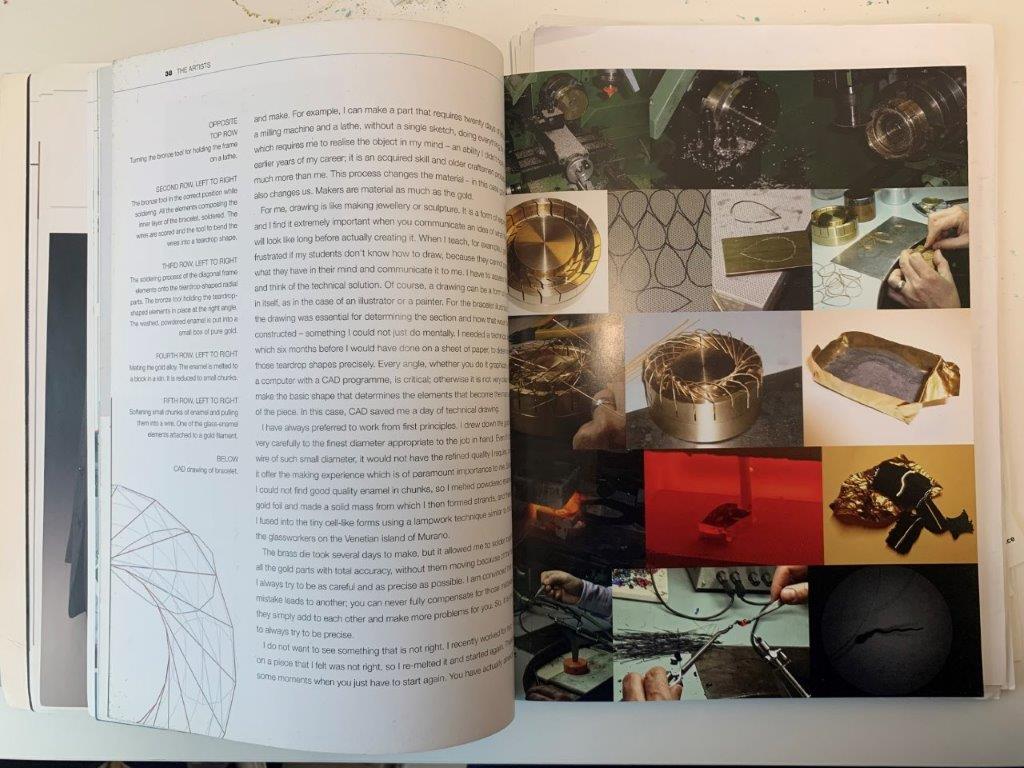
In terms of textual content, I enjoyed reading Ruud Peters’ explanation of his work, connecting his craft to the deeper, metaphorical aspects of his thought process. I wanted to incorporate this metaphorical explanation within my experiment-observation-inference format for my individual response.
Connecting these approaches to our theme:
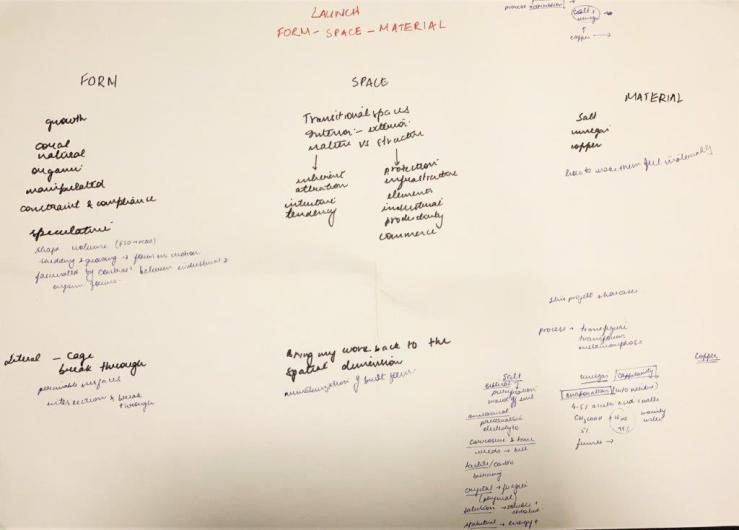
I started analysing how I use form, space and material in my process, and tried to incorporate their changing roles in my Investigate and launch projects, through an experiment-observation-inference format, highlighting observations and responsive reactions not just in the material reactions, but also in the intersection of overlapping metaphors and stories that the materials were playing out during their interactions.
Individual Response:

 design factory