
12 February 2020
Cerith Wyn Evans at White Cube, Bermondsey
Cerith Wyn Evans is described as a ‘conceptual artist, sculptor and filmmaker’, and on the basis of my recent visit to an exhibition of his works at the White Cube, I would call him an experiential artist drawing from historical artwork, technical drawings, navigation paths and linguistic prose in the manifestation of narratives in space.
Invoking narrative from historical artwork
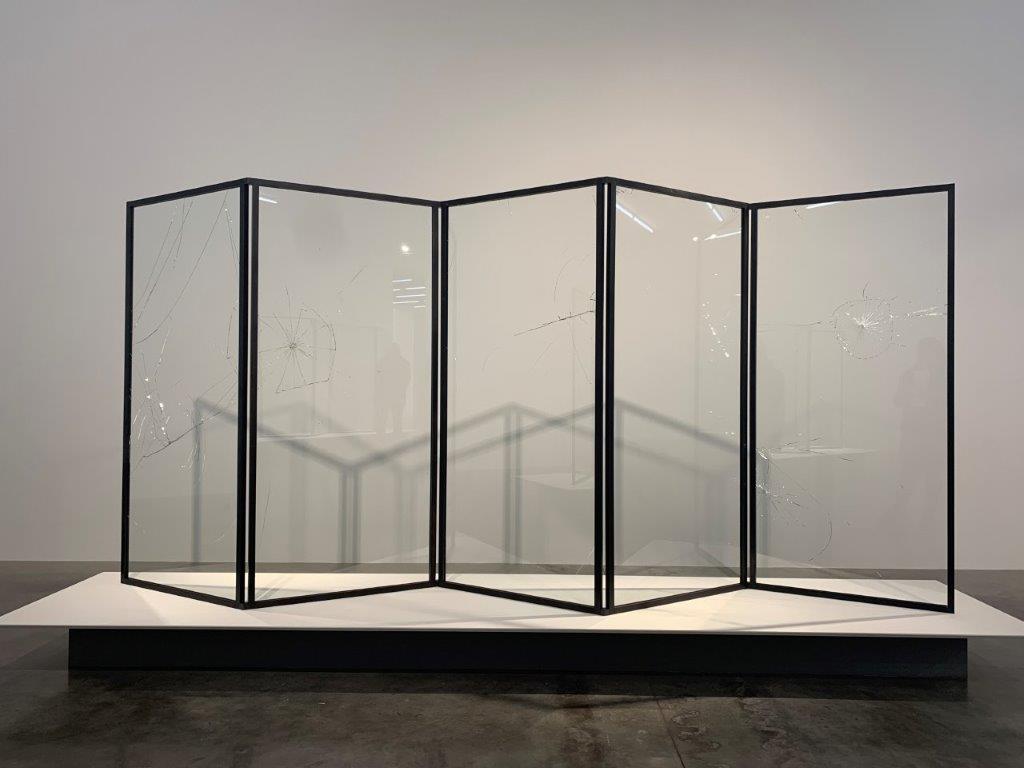
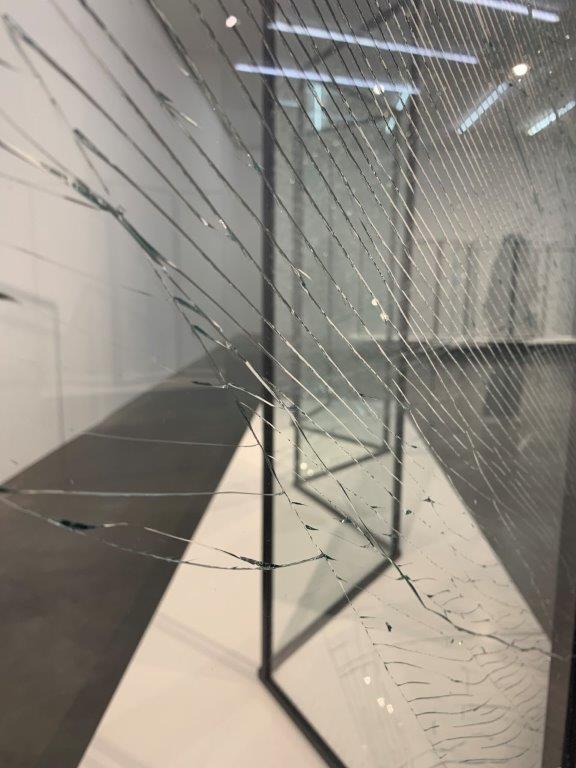
Folding screens of fractured glass panels – based on Marcel Duchamp’s ‘The Bride Stripped Bare by Her Bachelors, Even’ (The Large Glass), having been shattered in transit and finally declared ‘complete’ by the artist upon its meticulous repair.
Writing and Drawing with Light, in Space
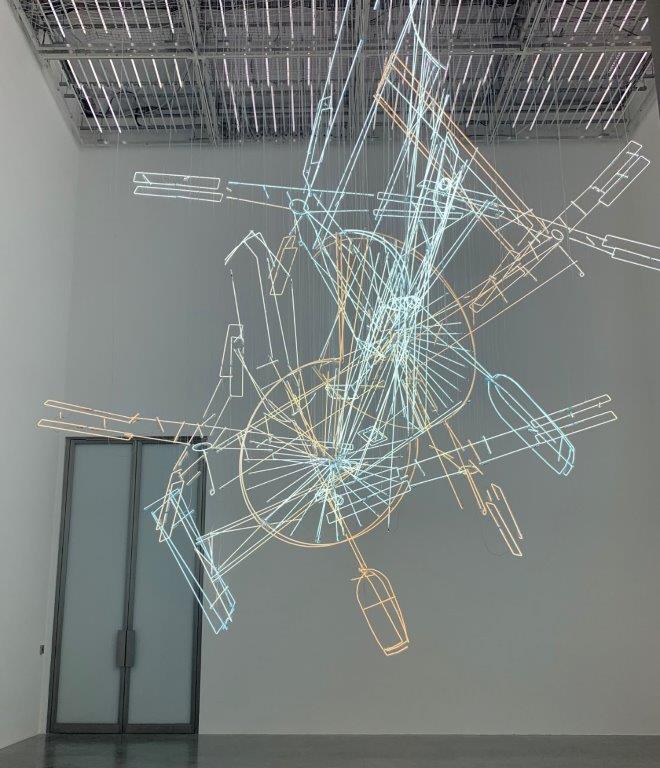
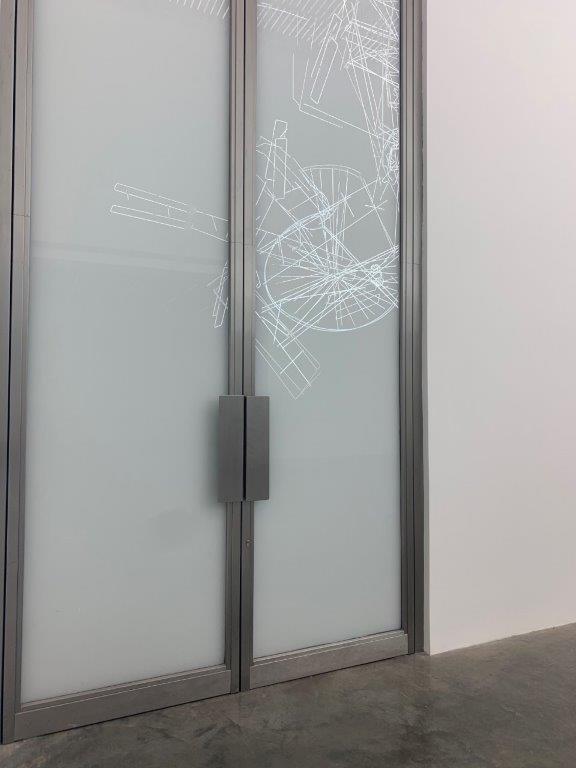
9x9x9 Fig. (0) Suspended neon sculpture based on Helicopter drawings by Paul Cornu in 1907 – appear as effortless scribbles in space. However, a closer, all round inspection reveals the 3-dimensionality of this sculpture. Moreover, a closer look reveals the complex workings of light lines in space.
Neon Wall – writing with light
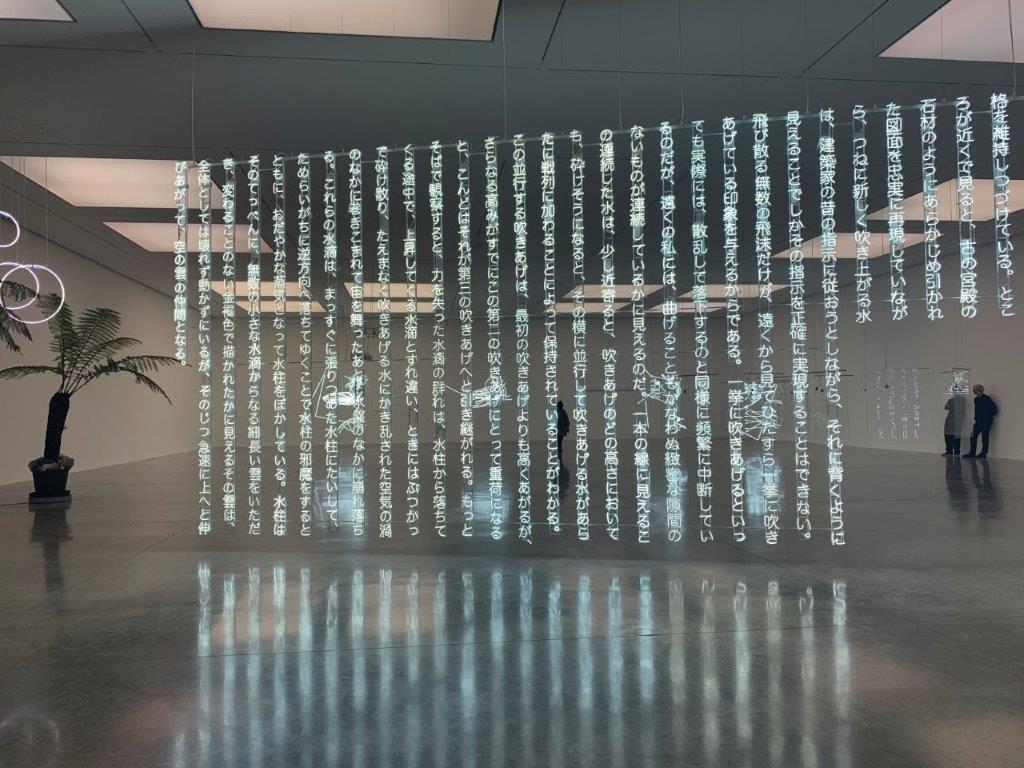
An extract from Marcel Proust’s ‘Sodom and Gomorrah’, translated in Japanese and written across a spatial dimension in neon light, embodies the aperture transitioning the ‘seen and see-able’.
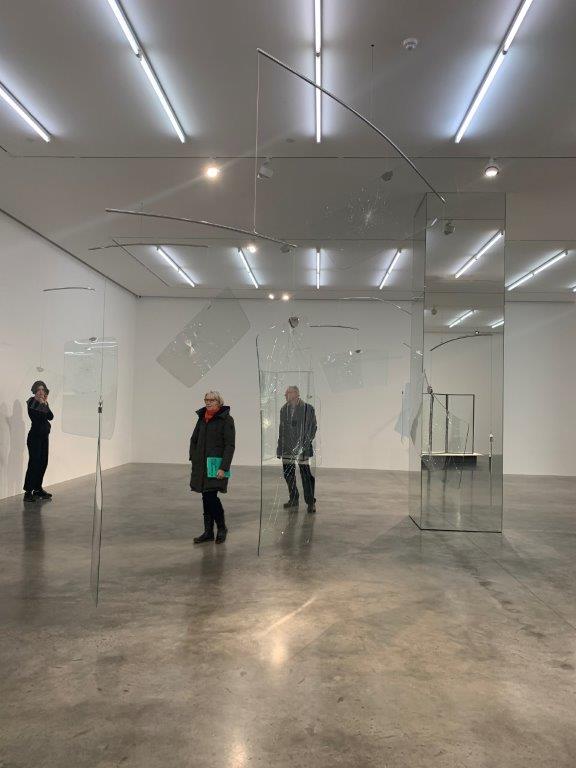
Shattered vehicle visors, highlighting motion in fissured glass panes as suspended mobiles
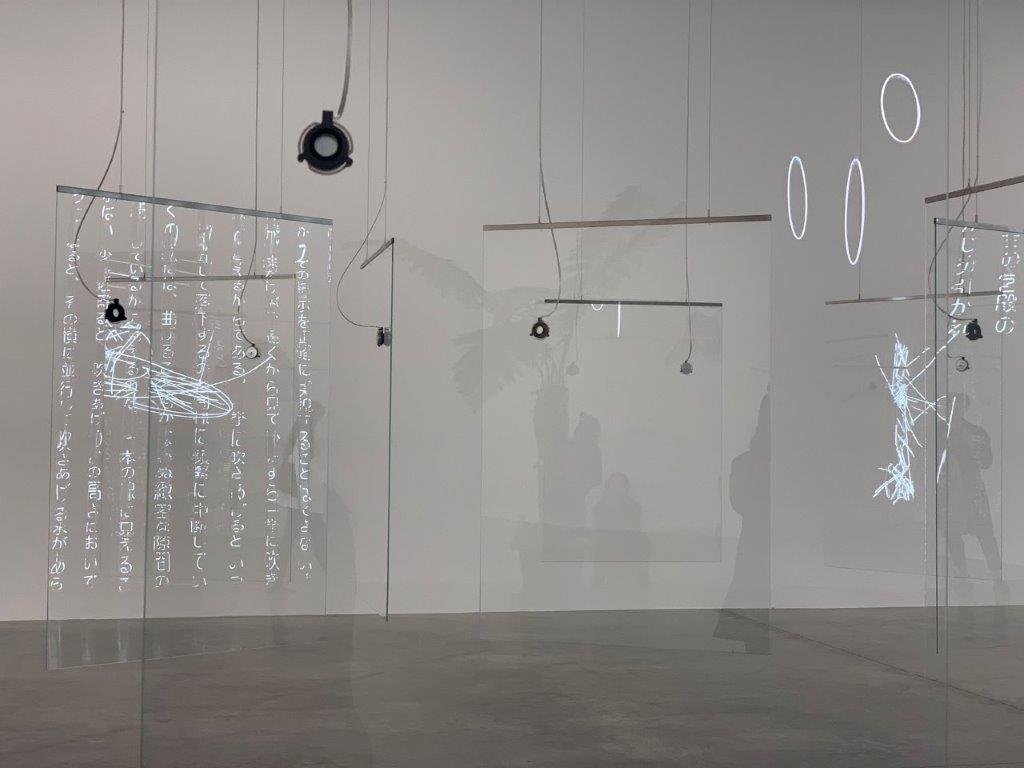
Light writing reflected in the panes of Pli S=E=L=O=N Pli (2020) Sound Installation
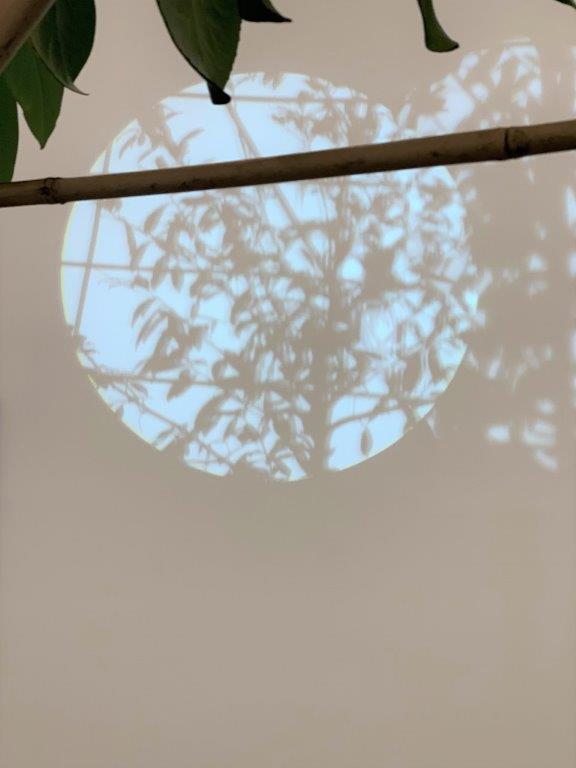
Ever changing shadows of 2 trees brushing against one another, invoking early ‘moving image’ works that informed later advancements in the field.
Contrasting with my experience and research on Olafur Eliasson’s artistic practice based on phenomenology and individual perception, Cerith Evans employs references to narratives set up by other artistic visionaries, in the material manifestation of his ideas. Olafur’s narrative inspiration, on the other hand, comes from experiences of natural and anthropocene environments, abstracting intangible everyday occurrences into material manifestation, not requiring much explanation for a viewer. In such a viewing experience, Olafur manages to draw out the empowering concept of individual perception, given that everyday occurences are perceivable to a vast majority of his varied audiences. However, in the historically inspired works of Cerith Evans, an understanding of referenced works helps giver the viewer a holistic picture of his motives for creation.

 design factory