
02 December 2019
Essay Plan: Structure 3 (Key works merged with paradigms as debate paragraphs)
- Introduction:
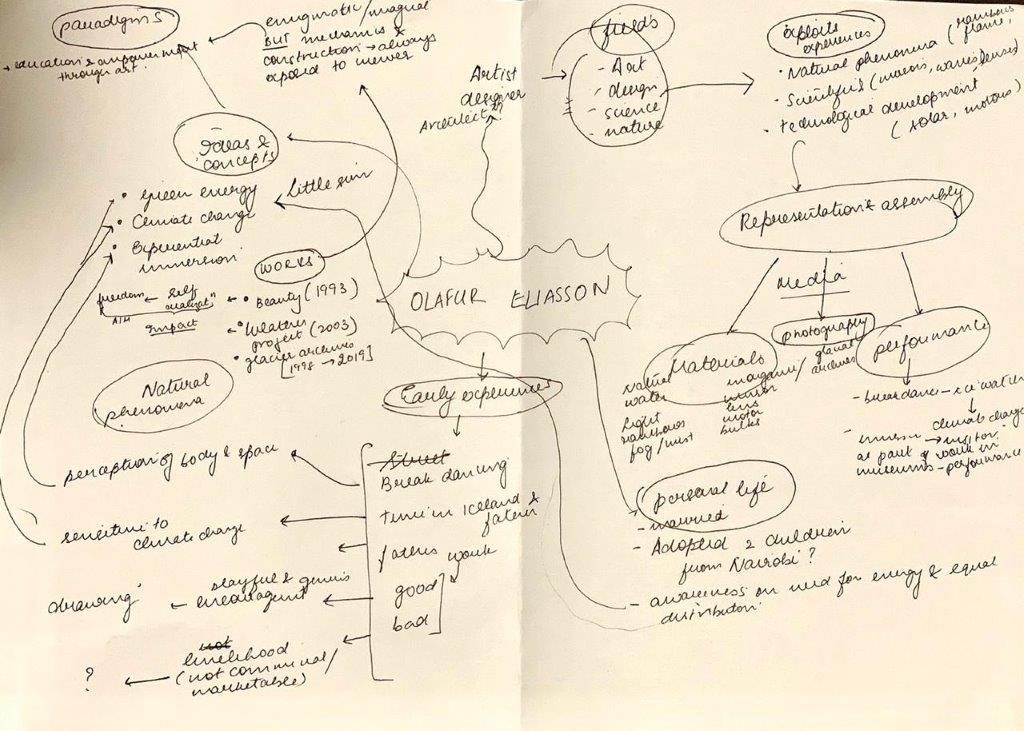
- Olafur Eliasson, Interdisciplinary experiential designer/artist
- Reason – material driven, nature inspired design
- My experience – “In Real Life” at TATE Modern – overlap of nature, technology, human experience
- My current exploration of emotional design as opposed to functional design, overall interest in dialogue between design and art
2. General Introduction to OE – practice, issues, impact
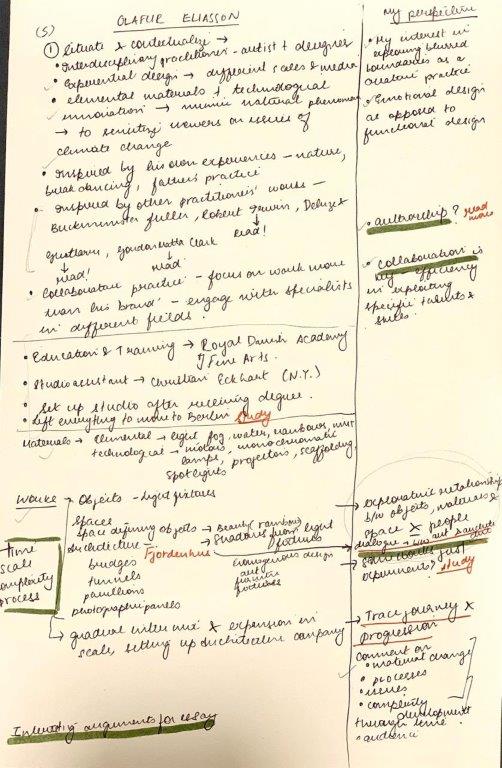
- Immersive and contemplative works – ranging from objects, spaces, space defining objects, architecture, photography, performance art
- Educational background (RDAFA) , training in NY, Studio in Berlin & Copenhagen
KEY PIECES – INTEGRATED WITH 3 ESSENTIAL PARADIGMS (ISSUES/THEMES)
3. ENVIRONMENT ISSUES
- Works –
- Ice Watch & (iii) Melting Glaciers (1998 – 2019)
(s) Early influences – glaciers of Iceland – nostalgia and sensitization
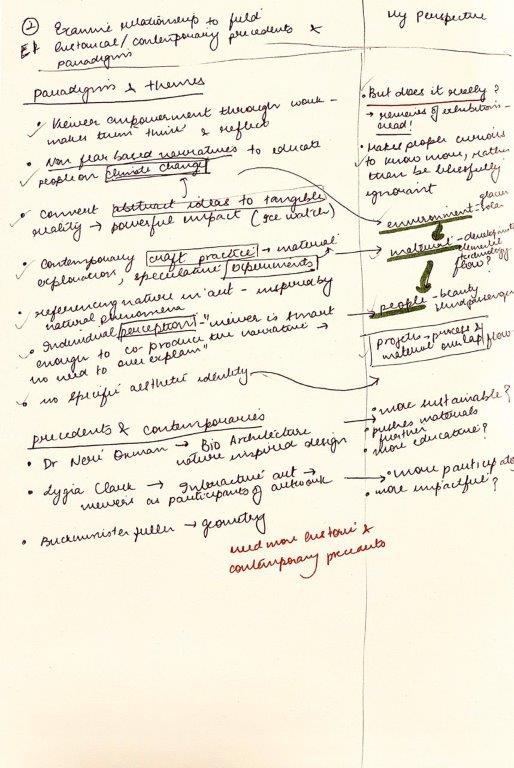
(e1) Abstract Idea made tangible for major impact
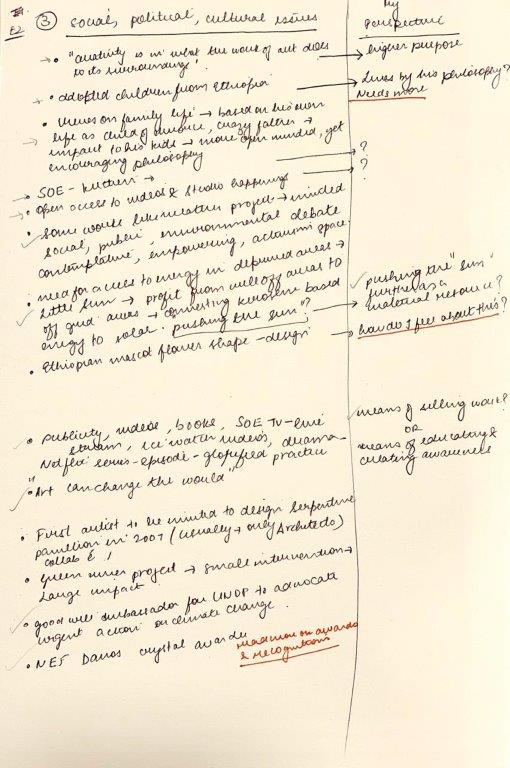
(e2) UNDP Goodwill ambassador – climate change
(i1) Non fear-based narratives to drive point home, Performance art & photographic documentation over 20-year interval (time) as a means of creating impact
(i2) Making people curious through the novel/dramatic presentation techniques – instead of letting them be blissfully ignorant (contrast with fear based narratives on this issue), lots of publicity – means of selling work? Or creating awareness?, Environmental impact of flying glaciers to Paris, London, justified?
- Little Sun
(e2) access to energy in deprived areas, replacing kerosene with solar power
(i1) collaboration with solar engineers
(i2) pushing the “sun” as an elemental material resource
4. MATERIAL DRIVEN PRACTICE
Works-
- Model Room (Developmental, prototyping, material exploration)
(e1) contemporary craft practice – exploration of hand making combined with technological innovation (precedent/example)
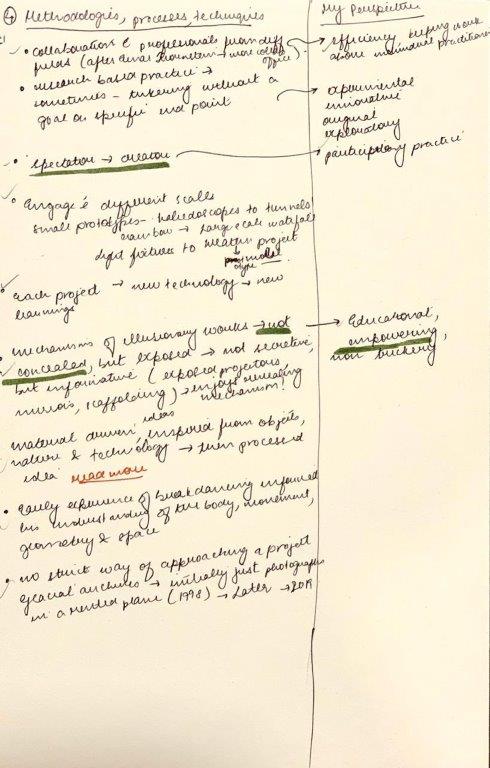
(i1) Research based practice, abandoned material exploration objects, proposal models
(i2) Speculative, experimental, original, exploratory
- Same materials, different scales – Light fixtures (Cold Wind Sphere 2012/In real life 2019) , kaleidoscope- Your Spiral View (Geometry, technology), Tunnels, Waterfalls
(e1) materials – overlap from 1 project to next
(i1) Each project – new approach, new technology, Collaboration with Einaar Thornstein, devising work based on Buckminister Fuller’s geometry – (i2) efficiency, keeping work above individual authorship?, No specific aesthetic identity (signature)
5. PEOPLE & EXPERIENCE
Works
- Beauty (1993)/ Big Bang Fountain(2014) (Elemental materials – continue from materials discussion above?)
(s) experiential immersion by exploiting and exaggerating natural phenomena
(e1) Individual perception – spectator = creator, referencing nature in art
- The Weather project (2003)
(e2) Invited public social, environmental and civic debate, activism
(i1) mechanism of optical illusion not concealed, but slowly exposed – (i2) empowering, not indulging in trickery/shock value
- The Blind passenger (2010) (people and experience – connect back to non-fear based narratives to drive home the point of air pollution)
(s) Early experiences of breakdancing informing his understanding of body, motion, space
(e1) Contrast with Lygia Clark – participatory element
(i2) My experience – point of air pollution not strongly reflected
6. OVERALL CRITICAL EVALUATION
- Reference changing complexity, issues, impact, boldness in experience over time (5)
- Reference gradual intermix & expansion in scale, material and techniques used in 3,4,5.
- Explorative relationship between objects, materials, space and people – dialogue between art and architecture – first artist invited to design serpentine pavilion (e2)
7. CONCLUDING THOUGHTS
- “Art can change the world” – evaluate using impact on education, empowerment, perception at individual and public level.
*Reorder points 3/4/5 for maximum interconnection – projects and parameters
*reduce artwork references for deeper discussions?
*More (e2) analysis

 design factory