
26 November 2019
Electroplating
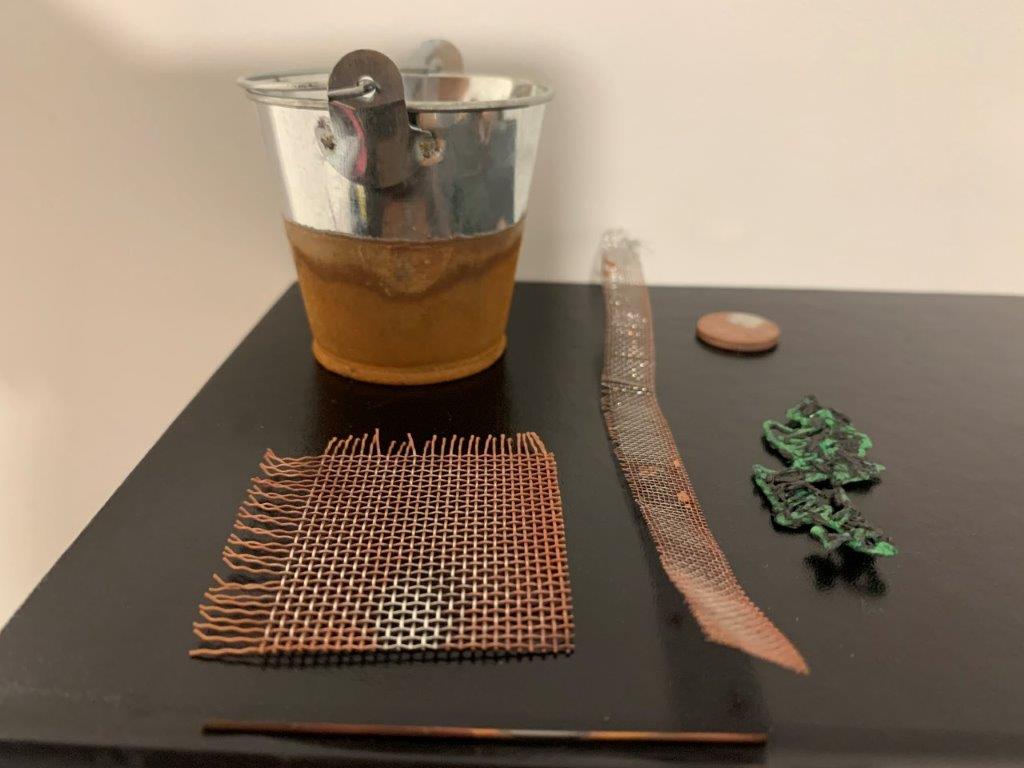
Impatient to start plating with copper, but without graphite paint to coat my plastic drawings, I started to coat some metal objects through my makeshift electroplating/electroforming setup.
Observations:
- Tin bucket had low adhesion, but Dipped long enough gave a rough rust-like copper coat
- Wire mesh took longer to coat, due to large surface area
- Plastic drawing coated with pencil shavings (solid graphite) and PVA glue instead of graphite paint failed to coat – this might be due to the need for overall conductivity throughout the object, that the shavings did not allow.
- Mechanical pencil lead – immediate uniform coat of copper on account of conductivity and small size
Electroforming
With my Graphite paint finally at hand, I proceeded to paint my plastic drawing and electroform it using the same apparatus.
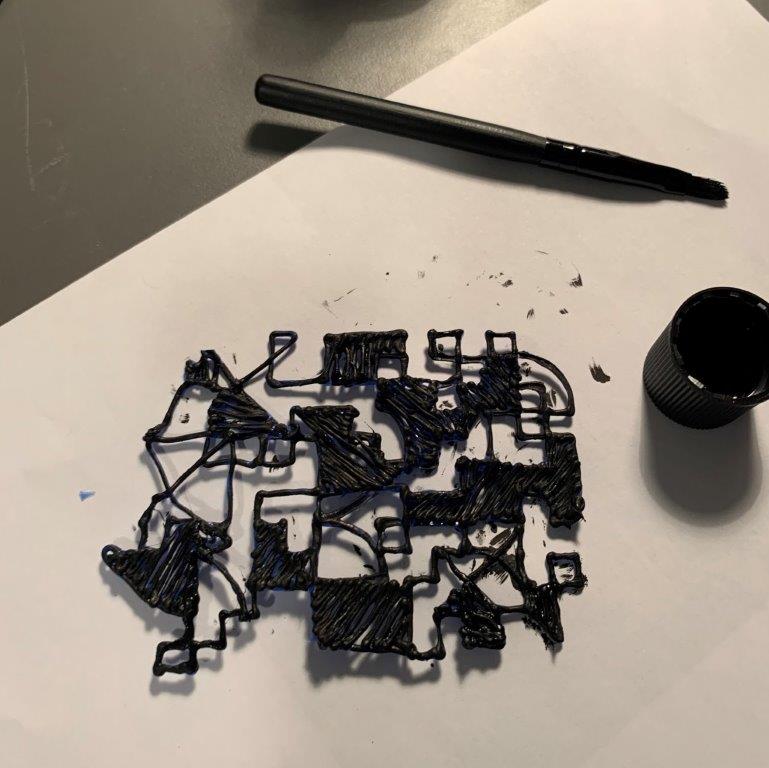
Painted with graphite for conductivity and adhesion of +ve copper ions 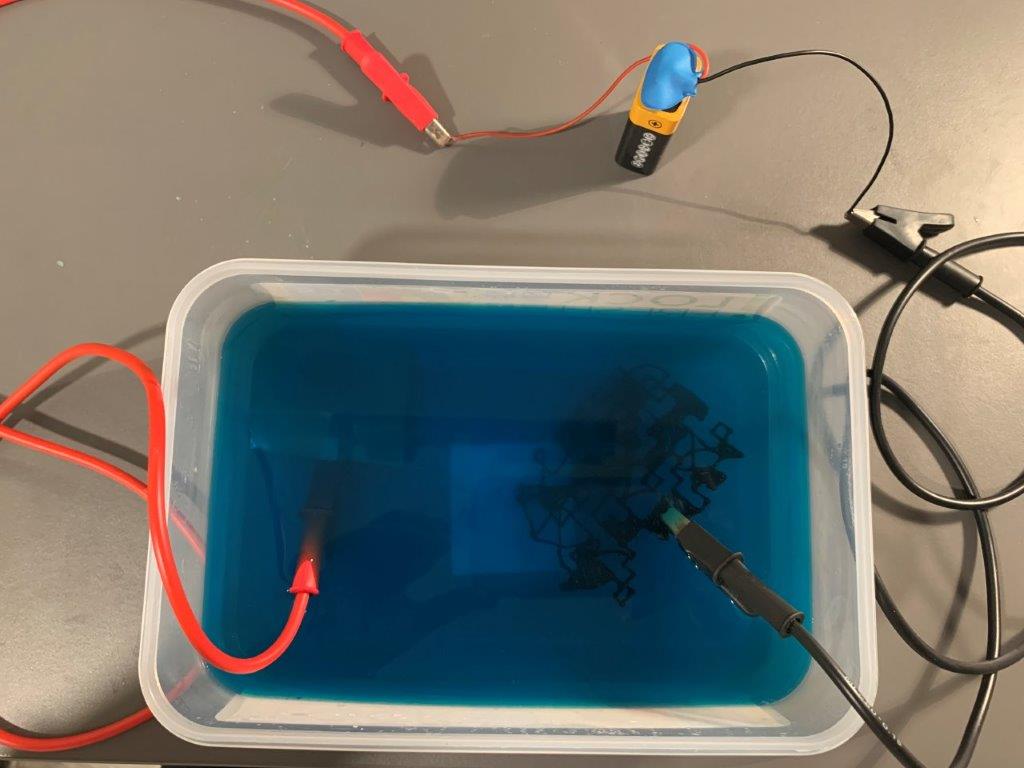
Electroforming apparatus 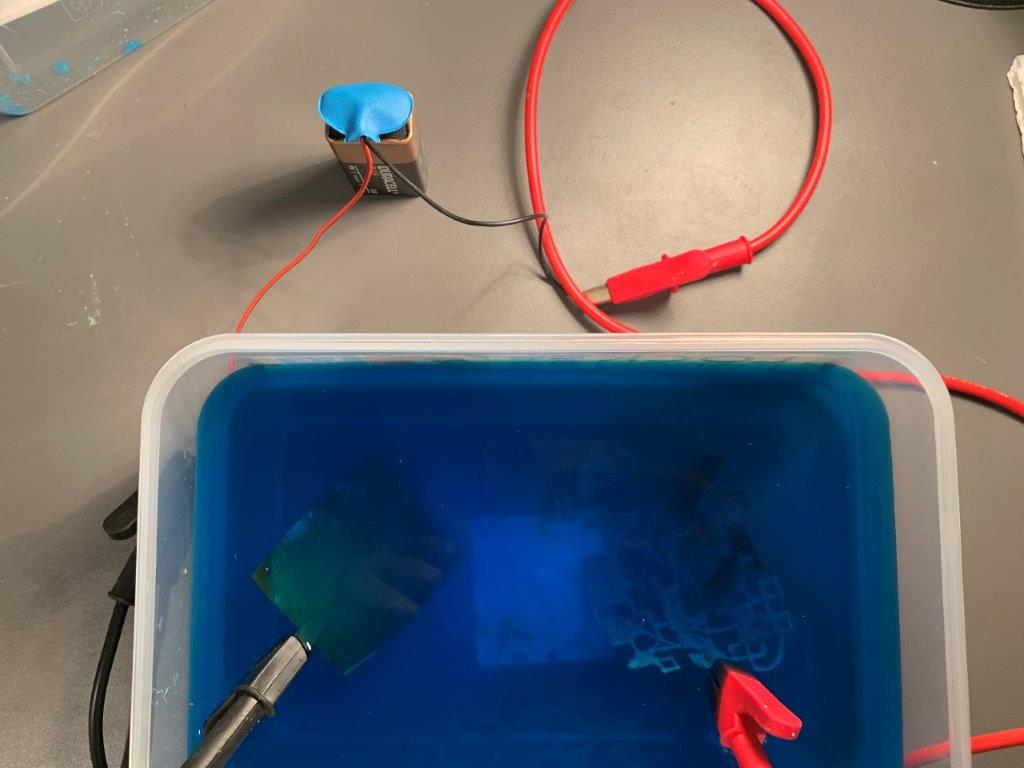
After 2 hours 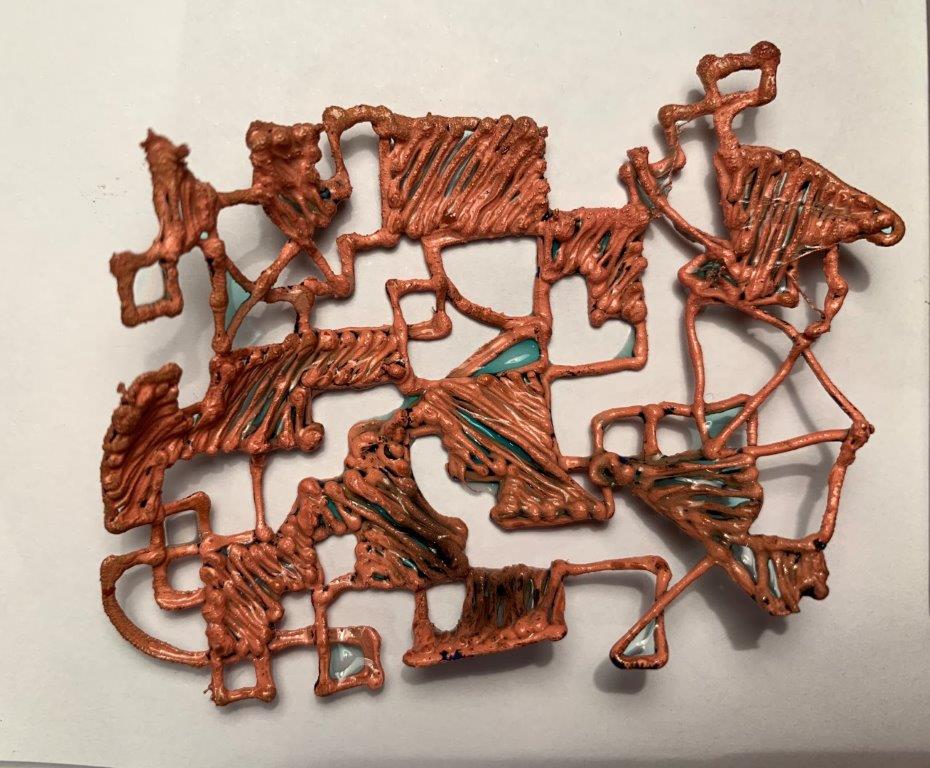
Coated plastic drawing – after 3 hours
After about 3 hours and 2 battery changes, the plastic drawing was almost fully coated with copper. I let it air dry for a bit. Introducing the plastic drawing in the hot copper sulphate solution caused some warpage in the plastic, which I considered using as a shaping method for future flat drawings that i would be coating.
Copper Sulphate Crystals
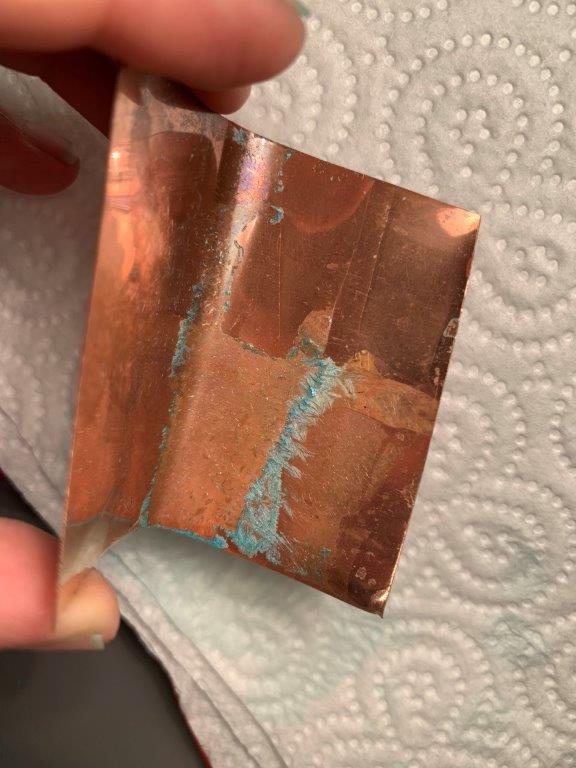
On a piece of copper I briefly used as anode, I observed needle-like crystals of copper sulphate where the solution hadn’t been cleaned off.
I proceeded to pour some copper sulphate solution onto my copper coated plastic drawing in the hope of growing such needle-crystals at densely coated areas on the drawing. On submerging the drawing into the remaining copper sulphate solution, I noticed copper sulphate crystal deposition on the drawing.
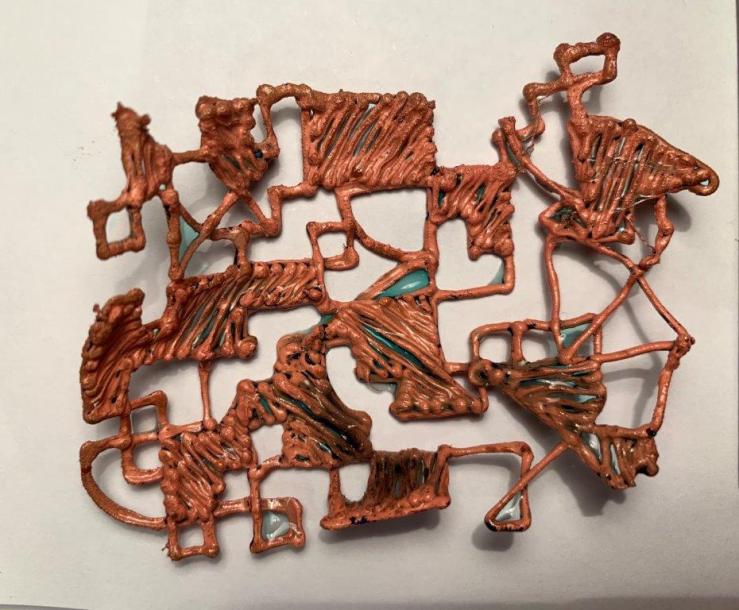
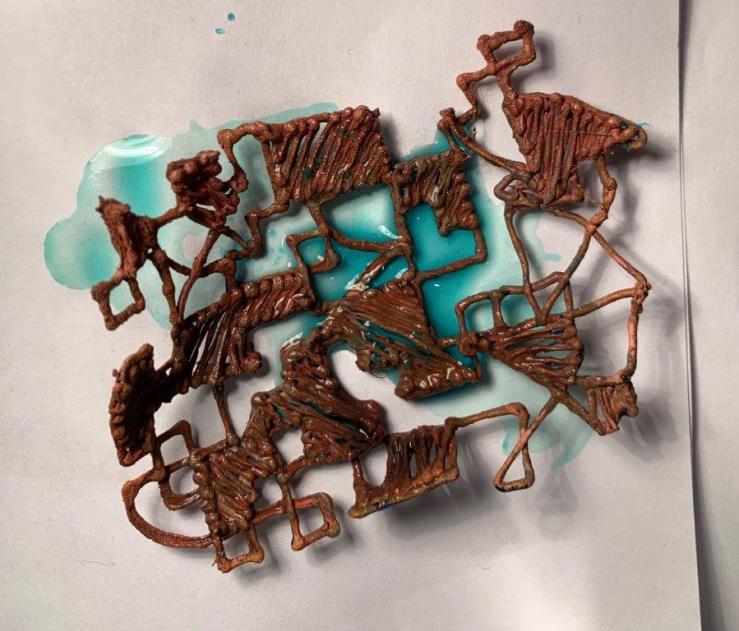
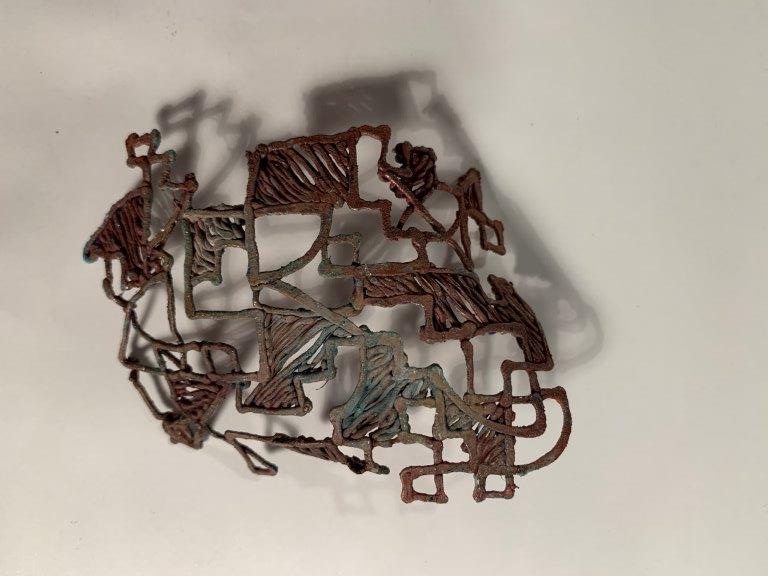
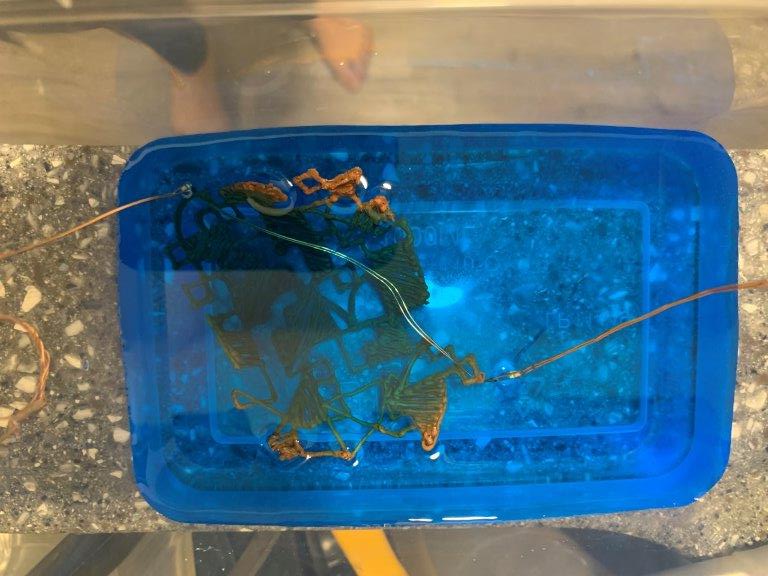
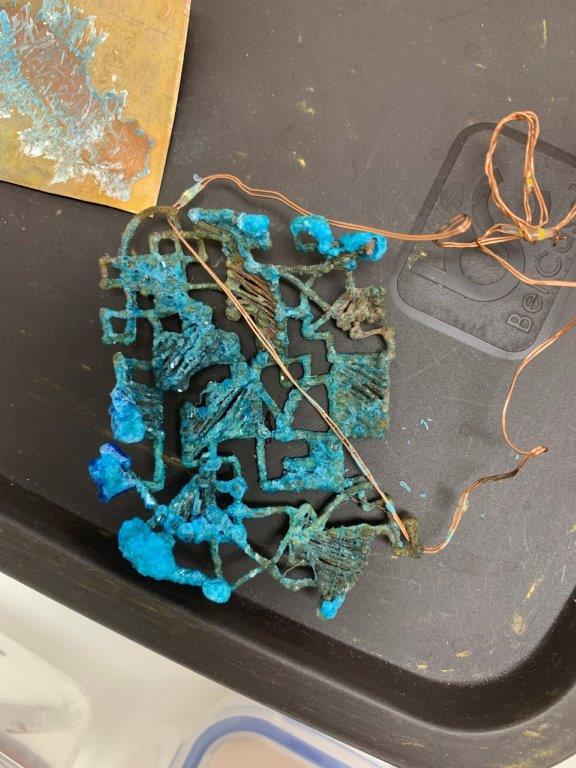
More drawings: electroforming process
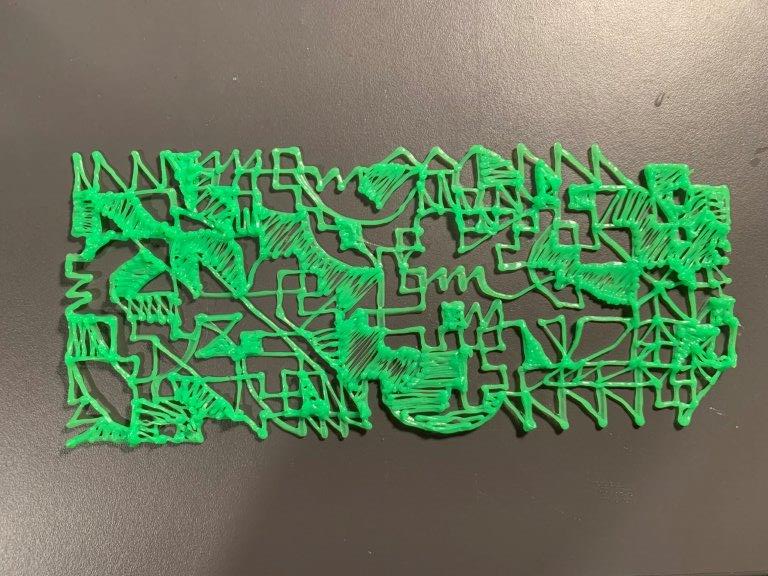
Plastic drawing 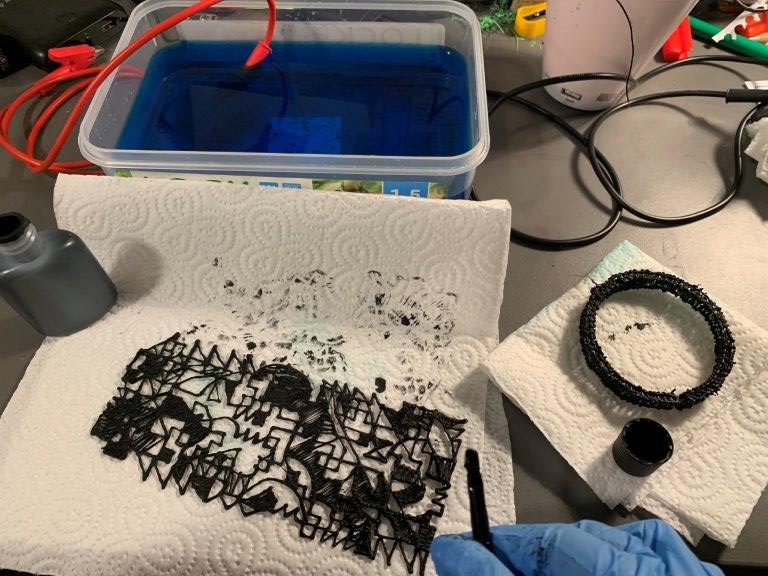
Coated with graphite paint for conduction of electric charge 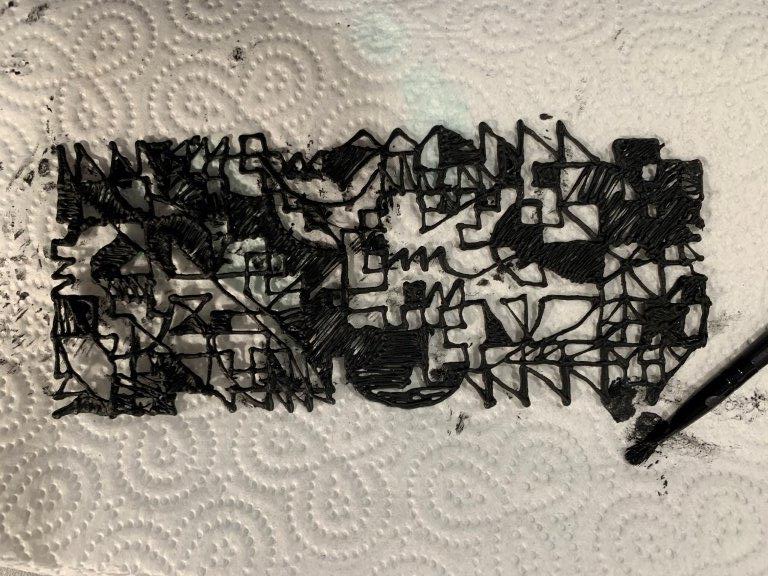
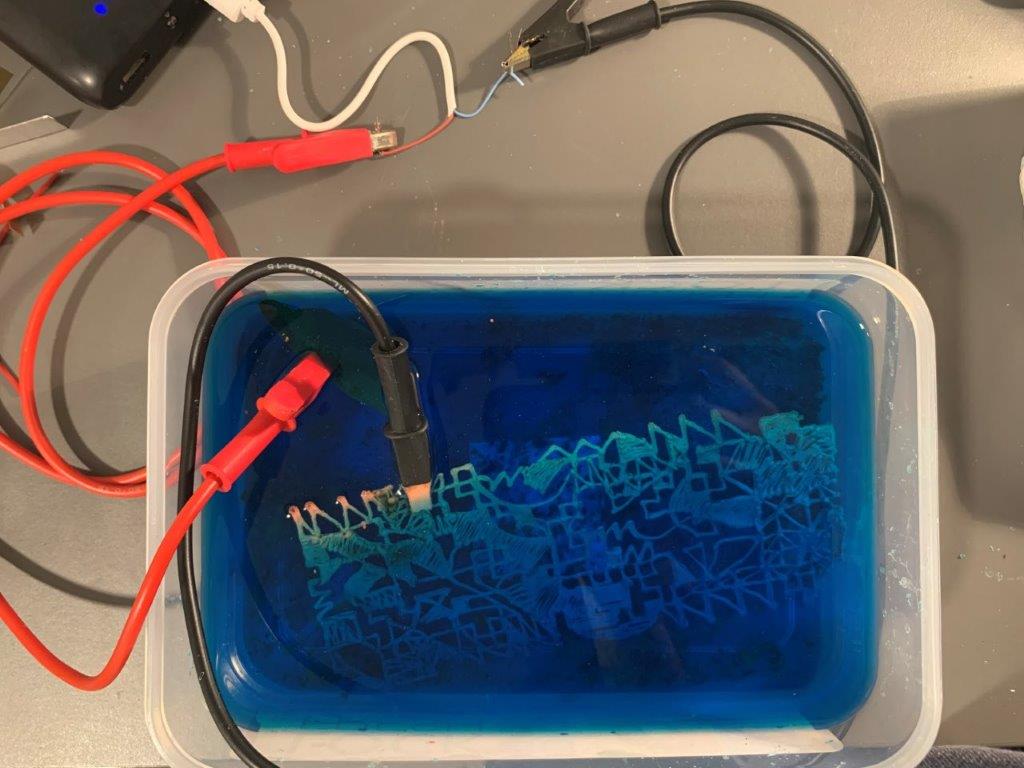
Electroforming in copper sulphate with copper sheet as anode 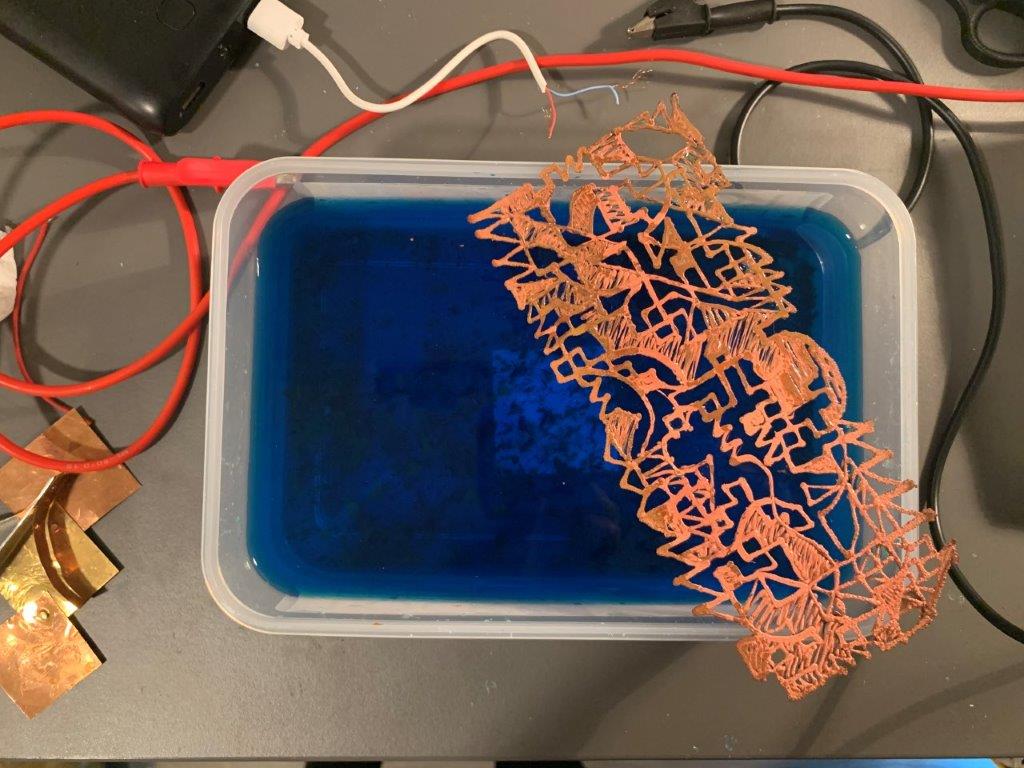
Final copper drawing 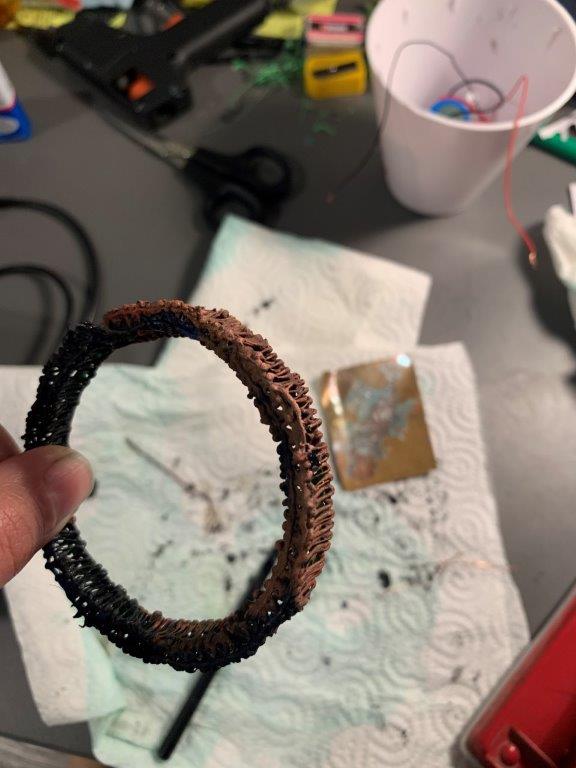
Partially electroplated plastic bangle drawing 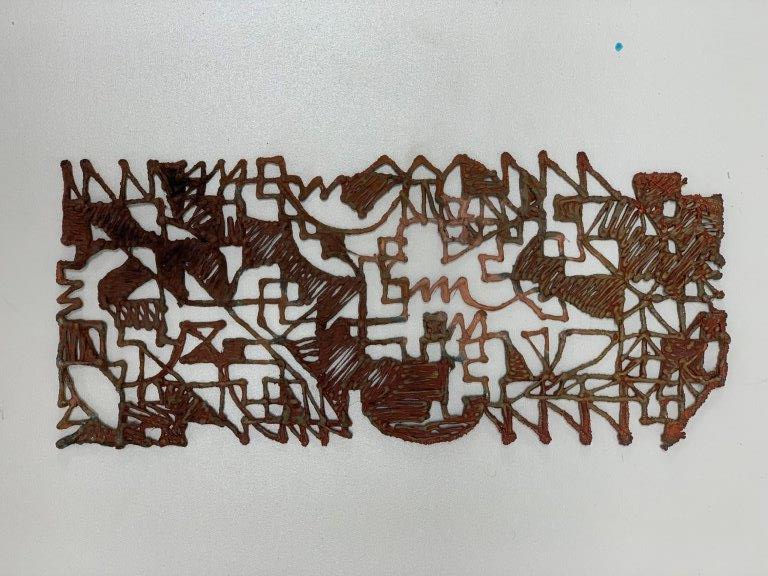

 design factory