
12 November 2019
I had been curious about Julian’s Subtraction cutting process, and finally managed to catch a demonstration and workshop, pairing with Summer in the creation of our own subtraction cutting garment.
Julian’s process, as I had observed from his presentation during the project launch, is quite organic and speculative, and relies on some impromptu, playful decisions governing the final look of a dress. Julian explained that he prefers measuring using his fingers, hands and arms, preventing the wearer from feeling conscious during the measurement process. Another revelation, was that he adjusted the width of the hole (for the body to fit through) based on the kind of clothes (loose, tight, fitting) the prospective wearer was comfortable wearing (possible wearing on that day), to create a garment customized to the comfort level of the wearer.
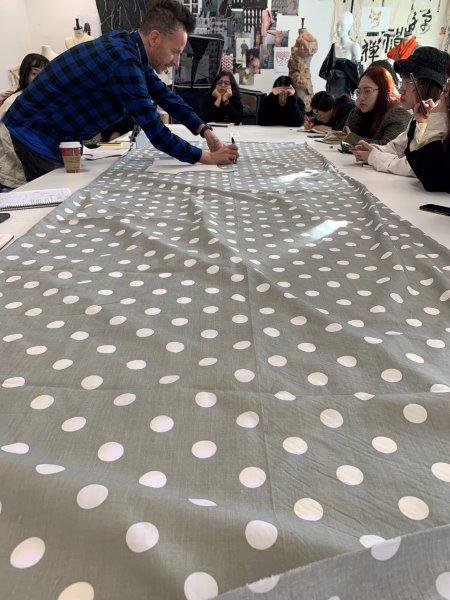
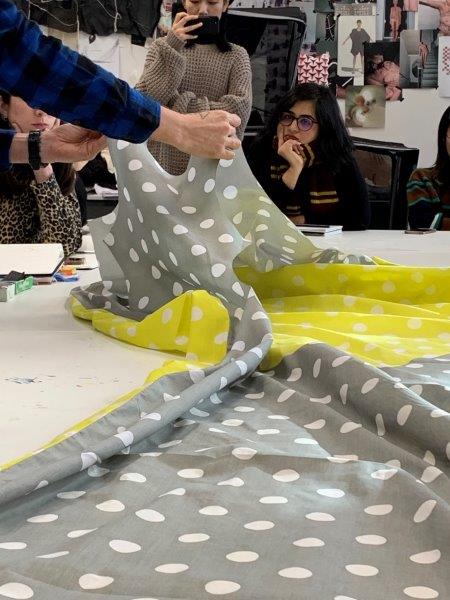
The important technique in his invention was in the placement and cutting of a vest pattern – front and back, joining the ends as curves, marking the start of an elongated skirt. Strategic placement and overlapping of holes, matching the circumference of the widest part of the wearer’s body, and subsequent stitching of overlaps, lifted the skirt in interesting and ruffled formations as the body then passed through the designated holes.
Julian addressed his use of a lot of fabric during the prototyping stage (apart from mini prototypes in paper) , but also revealed that cut hole patterns could be used in a different project. I found his view on sustainability in fashion quite interesting, as he shared, that he was interested in making garments that people would find desirable, and that he did not appreciate making work that would not be used for reasons of lack of aesthetic appeal, despite being sustainable in production, since it was essentially a wasted resource.
Some elements of Julian’s process revealed his passion for his craft, and his enthusiasm for each new piece; such as a conscious effort to keep music playing in the background, addressing physical characteristics of the wearer in deciding upper and lower contrasting fabrics, and encouragement for each pair of students working on their own interpretation of his process.
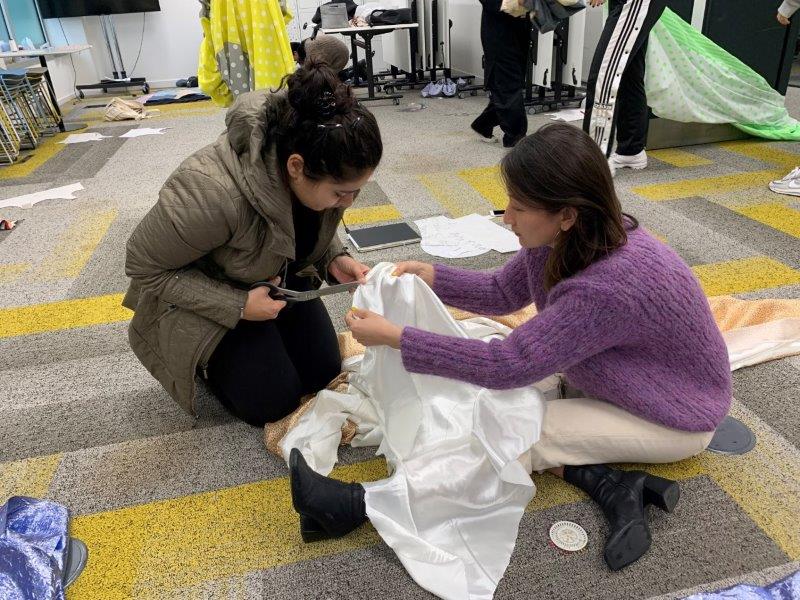
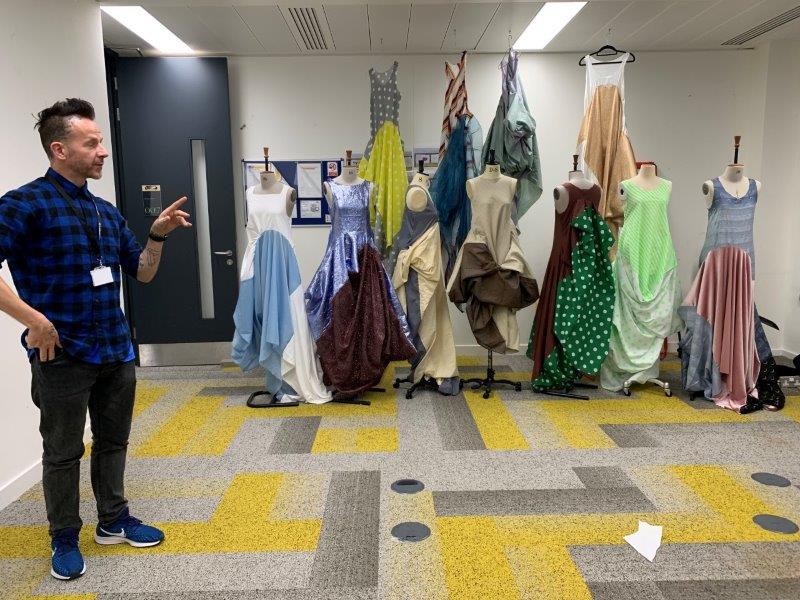
Even though summer and I struggled a bit with cutting and sowing our satin fabric, (good thing we were inducted previously on the machines) we were excited to explore this new material and its behaviour.
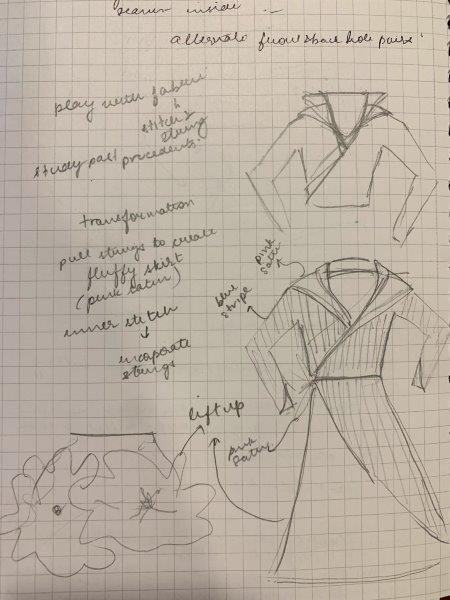
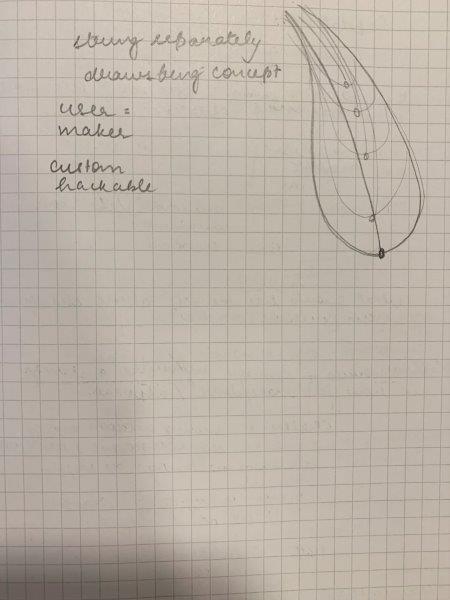
Using ruffled fabric to create textured skirts inspired me to think of a customizable garment using a drawstring mechanism to convert a long straight skirt into a ruffled one, with front and back contrasting fabrics as used in the demonstration and workshop. The idea would acknowledge the hacker culture in the furniture and entertainment industry, and allow for user controlled customization and transformation in their own garments.

 design factory