
01 October 2019
ADAPTATION STRATEGIES
- Towards sustainability- built environment- biggest culprit for waste generation
- Conversion of existing buildings and models to new and distinctive (traces of history, richer) ones with diff. uses
- emotional value – sense of human use – previous life
- What was once there + what is new – intersection of 2 moments
- addition
- upcycling / superuse (smart marketing strategy) – add quality and value – new personality – cheaper to source waste materials – require less energy to develop – marketing – soundbyte – conservation
Constraints-
-standardisation of waste stream and final product for mass production
-being able to source enough for mass production
(I just realized the Nomadic gardens of Shoreditch, our site for the Navigators Project was an excellent example of Superuse of derelict urban space under 2 railway lines, into a community space with rich social character)
Precedents:
- Astley Castle (Witherford Watson Munn) – repurposing – minimal, targeted intervention – filled walls in
- Cuypers Passage Amsterdam – encourage safety and increased pedestrian flow by discouraging tagging on underpass
- Upcycled creative – source materials (unwanted) – into more desirable objects – post-industrial aesthetic
CONCEPT SHEETS
A sheet with drawing, annotation, notes, photographs, collage etc.
Communicate design idea
- Headings
- Titles
- Subtitles
- Pictures
- Photos
- Labels
- Collage
- Brainstorming
- Research Precedents
- Design development, drawing, diagram, annotation
- visualization
GRAPHIC REPRESENTATION
- Jean Tinguely Kinetic sculpture – drawings – vintage components – expressive, self communicative
- Laurence Halprin – Lovejoy fountain – colour in sketches
- Da Vinci – study of dogs, cats and other animals – in depth understanding- visual – annotation
TASK: Produce design sheet –
- current design idea
- working title
- subheadings
- drawing/ description of artefacts
- design concept – sentence
- research- precedents
- design development – drawings, diagrams, visualization
- proposed design
- Site (potential stakeholders)
- location map – explanation of area and current use
- How doea it relate to adaptation / superuse?
WORKING TITLE: DRAWING FROM SPACE (based on my exploration of the processes used by Wendy Ramshaw)
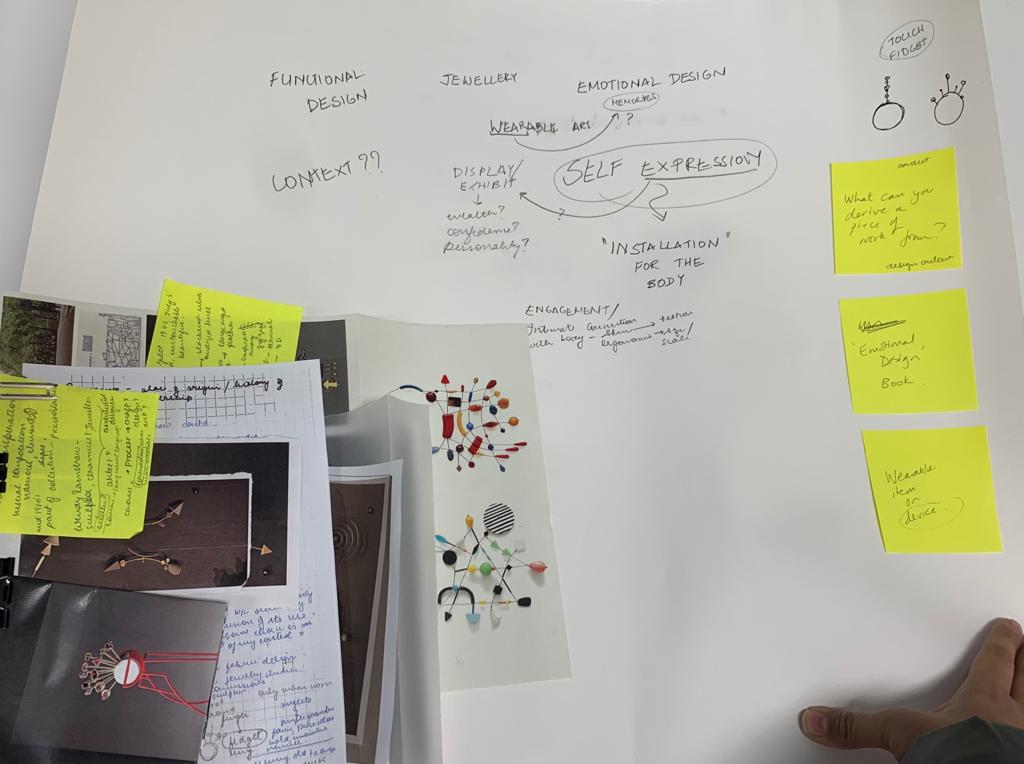
I presented my current research analysing my identified artefact: A Wendy Ramshaw neckpiece, part of her collection titles ‘Picasso’s Ladies’; an abstract geometrical series for posthumous stakeholders – the subjects of 60 portraits painted by Picasso.
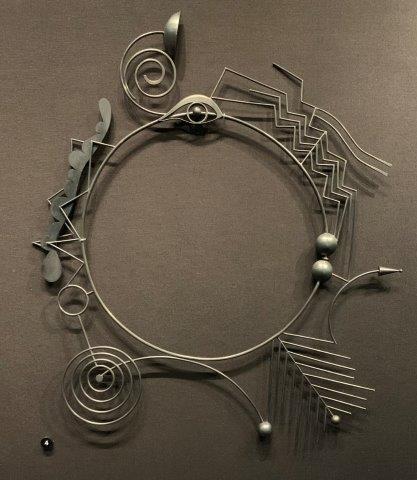
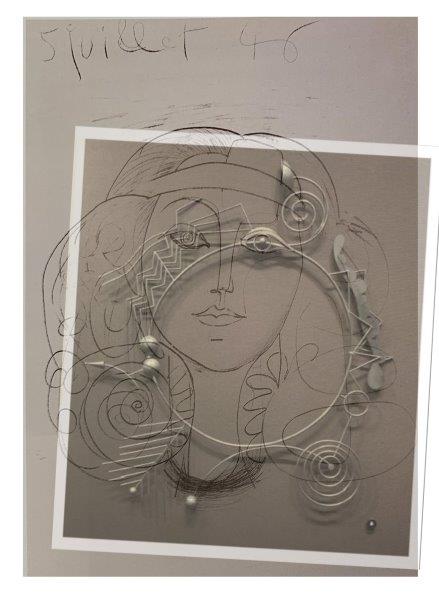
I have been studying her abstraction process through the book ‘Picasso’s Ladies’ with photographs of her collection against the artwork referenced in the jewellery. The author’s analysis and artist’s notes suggest missing and similar elements ( an incompletely rendered eye, a rigid feather, a cloud, spirals in hair) from the portrait incorporated within the composed neckpiece.
I also studied the adaptation process behind Wendy Ramshaw’s geometric compositions, and further studied her Architectural projects – incorporating optical lenses for jewels, with similar line drawings abstracted from contextual references, at a larger scale.
I wanted to understand the design criteria behind ‘Jewellery / Wearable design’ as a potential design project. Since I am used to dealing with specific sites and stakeholders for various projects, I was confused as to how to approach the problem.. Moreover, I am keen on exploring aesthetic language and form giving in my projects – since they have been function based in my past practice. From my reading of ‘Unexpected Pleasures’, I figured that Jewellery could be functional (lanyards- authority, access), or relate to Self expression or Self image, It could be commemorative (medals) or be used to send certain visual signals or be a marketing device. Further, the authors suggested that human needs exist beyond the most obvious practical, survival oriented functions; and that jewellery design fulfills emotional needs.
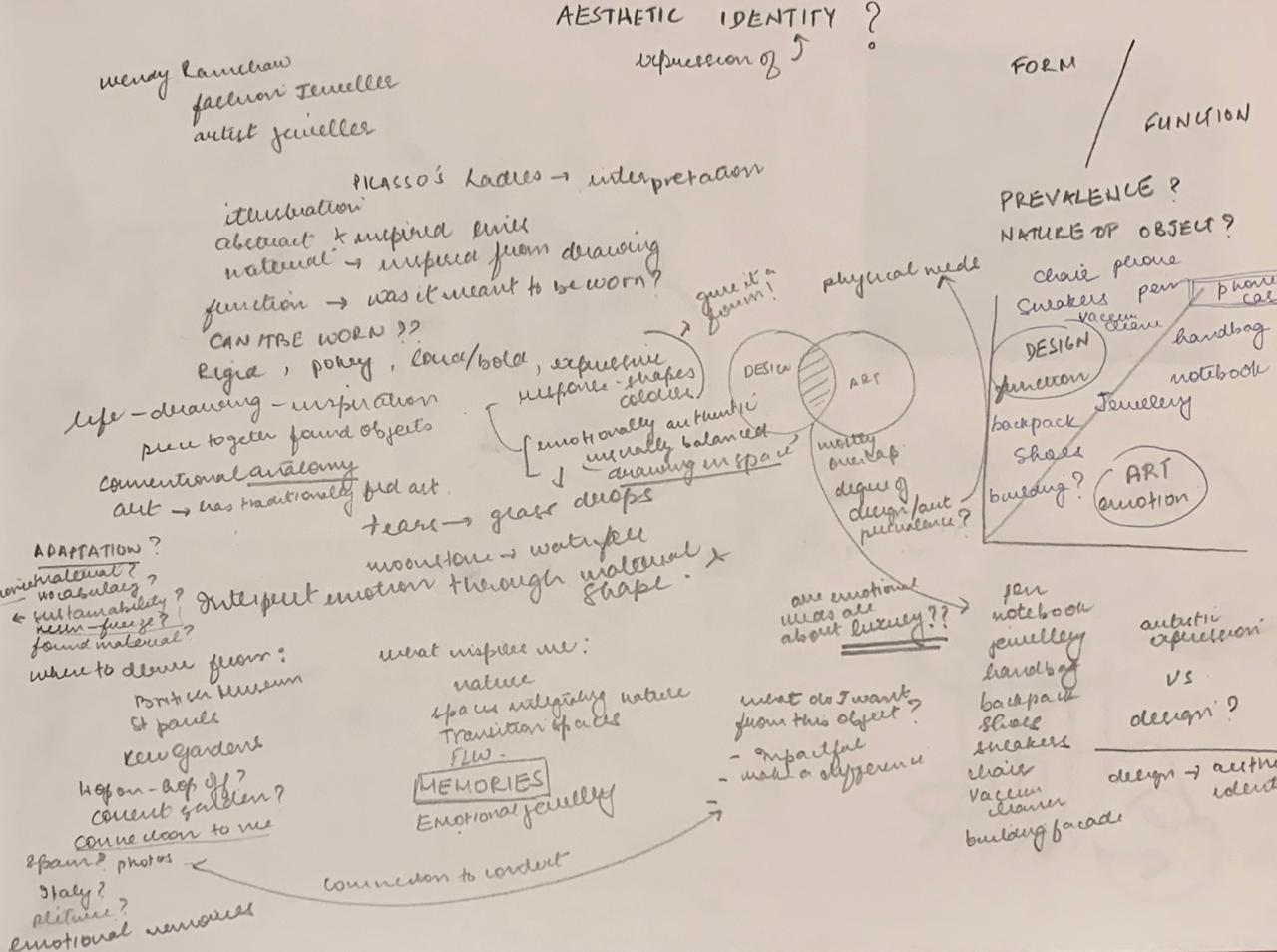
This made me reflect on my previous design projects and concepts of space design: I realized that my concepts have mostly revolved around the intersection between the functional and emotional aspects of human experience, even when not purposefully explained as such.. This made me worry less about having a deep functional concept or design criteria, and encouraged me to start engaging with colours and forms, and delve deeper into human anatomy and the technicalities of designing wearables.
- Wearable – inspiration?
- Gadget/ accessory/ technology?
- Clothes? wearable art?
- inspiration? adaptation? possible different versions of object/concept
- quick ideation
- sketch models
- precedents – expand knowledge in product design
- Graphic representation
I enjoyed looking at concept sheets by members of my pathway, and as usual, I marveled at the unique thought processes and representation skills adopted by my peers here. I am inspired to make more sketches of ideas, even if not developed fully, to convey my thought process efficiently (cue Jim’s highly expressive sketches), and use different media and adaptation strategies to conceptualize and visualize my ideas.
Things to do:
Based on my discussion with Isabel, I decided to look at functional contexts / design criteria, while simultaneously looking for inspiration to derive my material and visual composition. Having decided on making a wearable, I want to study how objects could sit on the human body (not just as conventional jewellery). At the same time, I’d like to sketch from objects as an adaptation and design visualization exercise.

 design factory