16 August 2019
Can Art and Design change the world?
In mixed-pathway teams, we were asked to address important global issues, toward a zine publication. As international students with diverse cultural backgrounds, our personal experiences aligned towards issues of cultural stereotypes within London. Our discussions on racial stereotypes from terrorism to consumerism, highlighted the resulting hinderances to cultural co-existence within a global society.
Based on the confrontational documentary, The colour of Fear,1 and experience designer Samy Aboudrar’s personal account,2 coupled with everyday observations of sub-conscious selective culture-consumption, I formulated a three-fold individual design objective:
- Awareness: of internal bias, cultural interdependence and identity
- Exchange: conscious cultural consumption
- Interaction: conversation opportunities for meaningful socio-cultural ties
I explored the cultural role of products and spaces, learning that culture-rich products, though potentially controversial, could be used to validate cultural identity3, reflect cultural usage4 or appropriate cultural aesthetics5.
I learnt of some successful precedents such as the Ship of Tolerance6 and the seesaws installation along the US-Mexico border wall7, suggesting community engagement as a positive educational tool for cultural integration.
I identified, within the public sphere of London, two contexts for my proposed intervention:
- English Telephone Boxes: ease of access, redundant interiors and iconic cultural significance
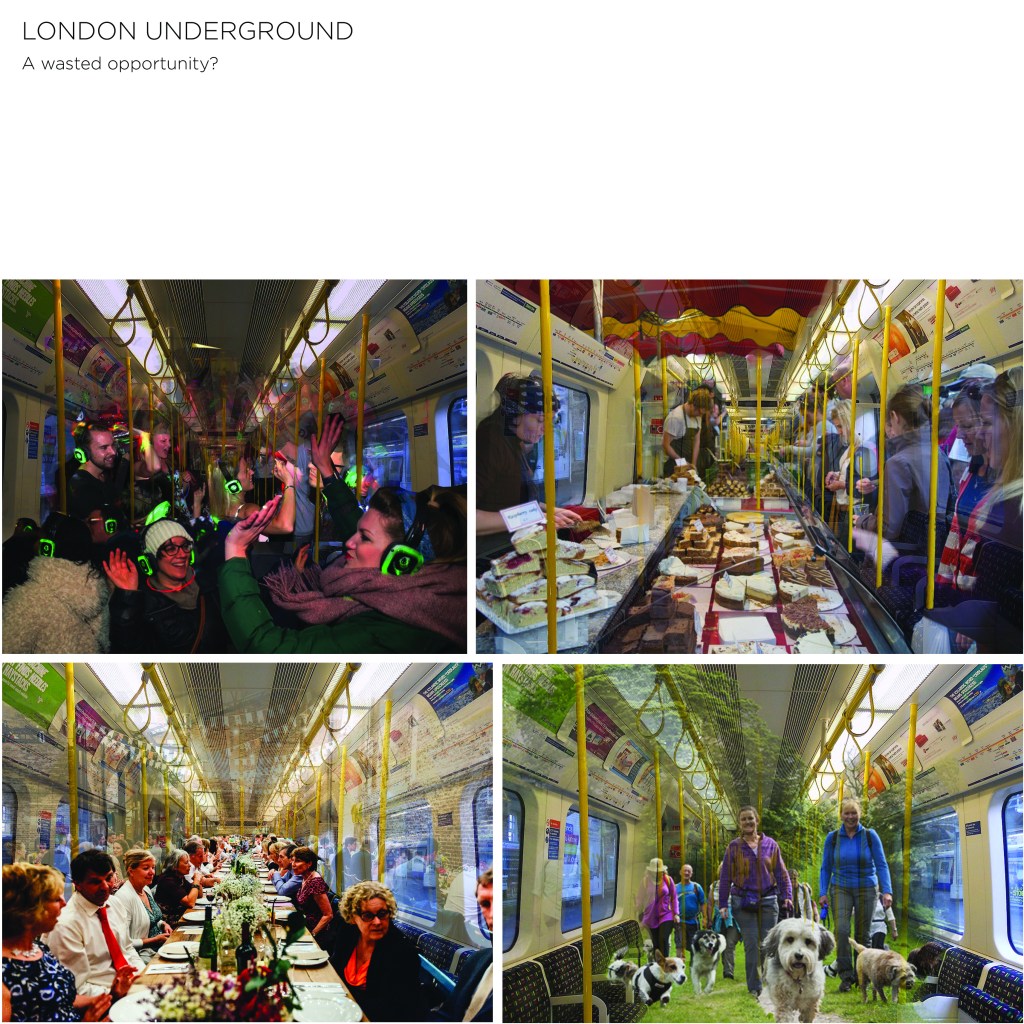
- London Underground: reflection of London’s ethnic constitution, interaction opportunities
At this stage, our Manifesto group formulated a ‘mini-zine’ raising insightful opinions on our responses. Moreover, a podcast session helped me to visualize interaction on the subway, based on my team’s experiences. Peer interaction at RCA revealed inconsistencies between the generalized perception and actual ownership of cultural identity amongst respective ethnic communities.
DESIGN PROCESS: Culture Capsules
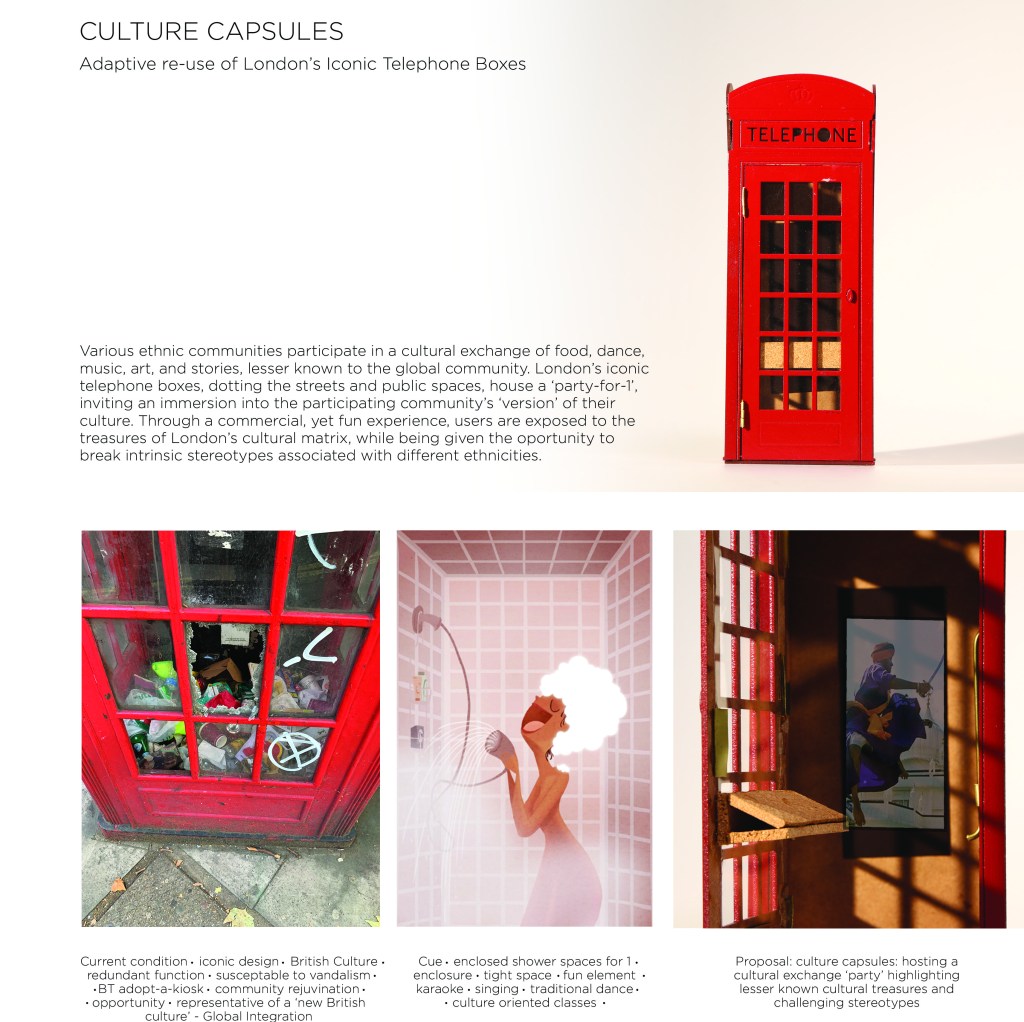
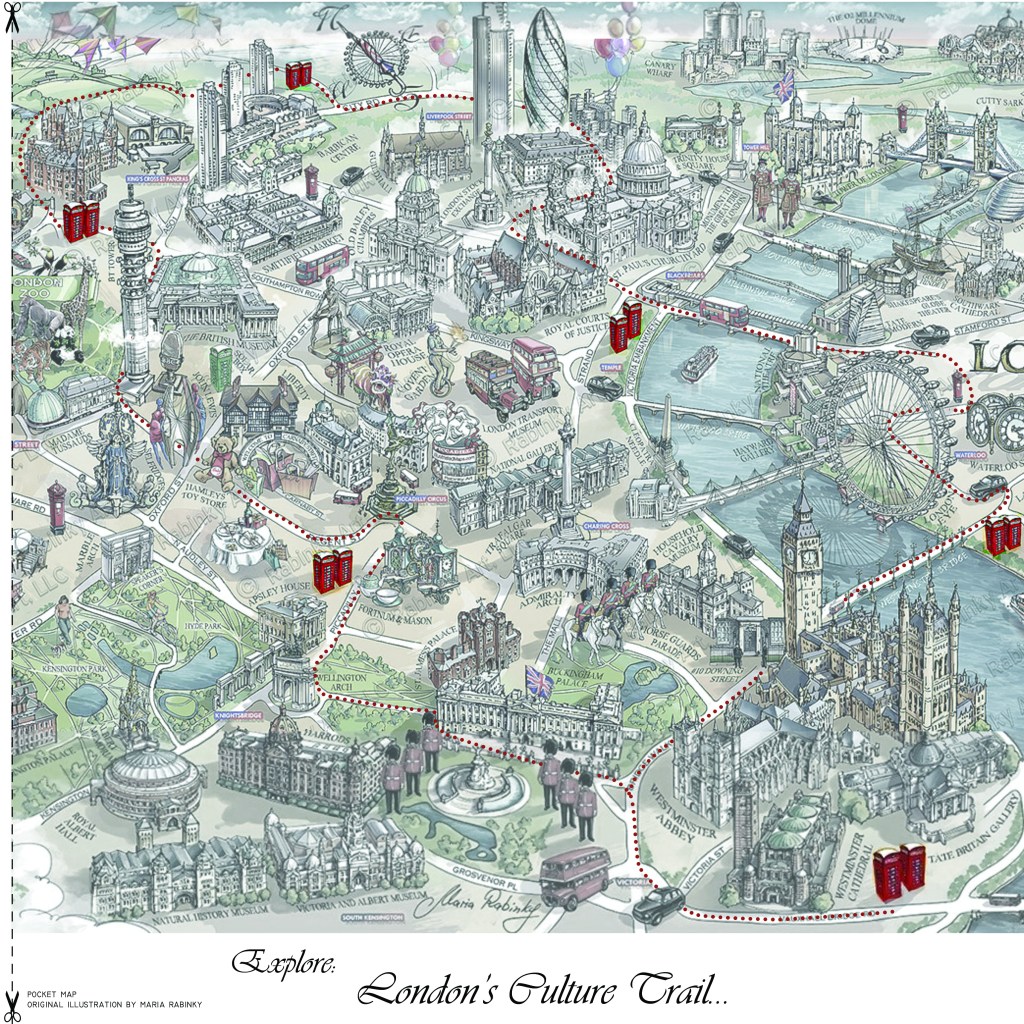
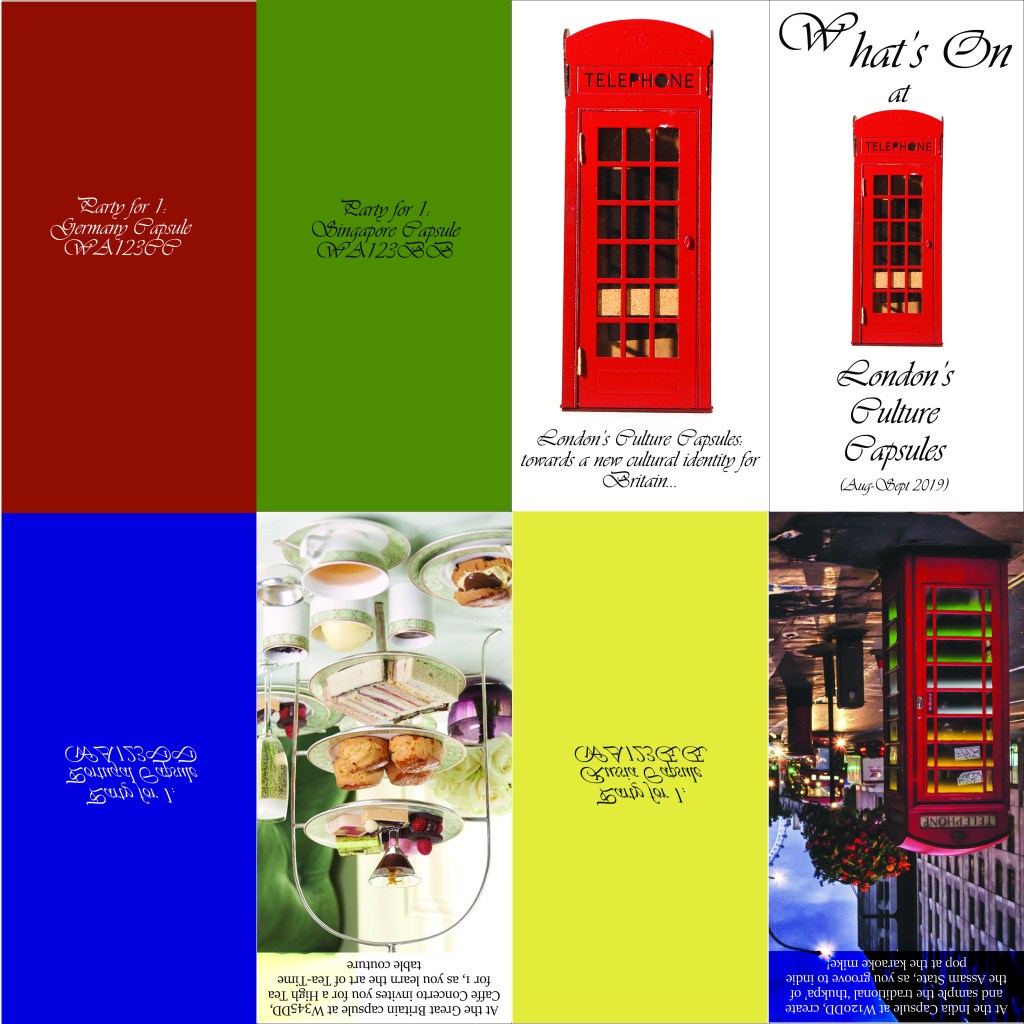
Suggesting evolutionary adaptation for London’s iconic telephone boxes, I proposed an immersive cultural experience aimed at conscious exchange and breaking stereotypes, through direct participation of ethnic communities; inspired by the ‘prosumers’ concept introduced by Tim Parsons in Thinking: Objects9.
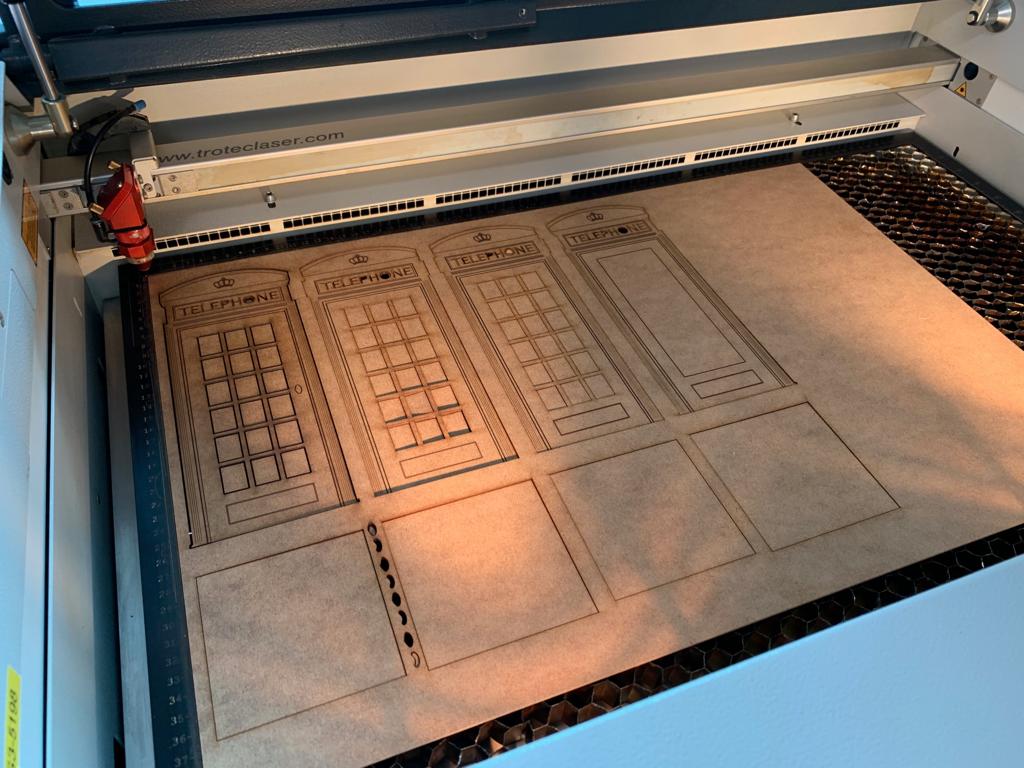
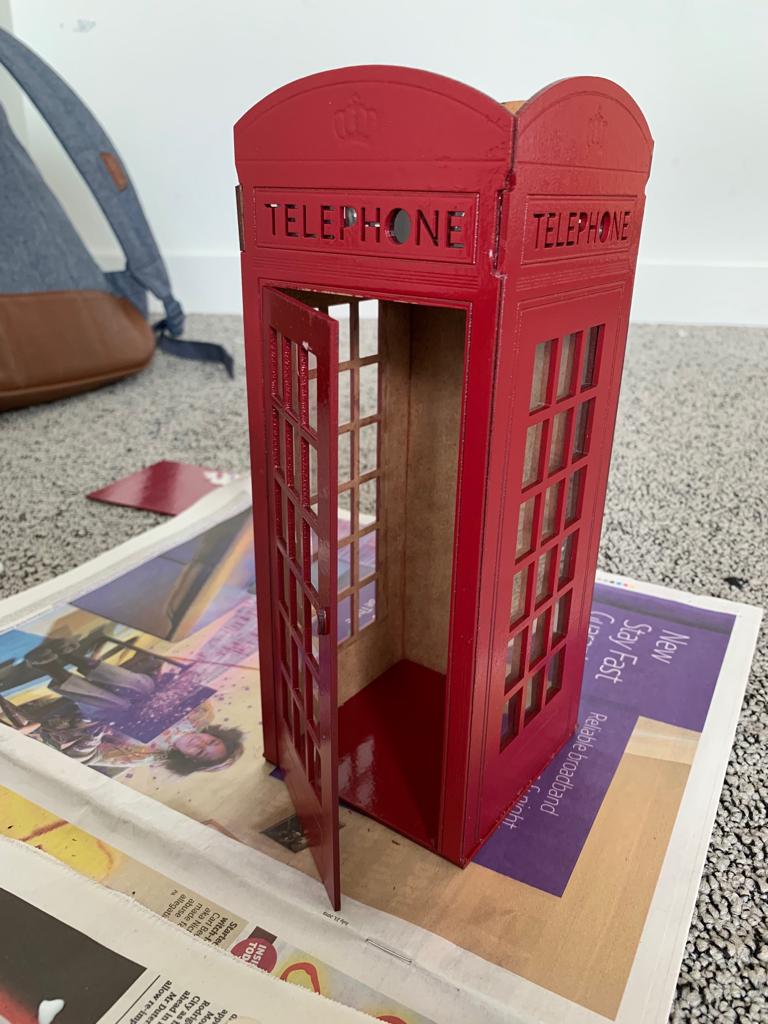
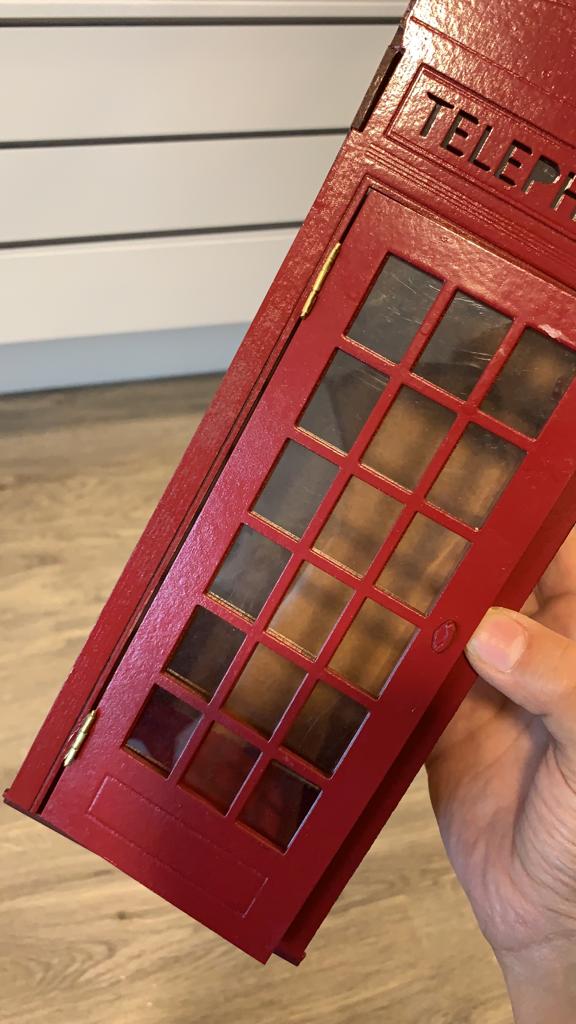
Using the laser-cutter, I prepared a 1:10 study model of the K2 telephone box8, which I later developed into my concept model. An Immersive site study likened the interiors to a shower cubicle, limiting seating options, yet allowing for a ‘sing-and-dance’ party for 1.
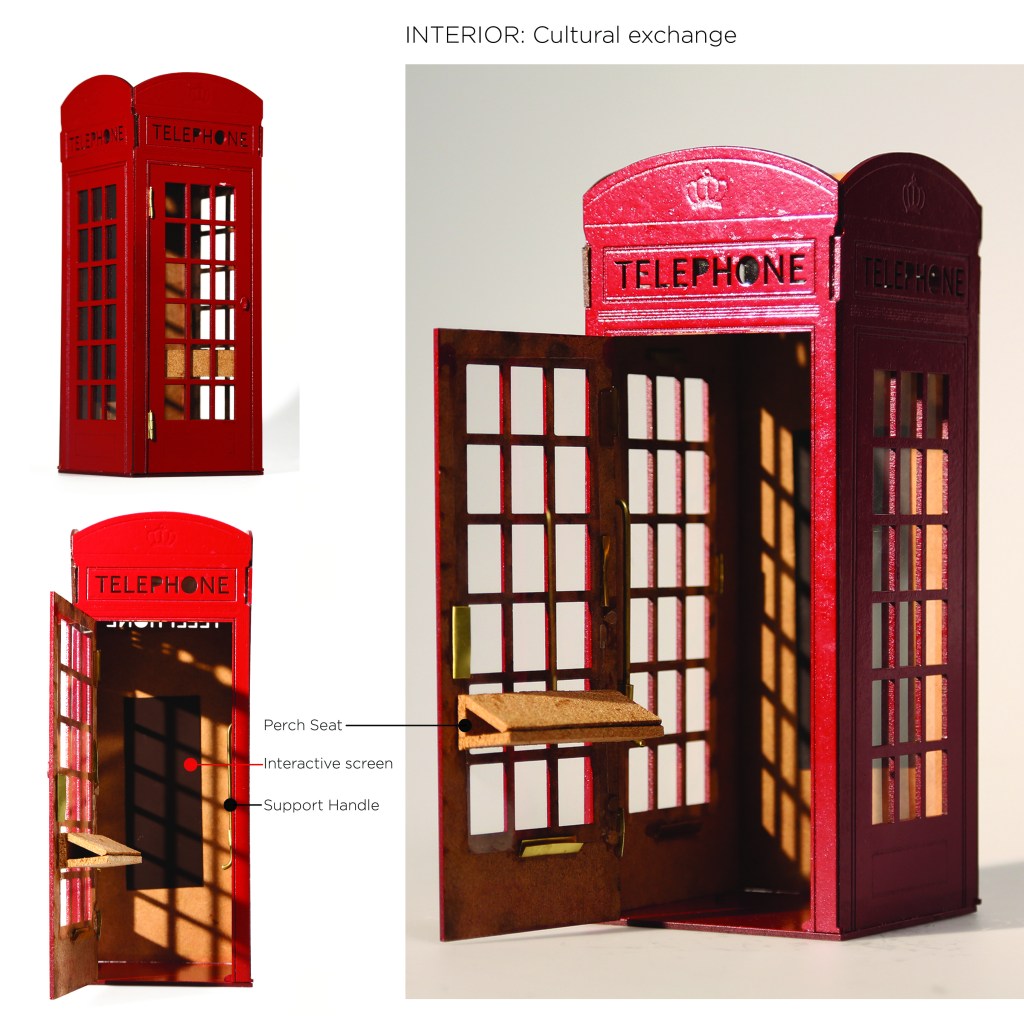
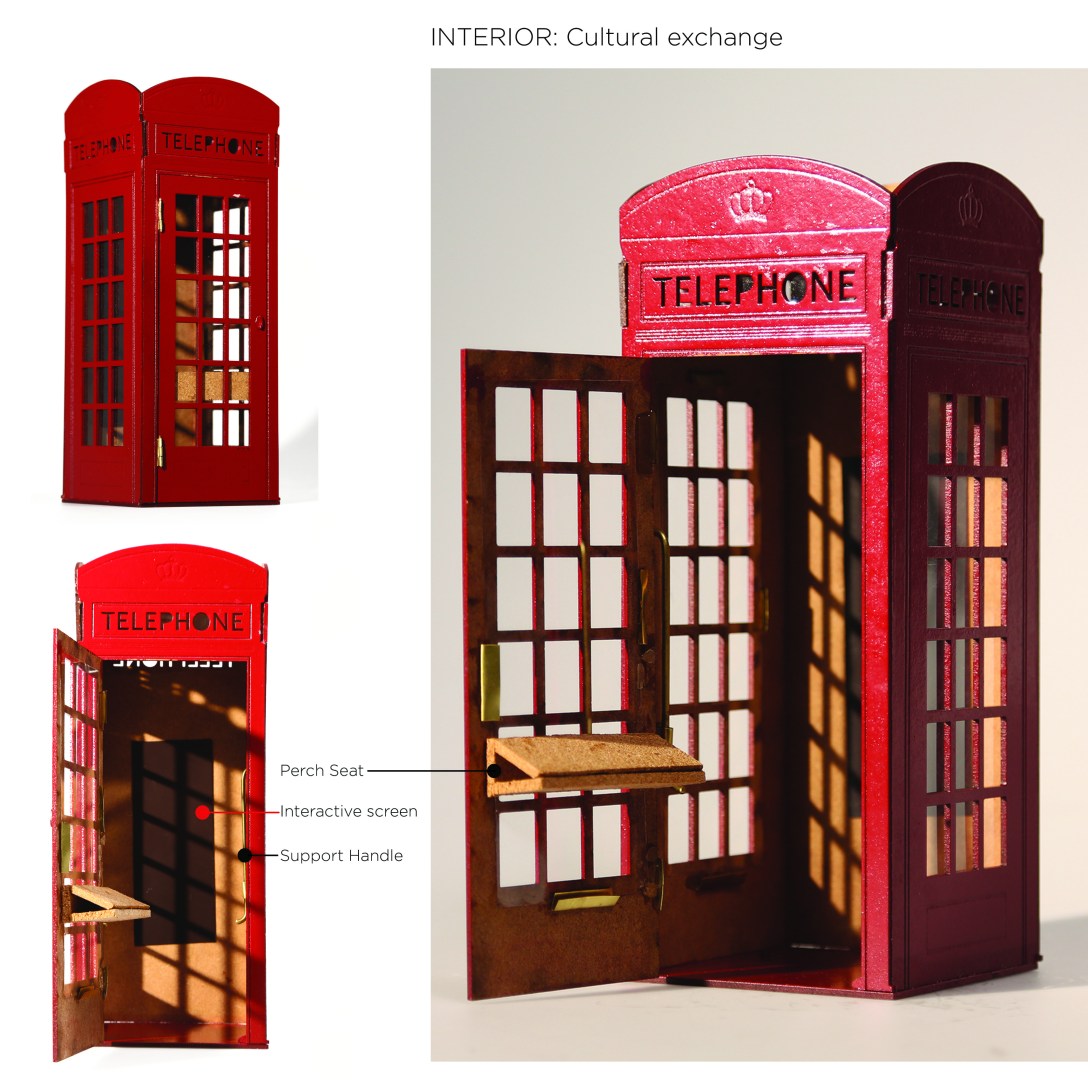
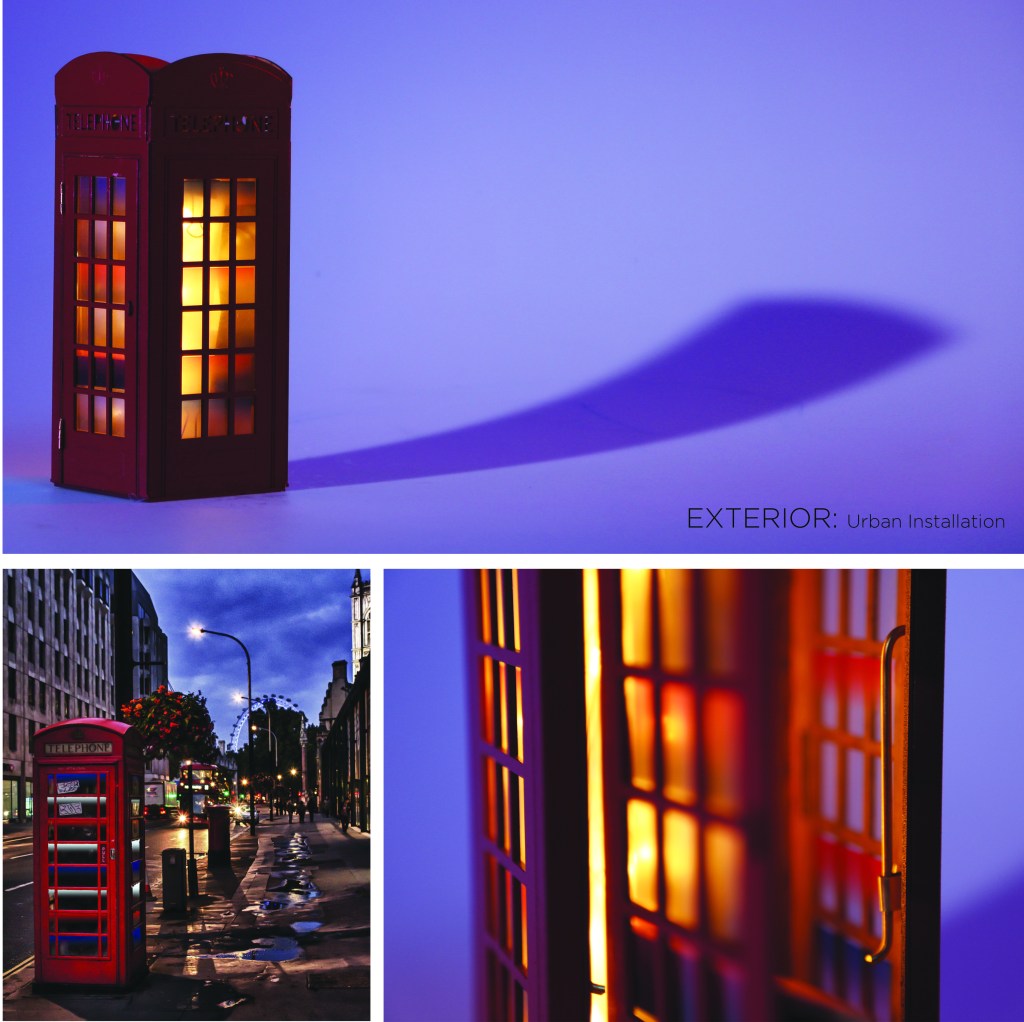
The physical intervention proposed a perch seating, side handlebars and an interactive screen, displaying community representative videos and instructions. LED lighting would emit cultural aesthetics turning the capsules into urban installations by night, representing a new, culturally inclusive identity for London.
London Underground:
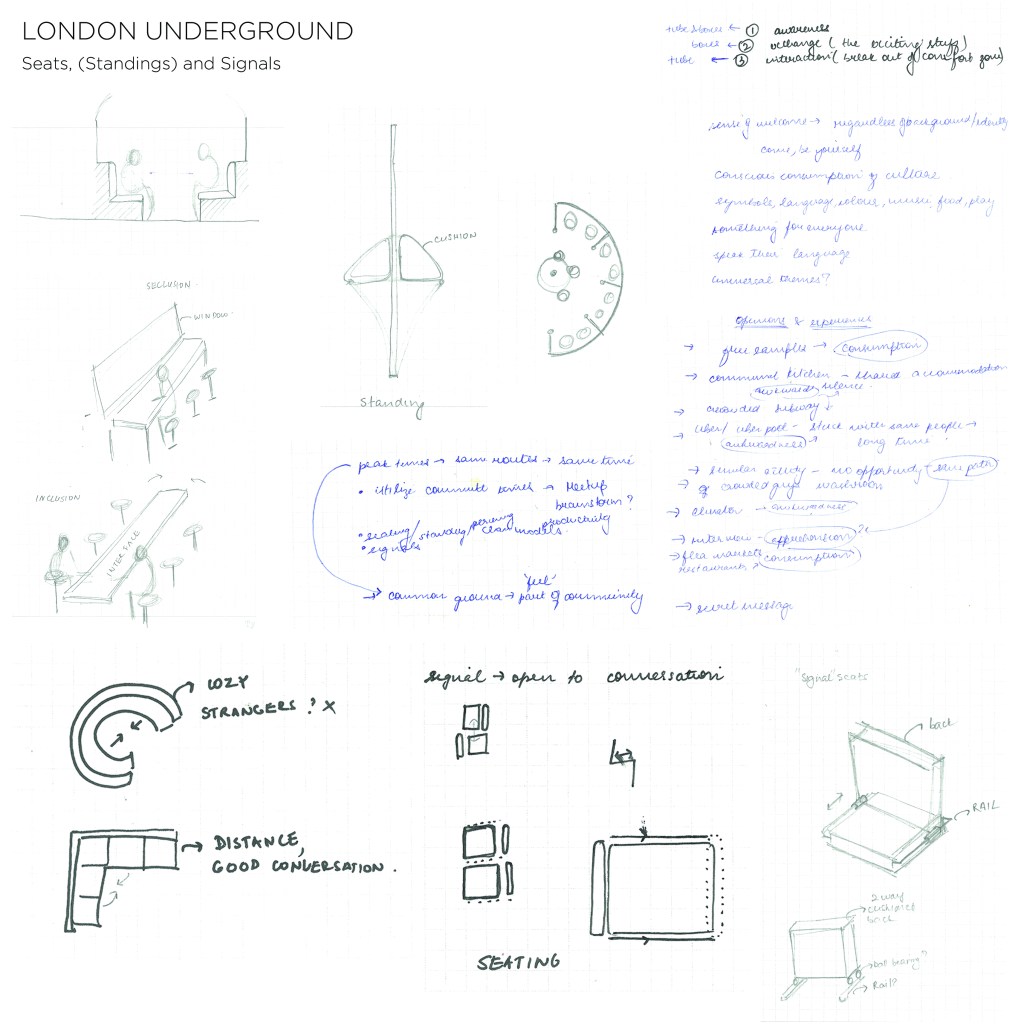
Examples from London10 and New York11 suggested the use of external stimuli in to prompt chance interaction. Studies into conversational seating design helped me develop sketches and models for a user-modulated ‘signal’ seating with a pivoting back.
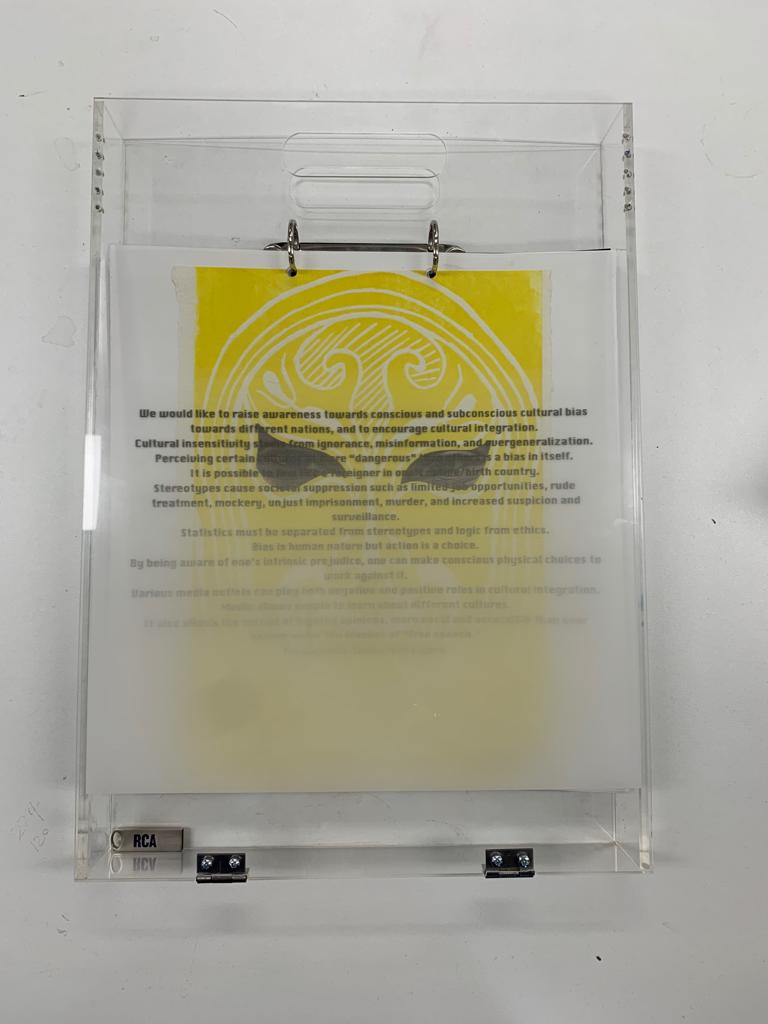
Our final Manifesto was clipped into a clear acrylic handbag – a design experiment towards spreading our views using consumerist ideals.
An intense discussion with Sr. tutor, Gary Clough, gave me a British national’s perspective of the undesirable colonial connotations of my design concept; suggesting a missing sample group in my primary research.
The Manifesto project represented the challenge of addressing global issues and initiating change. From my participation as a designer, team and audience member, I acknowledge that Art and Design could play a complex role in changemaking, by presenting opportunities for dialogue, opinion, confrontation and knowledge sharing. However, the exercise also highlighted the undeniable importance of representation and collaboration with the people12 in every step of the process, progress and implementation.
REFERENCES:
- The Colour of Fear dir. by Lee Mun Wah (StirFry Seminars & Consulting, 1994)
- Samy Aboudrar, Design against racism, blog post, Medium.com, 11 July 2018, <https://medium.com/@smbdrr/design-against-racism-63a76b826059> [accessed 06 August 2019]
- Emily Dawling, The sports hijab dividing opinions, online article, bbc.com, 10 January 2018, < http://www.bbc.com/culture/story/20180110-the-sports-hijab-dividing-opinions> [accessed 10 August 2019]
- Twentytwentyone.com, online store < https://twentytwentyone.com/product/pp-250-valet-chair-pp-mobler> [accessed 30 July 2019].
- Wenyu Wu, Alex Brezing, ‘Bauhaus and Ming-style – a comparative study to contribute to the understanding of Cultural Impact on Product Design’ (2012), p.5.
- ‘The Ship of Tolerance’, The Ilya & Emilia Kabakov Foundation < https://shipoftolerance.org/about> [accessed 30 July 2019]
- Lanre Bakare, Pink seesaws reach across the divide at US-Mexico border, online article, theguardian.com, 30 July 2019 < https://www.theguardian.com/us-news/2019/jul/30/pink-seesaws-reach-across-divide-us-mexico-border > [accessed 31 July 2019].
- ‘The Telephone Box’, Richardcoltman.me, <http://www.the-telephone-box.co.uk/kiosks/k2/> [accessed 18 August 2019]
- Tim, Parsons, Thinking: Objects Contemporary Approaches to Product Design (Switzerland: AVA Publishing SA, 2009).
- Fashion.telegraph.co.uk, Models stage fashion show on London Underground, fashion.telegraph.co.uk, 07 September 2009, < http://fashion.telegraph.co.uk/news-features/TMG6150244/Models-stage-fashion-show-on-London-Underground.html> [accessed 06 August 2019]
- Nbcnewyork.com, Bar Cars Returning to Metro-North Railroad: Report, nbcnewyork.com, 12 September 2016, < https://www.nbcnewyork.com/news/local/Bar-Cars-Metro-North-Service-Rail-393148761.html> [accessed 18 August 2019]
- OpenCity Projects, Design for Diversity Toolkit (2018), p.10. OpenCity Projects ebook.

 design factory